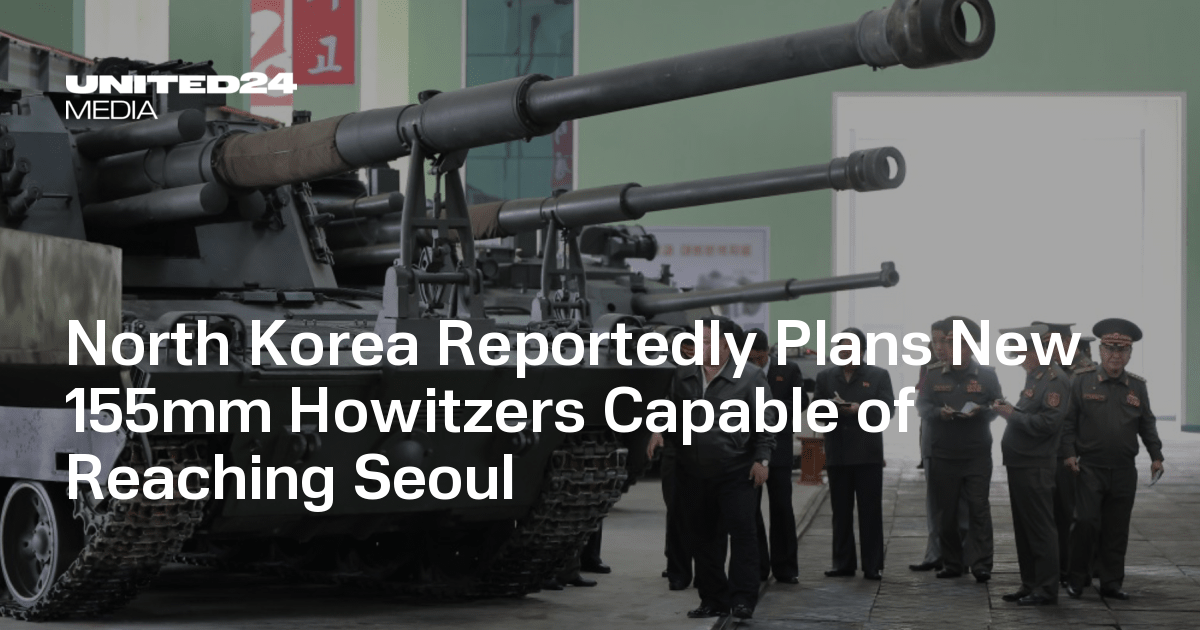
North Korea reportedly plans to deploy new 155mm self-propelled howitzers by end-2026, with a firing range exceeding 60 km that could put parts of the Seoul metropolitan area within reach. KCNA said the system will be delivered to three battalions as Pyongyang expands conventional firepower and leverages battlefield lessons from its deployments in Russia's war on Ukraine. The development heightens security risk for South Korea and reinforces regional geopolitical tension.
This is less about an immediate battlefield shift than about a medium-term change in Seoul’s decision tree. If North Korea convinces markets that its artillery can credibly reach the capital in sustained salvos, the first-order winner is South Korean defense procurement, but the second-order effect is a persistent risk premium on any asset tied to Korean consumer confidence, inbound tourism, and domestic cyclicals. The more important implication is that mobility and survivability improvements in the artillery layer increase the probability of a costly, rapid-response escalation cycle, which tends to force earlier stockpiling and higher readiness spending rather than a neat one-time budget bump.
The underappreciated angle is technology transfer and doctrine importation. Battlefield exposure to drone spotting, counter-battery timing, and distributed fires likely matters more than the specific platform, because it can improve the lethality of legacy artillery even if the new systems are deployed slowly. That creates a years-long tail risk: incremental capability gains can alter deterrence thresholds without crossing a visible “red line,” making miscalculation more likely during future exercises or border incidents.
For capital markets, the cleanest expression is not a direct North Korea trade, but a relative-value defense basket versus Korea-beta cyclicals. South Korean prime contractors and missile-defense names should see persistent order support over 12–24 months, while banks, retailers, airlines, and leisure names face episodic drawdown risk whenever headline tension spikes. The consensus likely underprices how much of the market response will come from insurance, hardening, and command-and-control spending rather than classic offensive weapons procurement.
The contrarian view is that investors often overestimate the speed of translation from rhetoric to usable combat capability. Sanctions, manufacturing bottlenecks, training dispersion, and logistics can delay meaningful force deployment, so the near-term risk may be volatility rather than structural escalation. That suggests buying defense on weakness after headline spikes, not chasing it intraday, while fading broad Korea exposure only if tensions persist beyond a few weeks and start to hit tourism or FX flows.
AI-powered research, real-time alerts, and portfolio analytics for institutional investors.
Request DemoOverall Sentiment
moderately negative
Sentiment Score
-0.40
