
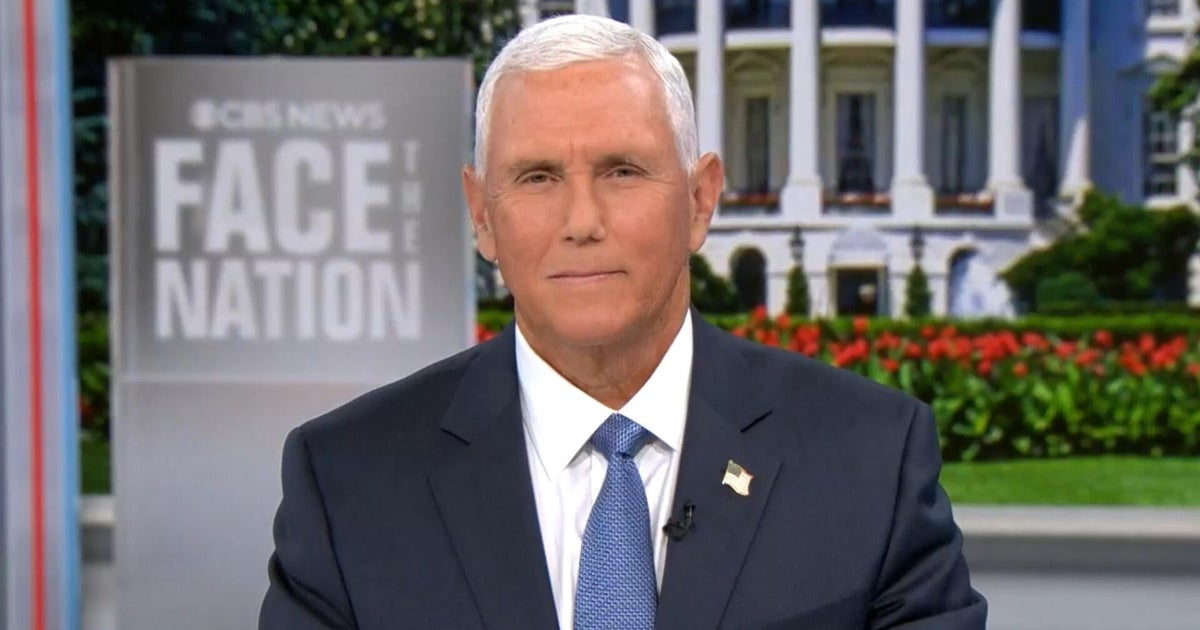
A $1.776 billion taxpayer-funded "anti-weaponization" fund has triggered pushback from Mike Pence and Senate Republicans, with Pence urging the Trump administration to drop it entirely. The DOJ faces legal challenges and a temporary federal court bar on moving ahead, while lawmakers seek guardrails to prevent payments to people who assaulted police officers on Jan. 6. The story is primarily political and legal in nature, with limited direct market impact.
This is less a direct market event than a governance and appropriations stress test for the IRS. The immediate loser is institutional credibility: if a politically charged payout vehicle survives legal challenge, it raises the expected value of future agency settlements as off-balance-sheet policy tools, which is bullish for litigation around administrative overreach and bearish for any regulated entity that relies on stable enforcement expectations. In the near term, the biggest market sensitivity is not the payout itself but the signal it sends about how fragile post-settlement implementation can be when Congress and the courts are aligned against it.
Second-order, the fight increases the probability that the IRS becomes a recurring budget and messaging battleground into the next appropriations cycle. That matters because it can slow hiring, compliance modernization, and audit throughput even if the fund is ultimately voided; a demoralized or operationally constrained IRS is a latent tailwind for tax-adjacent advisory, accounting, and software names over a 6-12 month horizon. Conversely, if the administration doubles down, the optics could harden Republican resistance to unrelated funding measures, increasing odds of short-lived shutdown/CR-driven volatility around domestic policy names.
The contrarian read is that the market may be overestimating how durable this becomes as a capital-allocation mechanism. The legal process already creates a natural off-ramp: court injunctions and Senate pushback make outright cancellation more likely than full rollout, so the best risk/reward is to trade volatility in policy-exposed sectors rather than express a directional view on the fund’s headline size. The real catalyst is whether the administration treats this as symbolic compensation or tries to operationalize broad claimant eligibility; the latter would extend the headline half-life from days into months.
AI-powered research, real-time alerts, and portfolio analytics for institutional investors.
Request TrialOverall Sentiment
neutral
Sentiment Score
-0.05
Ticker Sentiment
