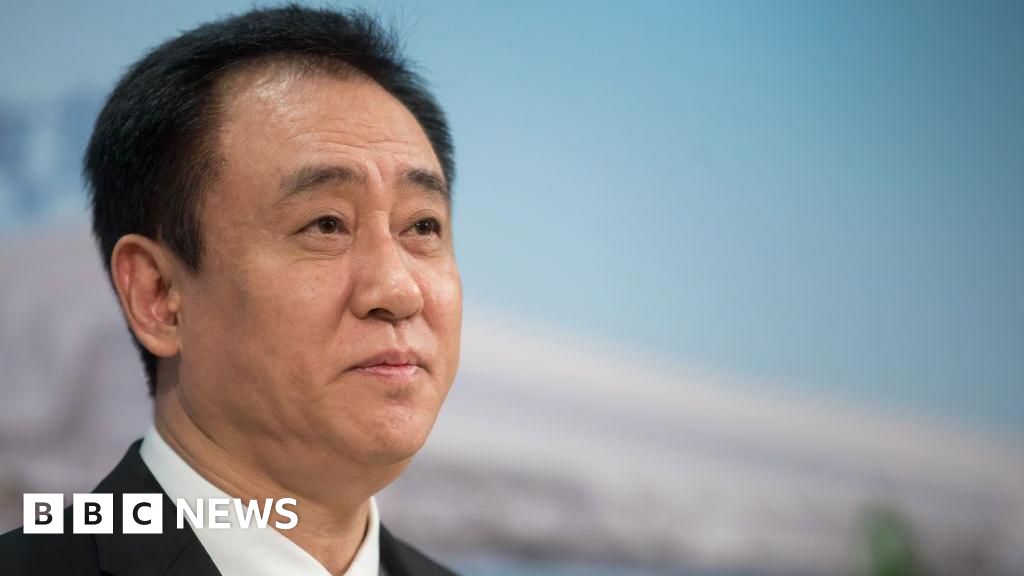
Evergrande founder Hui Ka Yan has pleaded guilty to embezzlement of corporate assets and corporate bribery, with the court to announce a verdict later. The case deepens the fallout from Evergrande's collapse, which left hundreds of unfinished projects across China, followed a debt pile of about $300bn, and saw its stock value wipe out 99% before delisting in Hong Kong in August 2025. The news reinforces legal, governance, and restructuring risks across China's property sector.
This is less a single-name event than a state-signaled reset of the entire Chinese property risk premium. A guilty plea at the founder level increases the odds that liabilities migrate from being treated as a financing problem to a governance-and-fraud problem, which typically lengthens restructuring timelines and raises recovery haircuts for offshore creditors. The first-order losers are legacy developers, but the second-order pressure is on local banks, trust products, and suppliers that depend on settlement velocity and land-sale recycling; that means tighter credit availability can persist even if headline policy support improves.
The key market implication is not immediate equity repricing so much as a further widening in the gap between policy intent and balance-sheet repair. Beijing can keep easing mortgage rules and easing homebuying restrictions, but if buyers believe pre-sale funds are unsafe, marginal demand stays suppressed and developers will still need to discount inventory, which compresses land values and collateral marks across the system. That creates a negative feedback loop for banks and LGFVs in weaker cities, where asset quality is already more sensitive to housing turnover than to nominal home prices.
A subtle contrarian point: the event may accelerate resolution discipline. Once the case is effectively personified, authorities may become more willing to let distressed developers fail rather than perpetuate zombie financing, which is constructive for longer-term capital allocation but painful over the next 6-18 months. In that sense, the headline is bearish for near-term property sentiment but potentially bullish for high-quality state-linked developers and banks that can absorb share as weaker private players are starved of funding.
The most actionable setup is to stay bearish on Chinese credit beta while being selective on relative winners. The highest-risk window is the next 1-3 months, when any verdict, restructuring update, or policy tweak can trigger short squeezes in offshore property names, but those rallies are likely to fade unless cash collections and presales stabilize. The market is still underestimating how long it takes to restore buyer trust once pre-sale governance is viewed as compromised, and that trust repair is the real bottleneck, not just financing cost.
AI-powered research, real-time alerts, and portfolio analytics for institutional investors.
Request TrialOverall Sentiment
extremely negative
Sentiment Score
-0.95
