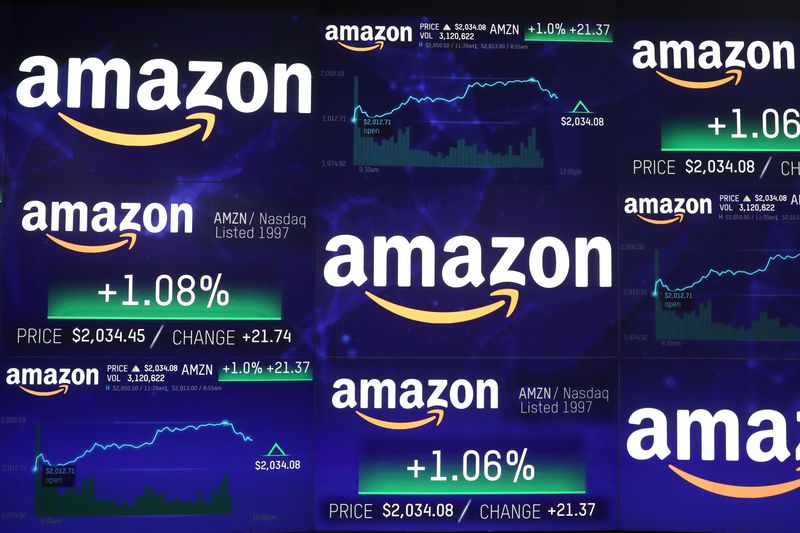
Wall Street faces a key earnings test with Alphabet, Amazon, Meta and Microsoft set to report, carrying more than $750 billion in combined options-implied market cap movement. Analysts are broadly constructive, but concerns center on whether the companies will lift already massive AI capex plans and pressure returns on investment. Sentiment is cautious as tech stocks remain vulnerable to any downside surprise, even though Nasdaq futures are up 0.4% ahead of the open.
The immediate market setup is less about the headline earnings beats and more about whether capex guidance forces a rerating of the entire AI supply chain. If the mega-caps confirm another step-up in infrastructure spend, the first-order winners are still the obvious hyperscale vendors, but the second-order losers are the software and internet names that depend on a cleaner margin-expansion story. A disappointment in one or two of the four names could also hit the semiconductor complex disproportionately, because positioning in AI hardware has become crowded enough that incremental bad news can trigger de-grossing rather than fundamental revaluation.
The asymmetry is most pronounced in MSFT versus the rest: the market is already assuming near-flawless execution, so even a merely solid print risks being treated as a growth scare if forward investment runs hotter than expected. By contrast, GOOGL and AMZN likely have more room to absorb elevated spending because investors still underwrite them as operating-leverage stories with multiple monetization paths. META sits in the middle: it can justify near-term capex intensity better than most peers if ad demand remains resilient, but the stock is vulnerable if management signals that payback is moving out beyond the next 12 months.
The contrarian view is that the market may be overpricing the idea that higher AI capex is automatically bad. In the next 2-4 quarters, the real loser may be underinvesting incumbents, not the spenders, because cloud capacity, model quality, and ad targeting improvements can create a compounding share gain that justifies the outlays. The more important risk is not absolute capex, but capex efficiency; if management teams frame spending as tied to measurable utilization or revenue conversion, the selloff in the AI stack should fade quickly.
For gold, the deeper implication is that a stronger dollar, tighter real rates, or a relief rally in risk assets could keep a lid on the metal even if structural demand remains intact. That means the 2026 target risk is less about a collapse in the macro thesis and more about prolonged opportunity cost while equities continue to absorb global liquidity. If the market keeps rewarding growth duration, gold can underperform for months despite geopolitical tail support.
AI-powered research, real-time alerts, and portfolio analytics for institutional investors.
Request DemoOverall Sentiment
mildly negative
Sentiment Score
-0.10
Ticker Sentiment
