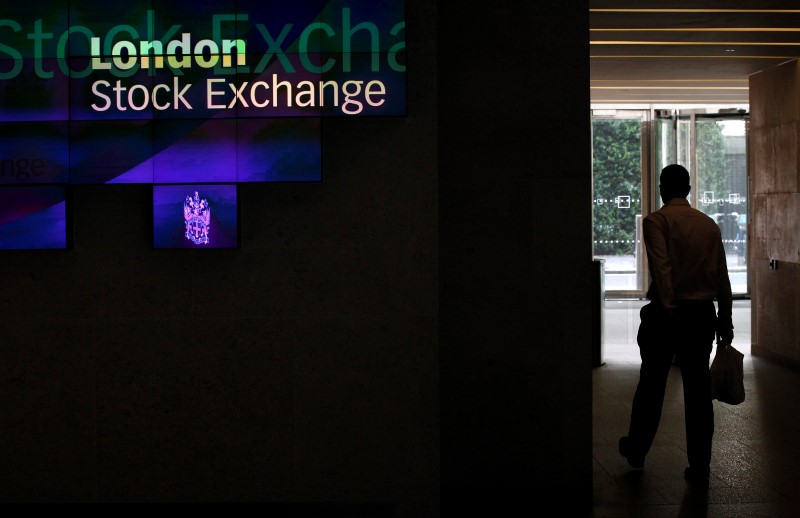
The UK100 gained 0.60% as Aerospace & Defense, Mining, and Banking led the market, while falling stocks outnumbered advancers 911 to 799. Rolls-Royce hit an all-time high, rising 2.55% to 1,393.00, but Frasers fell 4.38% and BT dropped 2.16%. Commodities were volatile, with July crude oil down 5.80% to $76.07 and August Brent down 5.01% to $79.00, while gold rose 0.29% to $4,364.22 and the dollar index slipped 0.16%.
The immediate read-through is that the market is pricing a sharp reset in geopolitical risk, and the most interesting second-order effect is not just lower oil, but a compression in the entire defense-energy inflation complex. If this de-escalation holds for even a few weeks, the bid into defense primes likely persists because investors will rotate from headline-risk hedges into balance-sheet quality and backlog visibility; however, the more cyclical winners may be the airlines, transports, and consumer discretionary names that were being pressured by fuel assumptions. The biggest loser set is not the obvious energy complex alone, but any business model where input-cost pass-through has been easier than volume growth — retailers and low-margin operators could see a short-lived margin tailwind if fuel remains suppressed.
The selloff in crude is large enough to matter for macro positioning, but I would treat it as a fast-moving event-risk move rather than a clean regime shift until the diplomatic details are known. A 5-6% daily move in oil often creates follow-through for 2-5 sessions as systematic funds de-risk commodity beta; after that, the tape usually depends on whether the market believes supply actually returns or simply the conflict premium disappears. If the market realizes the headline is a ceasefire without verifiable flows, crude can retrace half the move quickly, especially if positioning was crowded short ahead of the announcement.
The contrarian point: the real medium-term beneficiary may be not the obvious consumer names, but quality industrials and capital goods exposed to lower input costs and easier financing conditions, because cheaper energy acts like a tax cut without needing a policy response. Conversely, defense stocks may be more resilient than the oil move implies because order books are now supported by multi-year European rearmament budgets; peace headlines can hit multiples, but they rarely erase backlog. In other words, the tactical trade is energy down, but the strategic trade is selective rotation, not outright defense liquidation.
I would be cautious chasing the defense rally at new highs; if crude stabilizes lower, the better risk/reward is in relative value versus the broad market rather than directional longs in the names that have already rerated. For banks, lower inflation and oil can extend the duration of the rate-cut narrative, which is supportive if growth does not roll over, but that benefit is more gradual and likely shows up over weeks, not days.
AI-powered research, real-time alerts, and portfolio analytics for institutional investors.
Request DemoOverall Sentiment
neutral
Sentiment Score
0.10
