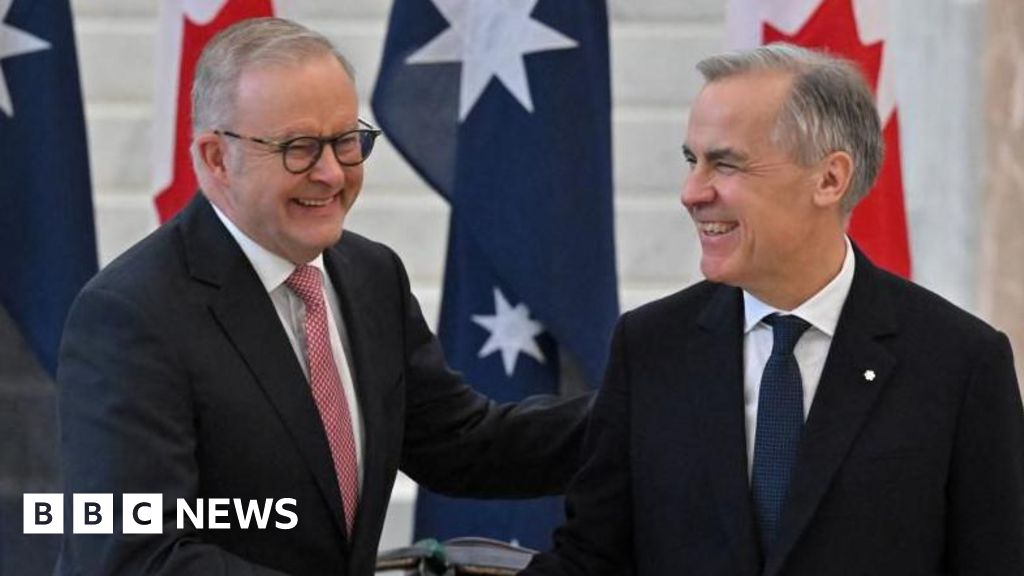
In a speech to the Australian parliament Mark Carney warned that the post-war global architecture is breaking down and urged closer Australia–Canada cooperation to bolster sovereign capabilities in critical minerals, defence and AI. The leaders announced Australia will join the G7 Critical Minerals Alliance as both countries together produce about one‑third of the world’s uranium and lithium and over 40% of iron ore, a development with potential supply‑security implications for mineral markets and related sectors. They also called for de‑escalation in the Middle East while opposing a ceasefire until Iran’s nuclear capability is curtailed; Carney recently signed multi‑billion dollar deals in India and will visit Japan next, underscoring a broader diplomatic push.
Market structure: The Australia–Canada push to secure “trusted” mineral supply chains benefits upstream miners and processors with Aussie/Canadian footprints (Albemarle ALB, Cameco CCJ, BHP BHP, Rio Tinto RIO) and defense/space contractors (Lockheed LMT, Northrop NOC). Expect a 10–20% price premium for certified ‘trusted’ supply contracts over 12–36 months and a tilt in share gains toward Western-listed producers as buyers diversify away from Chinese sources. Commodity-led inflationary pressure should put modest upward pressure on 10y yields (+10–30bps) and strengthen AUD/CAD by ~1–3% on policy-backed capital flows in the next 3–12 months, while implied vols for miner/defense names rise 20–50% around key announcements.
Risk assessment: Tail risks include a regional military escalation or reciprocal export controls (probability ~10% over 12 months) that could spike energy and insurance costs and depress flows; regulatory/permitting delays in Australia/Canada can push supply out 24–60 months. Immediate market moves are likely muted (days), policy/capex announcements matter over weeks–months, and structural supply tightening plays out over 2–5 years. Hidden dependencies: refining/cathode capacity and specialty chemical inputs (soda ash, spodumene conversion) are chokepoints that can negate raw ore volume gains.
Trade implications: Direct plays: establish modest sized, time-boxed positions — ALB (2–3% portfolio) and CCJ (1–2%) for 12–24 months to capture secured-supply premia; add a 1–2% tilt to LMT/NOC for defense/space procurement upside over 6–18 months. Use pair trades (long ALB, short SQM) to express Western vs Chilean/LatAm sovereign risk divergence; implement 9–12m call spreads on CCJ and ALB and buy 6–12m protective puts on EM/miner ETFs as tail hedges. Enter in tranches over 4–8 weeks; re-rate or trim if commodity spot prices move ±20% or if G7 alliance commits >$5bn procurement/subsidy within 90 days.
Contrarian angles: The market underestimates execution risk — new sovereign deals often spur capex that creates oversupply 36–60 months out (2008–14 precedent), so upside may be front-loaded and followed by realisable underperformance. Conversely, consensus may be underpricing the strategic premium for uranium (nuclear restarts) where supply is concentrated; small, option-backed asymmetric longs in CCJ could outperform. Unintended consequence: aggressive nationalization/procurement rules could compress free-cash-flow multiples for non-domestic miners, so cap position sizes and prefer liquid hedges.
AI-powered research, real-time alerts, and portfolio analytics for institutional investors.
Request TrialOverall Sentiment
neutral
Sentiment Score
-0.15
