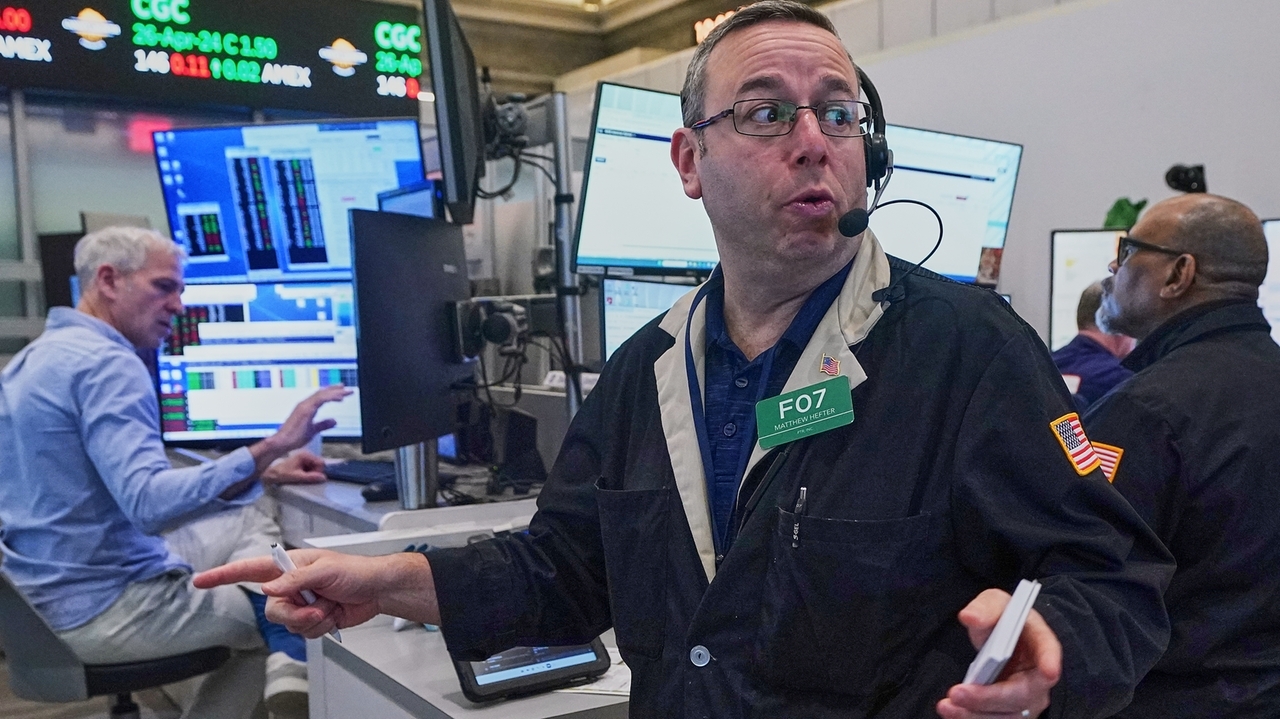
Asian equities were mixed while U.S. futures followed record closes on Wall Street, with Tokyo's Nikkei 225 up 1.4% to 60,564.18 and South Korea's Kospi up 2.1% to 6,617.94. Oil climbed more than $1 on renewed uncertainty over Iran talks, with Brent at $100.57 and U.S. crude at $95.65, while the dollar weakened slightly to 159.34 yen and the euro rose to $1.1723. Markets are also bracing for policy decisions from the Fed, ECB, BOJ and BOE this week; Intel's 23.6% surge to an all-time high underscored the AI-led equity rally.
The market is pricing a narrow risk premium: geopolitics is supportive for energy without yet forcing a broad de-risking of equities. That is the most dangerous setup, because the first-order move is obvious in oil, but the second-order effect is in inflation breakevens, rate-cut odds, and factor leadership rotation. If crude holds elevated for even 2-4 weeks, the market will start to question whether this week’s central-bank meetings can stay as dovish as priced, which is the real cross-asset transmission channel.
The more interesting part is that the rally in semis and AI-linked equities can coexist with higher oil only if growth expectations stay intact. That creates a wedge: capital is chasing secular AI winners while ignoring that higher transport and input costs eventually compress margins for broader cyclicals and consumer discretionary. In that sense, the move is more defensive than it looks—tech is being treated as insulated, but the rest of the market is quietly getting a tax.
On Intel, the jump is not just about one good print; it is a credibility reset. The market is beginning to assign value to the foundry/AI optionality rather than the legacy product cycle, which can force systematic re-rating if management sustains execution for another quarter or two. But this kind of gap-through-peak move often invites fast money participation first and then digestion, so the risk is less fundamentals failing immediately and more the stock becoming crowded before estimates fully catch up.
The contrarian read on oil is that the market may be underestimating policy flexibility. If crude spikes fast enough to threaten inflation optics, diplomatic pressure could increase quickly and cap upside before physical shortages become severe. That means the best risk/reward is not chasing outright energy beta, but structuring trades that benefit from a moderate squeeze in crude volatility and a temporary steepening in energy equities versus rate-sensitive growth.
AI-powered research, real-time alerts, and portfolio analytics for institutional investors.
Request DemoOverall Sentiment
mildly positive
Sentiment Score
0.15
Ticker Sentiment
