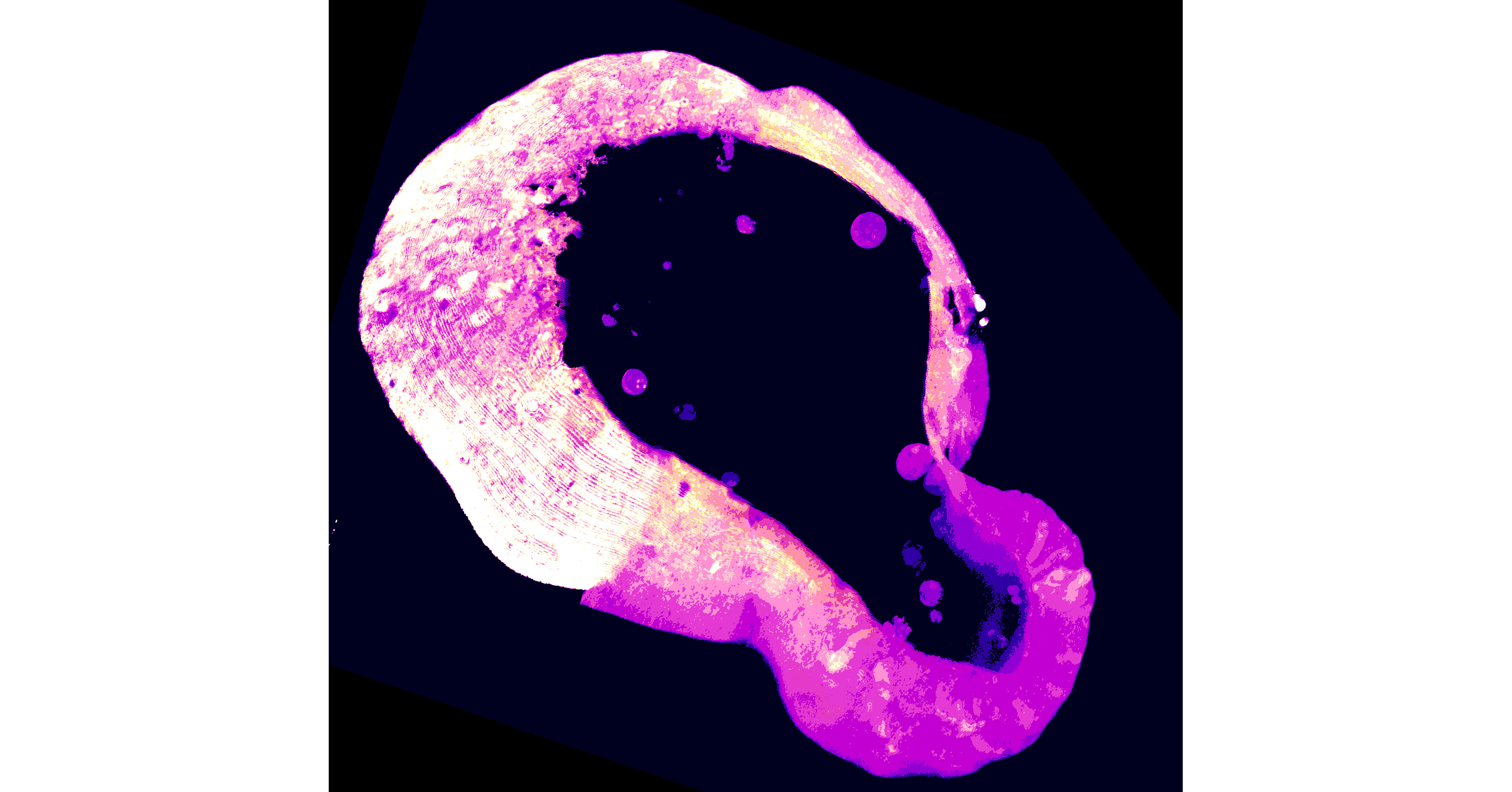
Whitehead Institute researchers report that polyamines can act as “storage lockers” for iron, buffering chemically reactive iron and preventing toxic iron overload. The study (published Aug. 14 in Cell) suggests a potential cancer strategy: combining drugs that lower polyamines with GPX4 blockers to trigger iron toxicity in cancer cells, and it offers a possible mechanism linking polyamine disruptions to early-onset Parkinson’s iron buildup.
This is better viewed as a platform-validating biology paper than a tradable event. For public markets, the only near-term implication is a modest sentiment lift for ferroptosis-adjacent oncology platforms; the revenue impact is still years away and the probability of clinical translation remains low. The market often overpays for a new mechanism before it has evidence of a usable therapeutic window.
The potential winners are not the institute’s work itself, but any listed drug developer already pursuing polyamine depletion, GPX4 inhibition, or combination cell-death strategies. That said, the more important second-order effect is negative: monotherapy narratives get weaker, because the paper implies cells can compensate through iron buffering and GPX4 dependence, making combination therapy the default and raising toxicity, trial complexity, and cash burn. In practice, that tends to favor better-capitalized oncology platforms over thinly funded preclinical names.
The main contrarian point is that investors may extrapolate too quickly from a mechanistic discovery to an investable asset class. The failure mode is straightforward: if systemic iron stress or GPX4 suppression harms normal tissue in animals, the thesis collapses and the read-through to listed biotech evaporates. Time horizon is long: 3-6 months for follow-on preclinical validation, 12-24 months for any IND-level signal, and 3+ years for clinical de-risking.
AI-powered research, real-time alerts, and portfolio analytics for institutional investors.
Overall Sentiment
mildly positive
Sentiment Score
0.15
