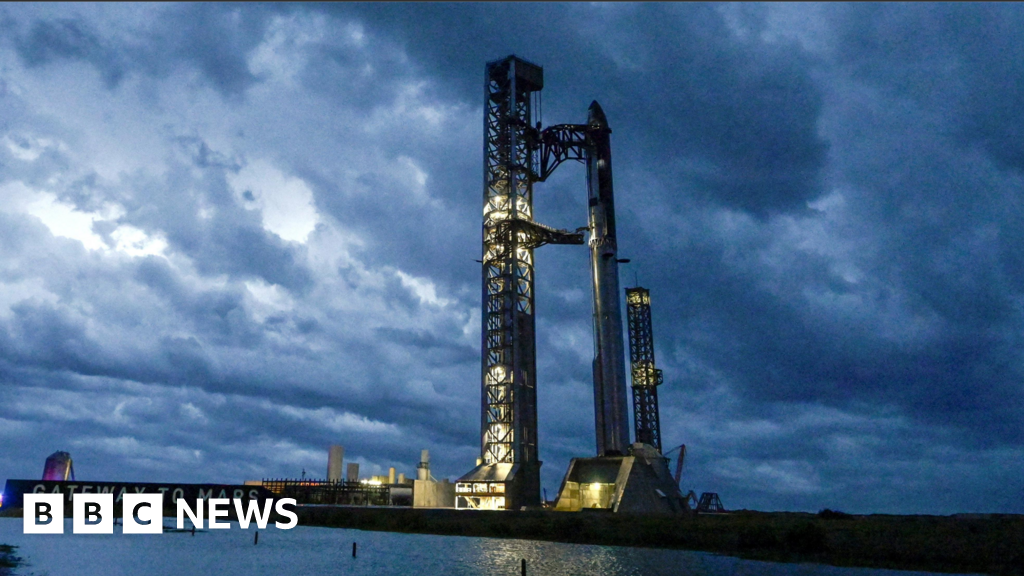
SpaceX postponed the Starship launch and plans another attempt on Friday, keeping focus on the debut of its Starship V3 rocket after months of delays. The company disclosed a planned Nasdaq IPO that could be the largest in Wall Street history, with a valuation of $1.25tn and Musk's stake potentially worth more than $600bn. Financially, SpaceX reported $18.6bn in revenue last year versus a $4.9bn net loss, and $4.7bn in Q1 sales with a $4.3bn net loss.
The immediate market read-through is not the launch slip itself; it is that SpaceX is trying to re-rate from a science project to an industrial platform right as it seeks public capital. That shifts the competitive battleground from execution perfection to cadence, reliability, and gross margin leverage, which favors suppliers with recurring content in propulsion, avionics, composites, ground systems, and launch-support software. Any credible evidence that Starship can sustain a faster test cadence would also tighten the competitive gap versus alternative launch providers by forcing them into a price-capex arms race they may not be able to fund efficiently.
For TSLA, the linkage is more indirect but still important: a SpaceX listing can pull investor attention, capital, and management narrative toward the Musk complex, which can either buoy sentiment or create a discount if investors start treating the group as a correlated bundle of moonshot optionality rather than distinct operating assets. The bigger second-order effect is on risk appetite for pre-profit, hardware-heavy AI and space names; a successful debut would likely extend the duration of the "growth at any cost" window for months, while a failed or delayed launch sequence could quickly compress multiples across that cohort.
The key downside risk is timing mismatch. IPO enthusiasm can front-run operational proof by weeks or months, but the market will eventually force a reconciliation if launch cadence, payload reliability, or loss rates do not improve quickly enough to justify the valuation. A setback in the next 1-3 launch attempts would likely hit sentiment harder than the postponement itself because it would raise the probability that the IPO price is anchored to narrative rather than demonstrable throughput.
AI-powered research, real-time alerts, and portfolio analytics for institutional investors.
Request DemoOverall Sentiment
mildly positive
Sentiment Score
0.15
Ticker Sentiment
