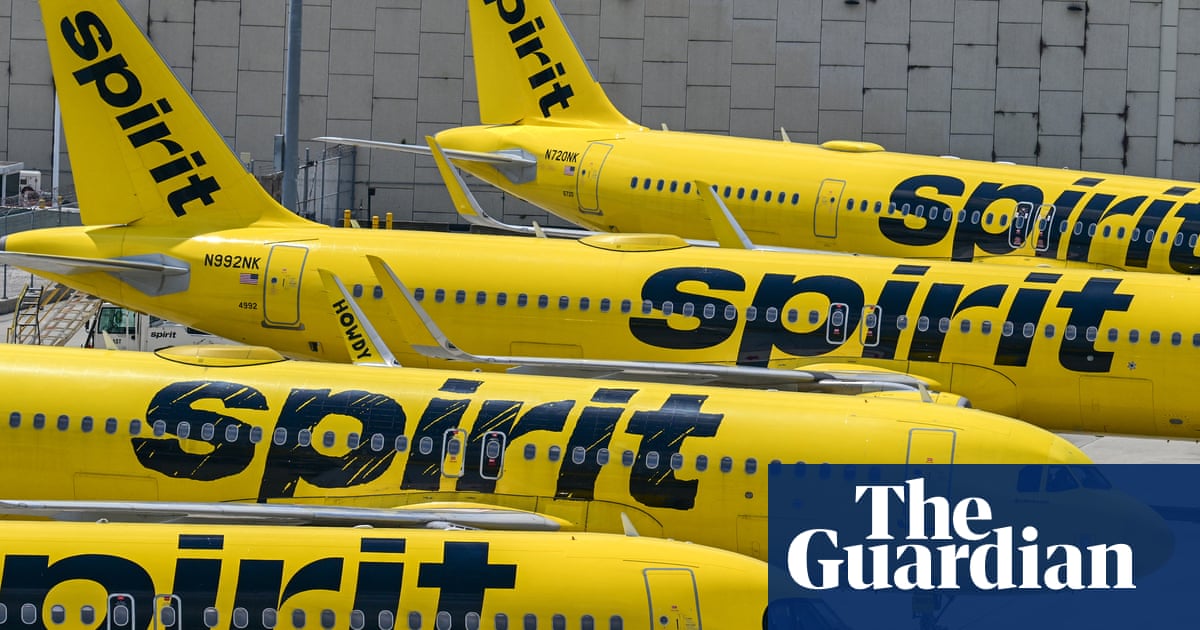
Spirit Airlines abruptly ceased operations and began an orderly wind-down after 34 years, leaving around 4,000 scheduled domestic flights through 15 May canceled and passengers stranded. The collapse followed failed rescue talks, creditor opposition to a proposed $500m bailout for a 90% government stake, and the blocked $3.8bn JetBlue sale. The shutdown is a major negative for Spirit employees, travelers, and the low-cost airline sector, with political blame now centered on the Biden administration and high fuel costs.
This is a forced supply shock in U.S. air travel, but the first-order winners are not the obvious surviving low-cost carriers; it is the network carriers with the most disciplined capacity management and the strongest fare power in leisure-heavy O&Ds. The key second-order effect is that Spirit's exit removes the marginal price setter on a meaningful slice of domestic short-haul demand, which should lift fare dispersion across the industry for several booking cycles and compress ancillary revenue bargains that consumers had been arbitraging for years.
AAL is the cleaner beneficiary than the market may expect because its network is most exposed to Spirit overlap in Sun Belt leisure markets while also having the least runway for further price competition. The risk is that the benefit arrives with a lag: revenue management systems typically reprice over weeks, not days, and the weakest demand cohorts may simply not travel rather than migrate immediately, limiting near-term load-factor upside. That said, even modest fare normalization can be accretive to unit revenue at a time when fuel and labor still cap margin recovery.
ARES deserves attention on the downside. Credit and distressed-control investors often look like rescue-capital providers, but here the outcome highlights that sponsored restructurings can be politically constrained and value-destructive when a platform has no credible stand-alone liquidity path. The broader read-through is to financing markets: airline-adjacent and highly levered consumer/transport borrowers may now face a higher cost of rescue capital because lenders will demand quicker downside control rather than extension-and-amend economics.
The contrarian take is that the market may overestimate how much of Spirit's demand is permanently transferable. Some of that traffic is not elastic to the same routes or times on legacy carriers, so the revenue upside for survivors could be muted by substitution into buses, cars, or outright trip cancellation. The biggest near-term catalyst is whether competitors explicitly hold capacity discipline into the next scheduling window; if they do, fare gains can persist for 1-2 quarters, but if they chase share aggressively, the benefit fades quickly.
AI-powered research, real-time alerts, and portfolio analytics for institutional investors.
Request DemoOverall Sentiment
extremely negative
Sentiment Score
-0.95
Ticker Sentiment
