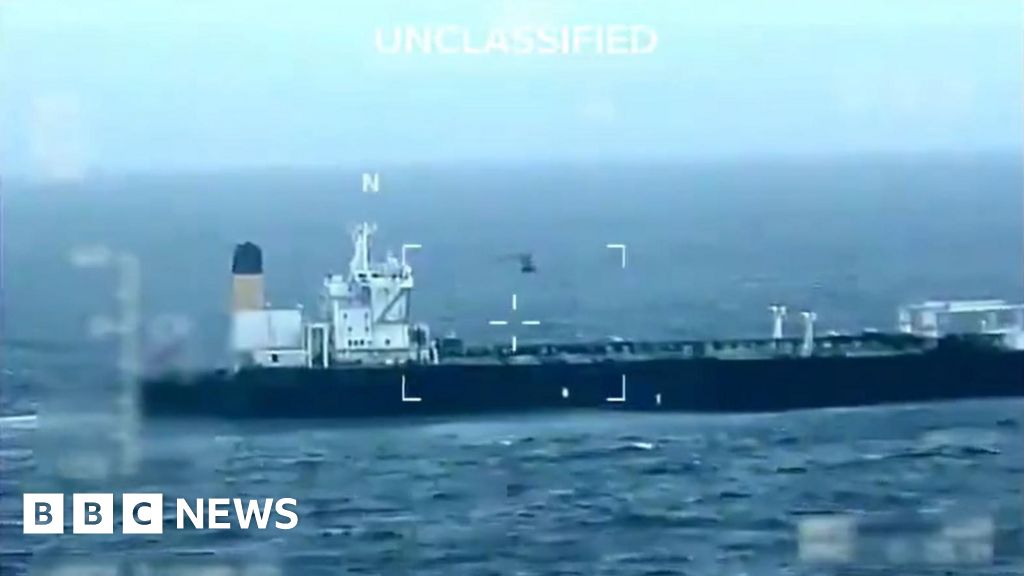
The US Coast Guard, supported by the Department of Homeland Security, boarded and seized a Panamanian‑flagged oil tanker named Centuries in international waters on Dec. 20, marking the second US seizure of an oil‑carrying vessel linked to Venezuela this month amid President Trump’s announced 'blockade' of sanctioned tankers. The move, framed by US officials as targeting illicit oil shipments that finance narco‑terrorism, has been condemned by Caracas which vows legal action at the UN; the Centuries is not on the US Treasury’s sanctions list and had previously sailed under other flags. For investors, the incident elevates geopolitical risk around Venezuelan oil flows, shipping and insurance costs and could add a modest risk premium to energy prices and EM exposure depending on further US enforcement or retaliatory measures.
Market structure: Direct winners are global oil producers and majors (XOM, CVX) if seizures sustain a premium on heavy/sour crude; direct losers are Venezuelan PDVSA, flag-of-convenience tanker owners, and ship insurers. Expect heavy/sour differentials (Maya, Arab Heavy) to widen ~$2–5/bbl over 1–3 months as buyers pause, while Brent/WTI could spike 3–6% on risk premia and rerouting costs. Credit and EM risk-off will push sovereign spreads wider and temporarily strengthen USD; USTs may rally in flight-to-safety.
Risk assessment: Tail risks include a maritime escalation (5–10% chance next 3 months) that could add >$10/bbl and disrupt Caribbean shipping lanes, or legal backlash that limits US seizures (higher probability, 15–25%). Hidden dependencies: effective impact hinges on insurance/P&I club responses and clandestine reflagging/ship-to-ship trades which can neutralize supply loss within weeks. Catalysts to watch in 30–90 days: Treasury sanction lists, P&I guidance, and congressional/military actions.
Trade implications: Tactical plays favor overweight energy producers and tactical Brent call exposure while shorting tanker-equities and owners of VLCCs. Use option structures to cap downside (3-month BNO call spreads). Rotate modestly away from Latin America EM local debt into global IG or defensive sectors; expect volatility window 2–8 weeks. Entry: act within 7–21 days; exit or trim on either a 50% realized payoff or resolution (policy reversal) within 90 days.
Contrarian angles: Consensus assumes permanent removal of Venezuelan barrels; history (e.g., Iranian tanker incidents) shows re-routing and covert sales can restore flows inside 1–3 months, making a long-in-energy-for-too-long a risk. Shipping names may be oversold if legal clarity arrives; conversely, insurers could raise premiums +10–30% and lift their earnings — an underappreciated beneficiary. The biggest mispricing is between short-duration geopolitical volatility priced into oil and longer-term reabsorption of supply into Asia via intermediaries.
AI-powered research, real-time alerts, and portfolio analytics for institutional investors.
Request DemoOverall Sentiment
moderately negative
Sentiment Score
-0.45
