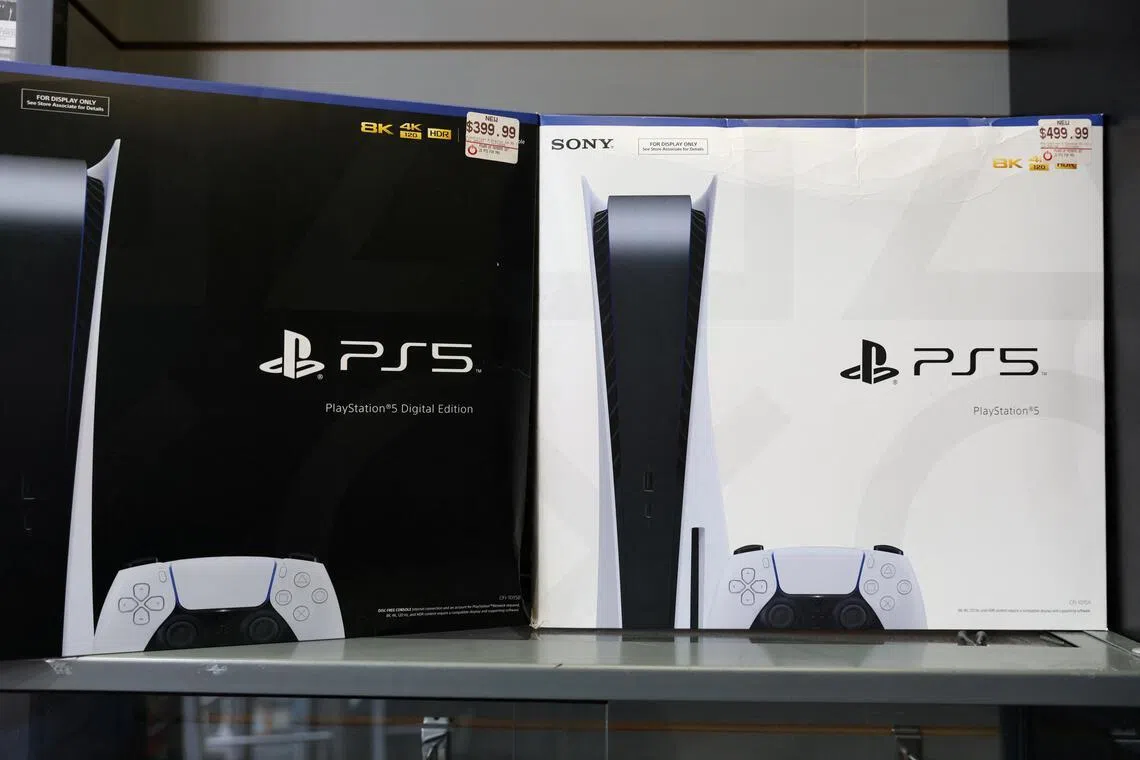
Sony will raise recommended PS5 prices in Singapore by about S$50 to S$100 on May 1, with the standard PS5 at S$849, the digital edition at S$764, and the PS5 Pro at S$1,167. The increase extends to other South-east Asian markets and follows prior price hikes in the US, UK, Europe and Japan, reflecting ongoing global cost pressures. The move is negative for consumer demand but is unlikely to be a major market-moving event for Sony shares.
This is less a one-off price reset than a signal that Sony is trying to re-anchor console economics after the peak demand era. In South-east Asia, where the console is already a discretionary upgrade rather than a mass-market necessity, a mid-single-digit-to-low-double-digit MSRP increase risks pushing more volume into gray-market and promotional channels, compressing official channel sell-through and weakening retailer inventory turns over the next 1-2 quarters. The near-term winner is likely distributors and resellers with old inventory, while Sony’s own mix shifts toward lower unit velocity but slightly better nominal hardware margin.
The second-order issue is ecosystem elasticity: hardware is the loss leader, but price-sensitive consumers who delay or skip a PS5 purchase also delay first-party software attach and accessory pull-through. That matters more in emerging markets because it slows the conversion of a one-time console sale into a recurring digital revenue stream, making the lifetime-value math less forgiving. If unit declines persist into the holiday cycle, the market will start questioning whether Sony can sustain platform growth without discounting, particularly against an install base that is now mature and replacement-driven.
The market is probably underestimating how much this pressures the broader gaming supply chain, especially contract manufacturers and peripheral vendors that depend on hardware momentum. A persistent price hike also creates a relative opportunity for competing gaming ecosystems with more flexible entry points, including PC and handheld alternatives, because the all-in cost of ownership moves further away from the impulse-buy threshold. Over 3-6 months, the key catalyst is whether Sony pairs this with a content/feature cycle that restores willingness to pay; without that, the action looks defensive rather than value-accretive.
Contrarianly, the move may be only mildly negative for SONY stock if management is prioritizing margin discipline over vanity units. In a mature console cycle, sacrificing some low-end demand to protect profitability can be rational, especially if currency, logistics, or component costs remain sticky. The question is not whether consumers dislike the hike; it is whether the reduction in units is small enough that software and services still offset the hardware drag.
AI-powered research, real-time alerts, and portfolio analytics for institutional investors.
Request DemoOverall Sentiment
mildly negative
Sentiment Score
-0.25
Ticker Sentiment
