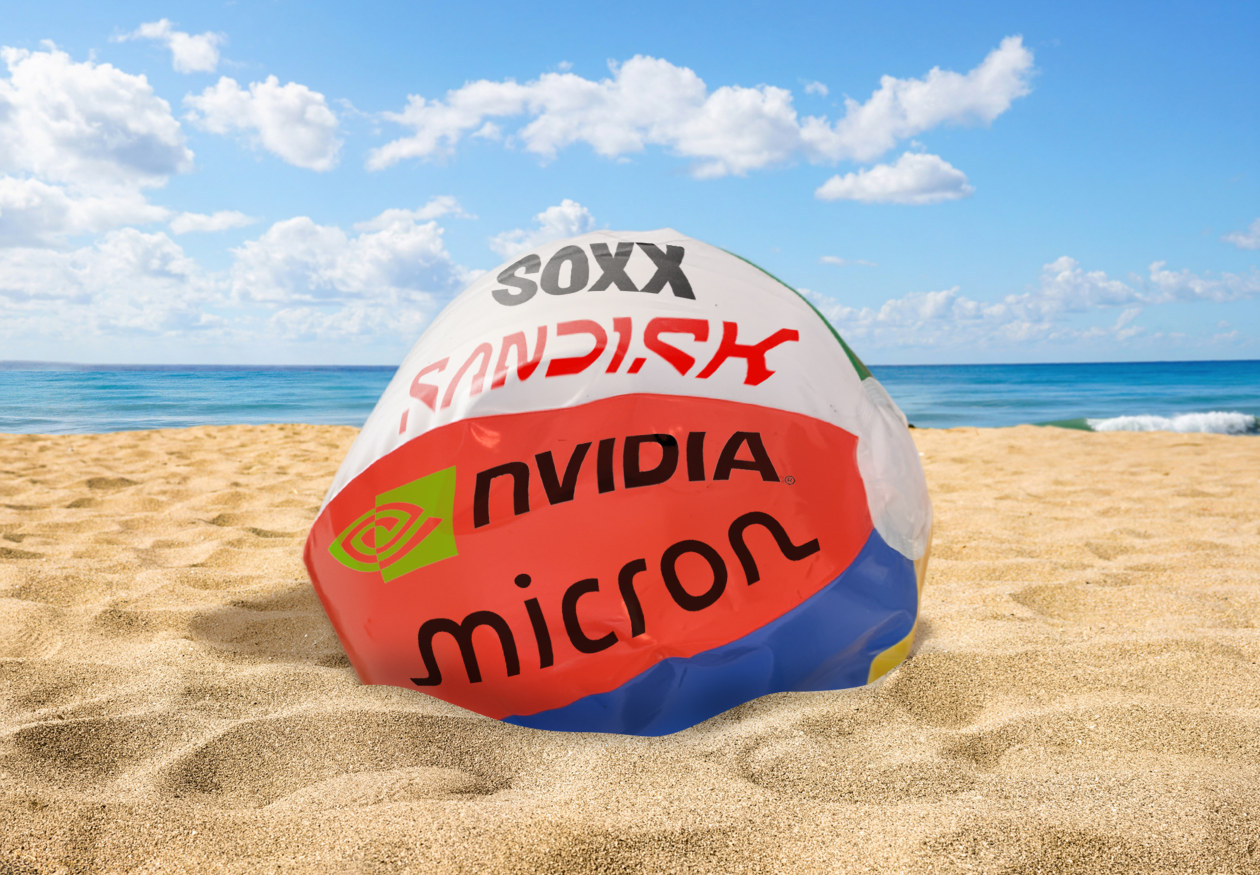
The VIX surged 13% to its highest level in over two weeks as a rout in global semiconductor stocks dragged the broader market lower. The S&P 500 fell 1.2% and the Nasdaq composite dropped 1.8%, signaling a clear risk-off move in tech and growth shares. Oil’s retreat to prewar levels and the Fed’s decision to hold rates steady did not offset the selloff.
The key second-order issue is not simply “tech down,” but that a crowded growth/AI tape is finally being repriced through the lens of duration risk and dealer positioning. When semis break first, it usually reflects forced de-risking in the highest-beta, highest-owned parts of the market, which can spill into the broader Nasdaq even if macro data remain benign. That makes the next leg less about fundamentals and more about whether systematic funds and vol-targeting vehicles have to cut exposure over the next several sessions.
Near term, the main catalyst is positioning, not earnings. A modest VIX move can trigger mechanical hedging demand if it persists for 3-5 trading days, especially after a multi-week grind higher in growth names; that can create an air pocket before value or defensives truly attract incremental capital. The market is also vulnerable if rates volatility re-accelerates, because semis are the cleanest proxy for AI capex expectations and their weakness can compress the entire “future growth” multiple stack.
The contrarian read is that this could be a healthy reset rather than the start of a regime change. If the selloff is confined to the most extended AI beneficiaries while breadth stays intact, it may simply unwind crowded long exposure and improve entry points for higher-quality megacap compounders. But if credit spreads and small-cap breadth fail to stabilize within a week, then this moves from an AI-specific de-rating into a broader risk-off de-grossing event.
For now, the risk/reward favors trading the dislocation rather than calling a top. The best setup is to fade the weakest semis on failed rebounds while keeping hedges tight, because the first bounce often comes from short covering rather than durable demand.
AI-powered research, real-time alerts, and portfolio analytics for institutional investors.
Overall Sentiment
moderately negative
Sentiment Score
-0.45
Ticker Sentiment
