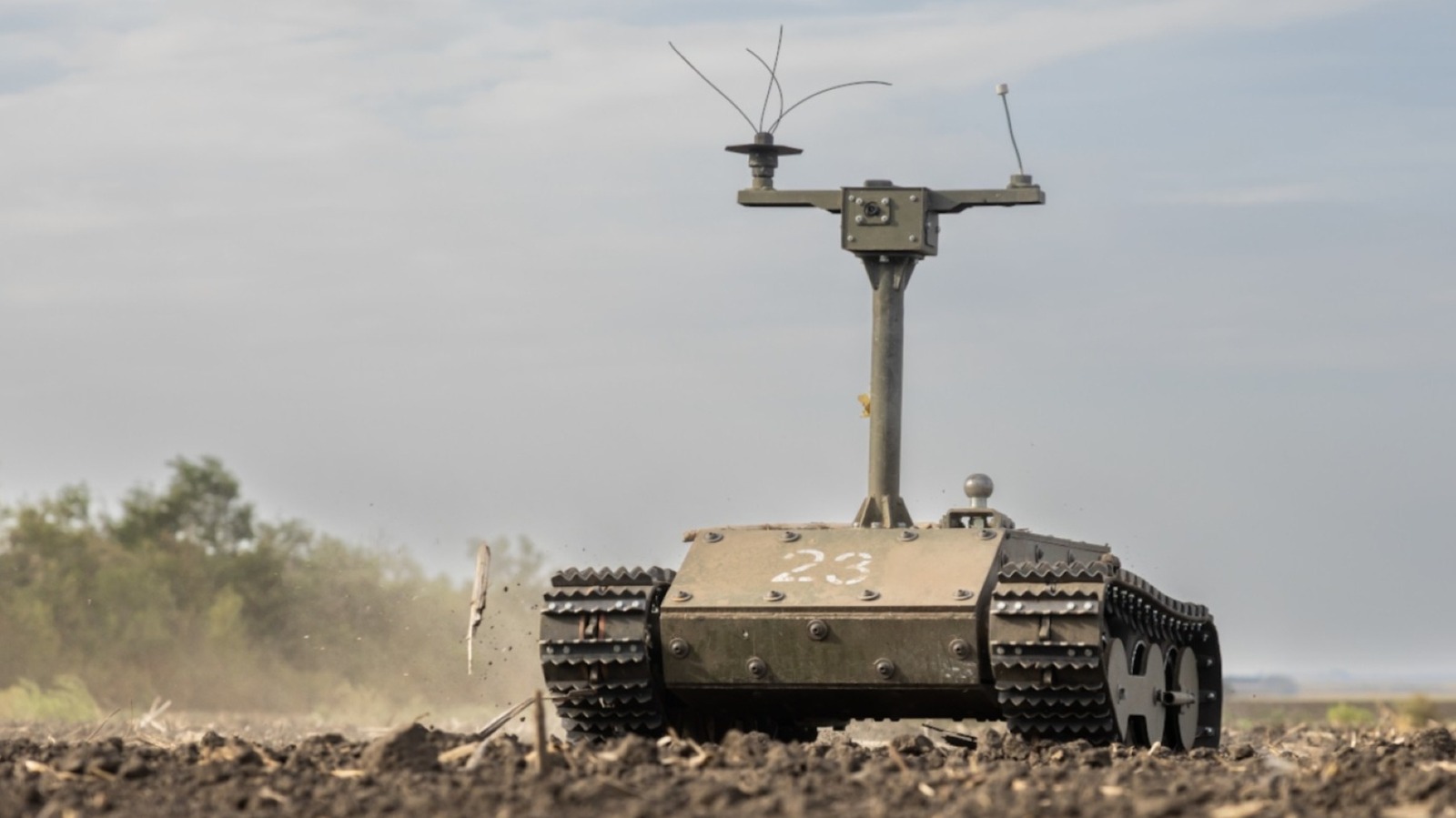
Ukraine has rapidly expanded use of unmanned ground vehicles (UGVs) for resupply, casualty evacuation and assault, with brigade-level stocks growing from a few units in 2023 to systems capable of delivering up to 370 tons of equipment in a single month; the Netherlands funded an order of 150 additional Estonian THeMIS units in October 2025 and commercially built UGVs have been acquired for roughly $22,000 each via state and civilian funding. Broad adoption and development by Russia, China, NATO members and U.S. services signal sustained procurement and supply-chain demand for robotics, sensors and countermeasures, while battlefield performance and electronic-warfare resilience will determine near-term operational and procurement winners in the defense sector.
Market Structure: UGV proliferation favors systems integrators, AI/compute chipmakers, sensor/battery suppliers and EMS manufacturers rather than single-platform OEMs. Modular, low-cost platforms ($20k reported) compress hardware margins but shift pricing power to software, autonomy stacks and sustainment contracts — expect large primes (integrators) to capture 30–50% of program-level revenue while component suppliers take volume-driven share. Demand signal: NATO/EU/US procurement moving from dozens to low-thousands of units annually over 1–3 years, implying durable multiyear revenues for suppliers of compute, comms and batteries.
Risk Assessment: Key tail risks are export controls or export bans, rapid counter-drone EW breakthroughs rendering fleets obsolete, and supply-chain shocks in semiconductors/batteries; any could wipe 30–60% of near-term upside for equity plays. Immediate market impact is muted (days); expect contract-driven stock re-ratings in 3–12 months and structural defense budget shifts over 2–5 years. Hidden dependencies include GPS/comm links, rare-earths and civilian crowdfunding for front-line buys; catalysts: NATO/EU procurement announcements, US DoD awards, and battlefield proof-of-concept videos.
Trade Implications: Favor large-cap defense integrators for contract capture, plus select semiconductor/AI exposure for autonomy compute. Use ETFs for broad exposure and protect with short-dated puts; employ capped call spreads to limit premium bleed while keeping upside. Enter positions on confirmed RFP releases or within 30–90 days of procurement cycle starts; aim to realize gains on 6–18 month windows tied to contract awards.
Contrarian Angles: Consensus will overweight big primes; markets underprice specialist suppliers (Li-ion battery makers, precision LIDAR/radar vendors, EMS firms) which can grow revenue 2–5x from small contract wins. Adoption may also dilute ASPs as low-cost UGVs scale — winners will be software/IP owners, not necessarily the cheapest hardware maker. Historical parallel: UAVs post-2010 where niche sensor/software firms were acquired at premiums years after initial platform adoption.
AI-powered research, real-time alerts, and portfolio analytics for institutional investors.
Request DemoOverall Sentiment
neutral
Sentiment Score
0.05
