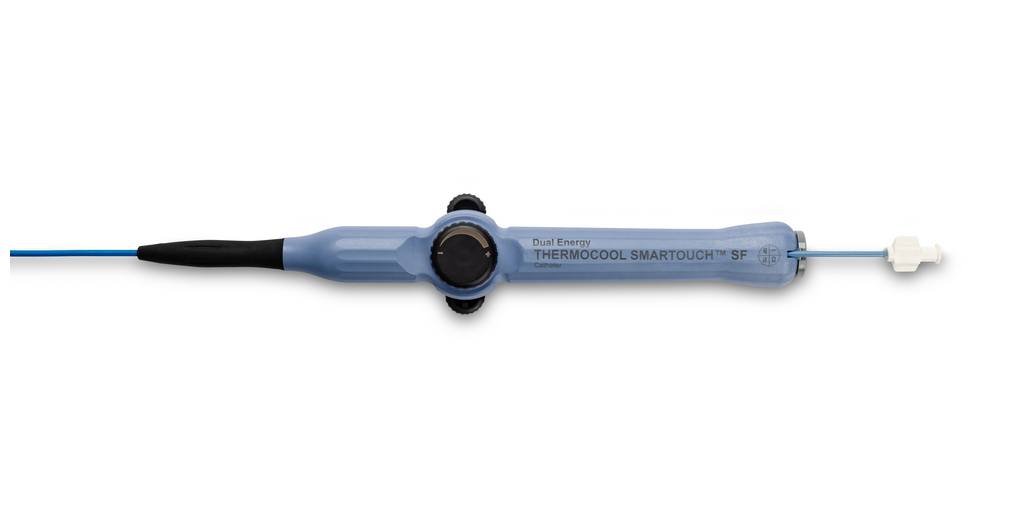
Johnson & Johnson announced FDA approval for its Dual Energy THERMOCOOL SMARTTOUCH SF Platform, allowing electrophysiologists to deliver both radiofrequency (RF) and pulsed field (PF) energy via a single catheter. The platform is integrated with the CARTO mapping ecosystem and J&J expects first U.S. procedures to begin this summer as it initiates a phased commercial rollout. The approval follows prior European introduction and is framed as further momentum in its MedTech innovation pipeline.
This is more about franchise defense than an immediate earnings step-up. The real economic value is the workflow lock-in: tying dual-energy ablation to the CARTO ecosystem raises switching costs for hospitals that already standardized on JNJ mapping, which should help JNJ defend share in a market where clinical preference can shift quickly after one good product cycle.
The second-order loser is the standalone pulsed-field ablation story. If an incumbent can offer a “good enough” PF option inside an installed base, it narrows the differentiation window for pure-play competitors and makes procurement more bundle-driven; that tends to compress pricing power across the category. I would also expect some displacement pressure on smaller mapping/navigation vendors if large IDNs consolidate around fewer integrated vendors.
Near term, this is a sentiment catalyst, not a major P&L driver: first U.S. cases this summer matter for credibility, but meaningful revenue proof likely takes 2-4 quarters of utilization data and console attachment. The main falsifier is slower-than-expected physician conversion or evidence that pure-PF systems deliver simpler workflows with better throughput, which would make the dual-energy pitch feel like complexity rather than optionality. The overhang for JNJ is that medtech investors may already assume a steady innovation cadence; they will need procedure volume, not press-release velocity, to re-rate the segment.
Contrarian view: the market may underappreciate how much this is a defensive moat builder for JNJ rather than a breakthrough growth driver. If adoption is steady, the biggest benefit is reduced churn in electrophysiology accounts and a longer runway for installed-base monetization, not a step-change in growth. If adoption disappoints, the stock impact should be limited because the approval does not appear to move the consolidated JNJ thesis materially.
AI-powered research, real-time alerts, and portfolio analytics for institutional investors.
Request DemoOverall Sentiment
moderately positive
Sentiment Score
0.35
Ticker Sentiment
