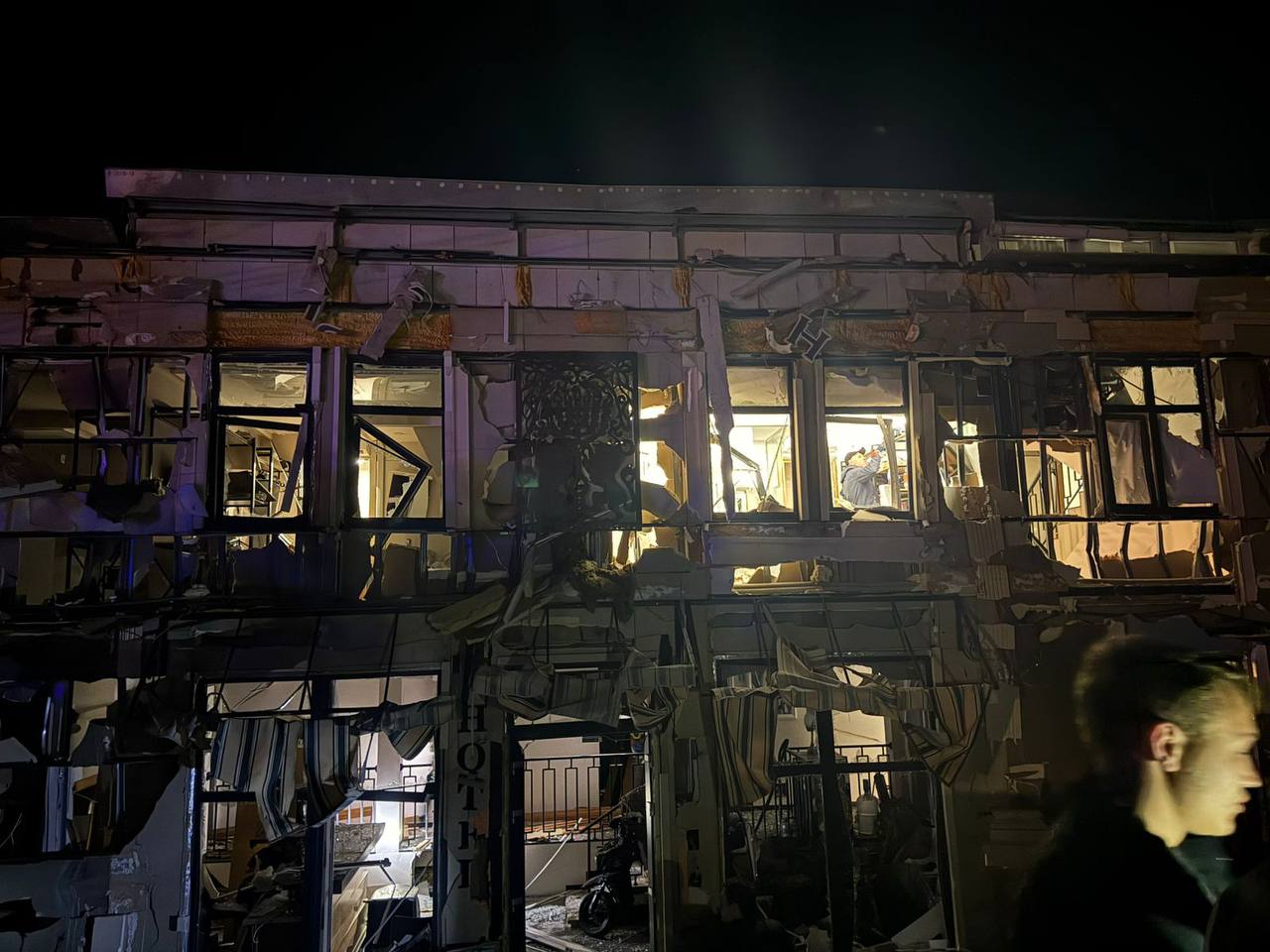
Russian drone strikes on Odesa injured 14 people, including two children, after hitting residential buildings, a hotel, and other infrastructure overnight on April 27. Local officials also reported fires in several districts and damage to warehouses and cars, though the full extent of destruction was not immediately clear. The attack adds to ongoing wartime risk for Ukrainian civilian infrastructure and follows another major aerial strike on Ukraine just one day earlier.
The immediate market read is not about any single attack, but about the growing probability of a sustained escalation pattern that forces Ukraine to spend more interceptors and more emergency repair capital to defend fixed assets. That shifts the economic burden from Russia’s relatively cheap drones to Ukraine’s far more expensive air-defense inventory and municipal reconstruction budgets, which is a slow-burn negative for any recovery-linked exposure and a quiet positive for defense supply chains tied to interceptors, radar, and base-hardening.
The second-order effect is on Black Sea logistics risk premia. Even when port operations continue, repeated strikes near a key maritime node raise insurance, trucking, warehousing, and security costs, which can compress margins for exporters, importers, and regional operators without showing up as an outright shutdown. The tradeable implication is that the pain concentrates in assets with high local property exposure or dependence on stable civilian infrastructure, while beneficiaries are names selling consumables to air defense and reconstruction ecosystems.
The most important time horizon is weeks, not days: one strike alone is noise, but a cluster of attacks on the same city tends to trigger a nonlinear response in insurance pricing, tenant behavior, and local capex plans. Over months, this can also pull forward Western funding for defensive systems and reconstruction contractors, making the conflict marginally more supportive for select aerospace/defense platforms even as it remains clearly negative for regional real estate sentiment.
Consensus is likely underestimating the persistence of “war friction” versus headline destruction. The market often prices civilian attacks as purely humanitarian events, but the real investable variable is balance-sheet strain: every repeat strike raises replacement costs, asset downtime, and working-capital needs. That makes the durable loser set broader than damaged buildings; it includes any business model that depends on predictable urban occupancy, logistics throughput, or cheap insurance in southern Ukraine and adjacent Black Sea corridors.
AI-powered research, real-time alerts, and portfolio analytics for institutional investors.
Request DemoOverall Sentiment
strongly negative
Sentiment Score
-0.78
