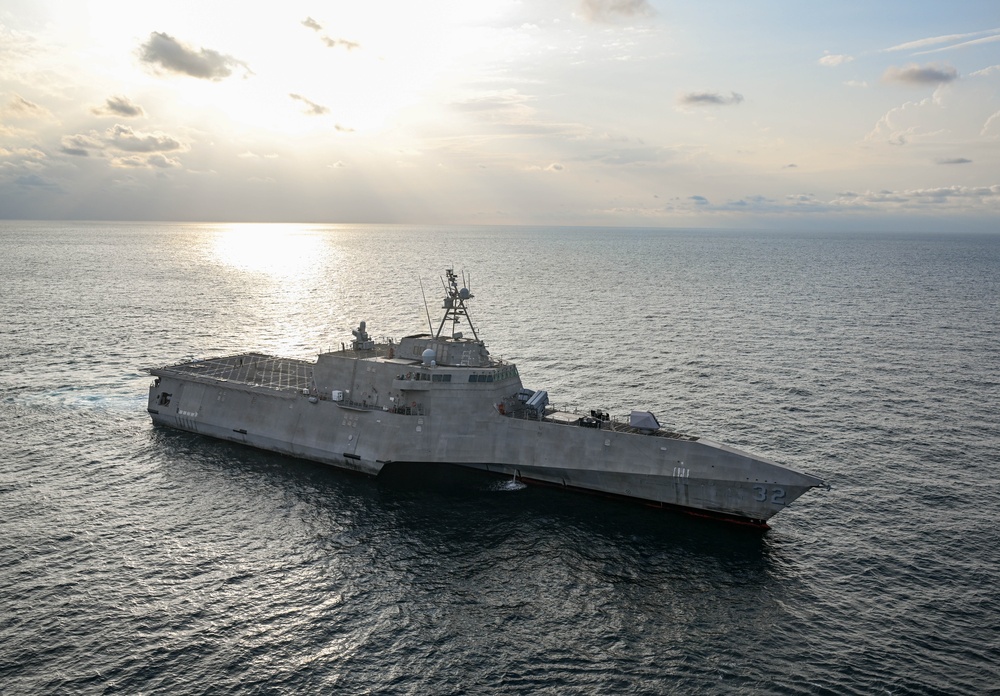
On Dec. 16, U.S. Naval Forces Central Command (NAVCENT/C5F) successfully launched a Low-cost Unmanned Combat Attack System (LUCAS) one-way attack drone from the Independence-class littoral combat ship USS Santa Barbara in the Arabian Gulf—the first shipboard launch of this type by U.S. forces. The launch, executed by Task Force 59 as part of the Task Force Scorpion Strike squadron, demonstrates extended-range unmanned strike capabilities and multiple launch options (catapult, rocket-assisted, mobile/vehicle systems), a development that should be monitored for implications on defense procurement, regional maritime deterrence and related defense-equipment suppliers.
Market structure: The USS Santa Barbara LUCAS launch crystallizes demand for expendable, low-cost loitering munitions and naval-launched UAS — direct winners are unmanned-specialists (small caps) and prime contractors that can integrate these systems (NOC, LMT, RTX). Pricing power will shift toward firms that can deliver systems at <$100k–$250k unit cost and provide sustainment; expect higher bid prices for turnkey sea-launch kits and integration services over 6–24 months. Cross-asset: higher geopolitics risk skews flows into defense equities and USD; oil (WTI) has asymmetric upside on escalations (10–30% spikes possible in days), pressuring EM FX and raising Treasury yields modestly if conflict risk persists.
Risk assessment: Tail risks include rapid regional escalation disrupting supply chains (semiconductors, RF components), retaliatory cyberattacks, and export-control freezes that could strand inventory — low probability but >5% impact to earnings for small vendors. Timeline: immediate (days) — sentiment-driven spikes in defense names; short-term (1–6 months) — contract awards and prototype failures; long-term (1–3 years) — platform standardization and larger DoD programmatics. Hidden dependency: success depends on logistics (deck handling, swarm C2), rules-of-engagement/legal pushback, and maintenance costs that could compress margins.
Trade implications: Direct plays: overweight modular unmanned suppliers and systems integrators; use call spreads to limit premium decay. Pair trades: long small-cap unmanned exposure vs short legacy ship-equipment suppliers with elongated build cycles. Options: buy 6–12 month call spreads on primes to capture re-rating while allocating a small tactical allocation to short-dated oil calls as geopolitical hedges. Entry: initiate within 2–6 weeks ahead of FY procurement decisions, target 15–35% nominal upside, cut losses at 10–20%.
Contrarian angles: Consensus may overstate rapid scaling — historical drone adoption (Predator era) took 3–7 years to mature; operational countermeasures (EW, decoys) can blunt value and shorten hardware lifecycles. Small-cap valuations may already price in fast-tracked contracts; avoid paying >8x EV/EBITDA without visible backlog. Unintended consequence: rapid fielding may trigger stricter export controls and Congressional oversight that slow commercial international sales, capping upside.
AI-powered research, real-time alerts, and portfolio analytics for institutional investors.
Request DemoOverall Sentiment
mildly positive
Sentiment Score
0.25
