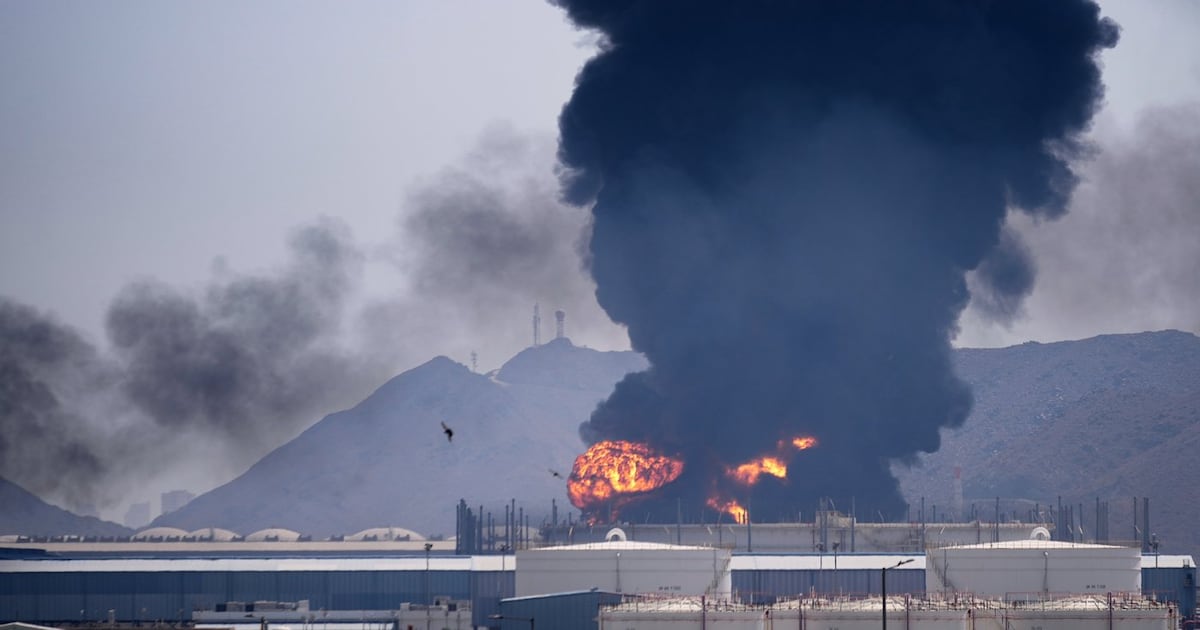
2,500 additional U.S. Marines are being deployed as the Iran conflict enters its third week, marking a clear U.S. military escalation. Expect risk-off market behavior: potential upward pressure on oil and gas prices, safe-haven flows into gold and sovereign bonds, and higher regional shipping/insurance premia. Monitor oil benchmarks, regional supply disruption indicators, and asset flows for near-term volatility.
The immediate market transmission will be through risk premia — energy, marine insurance and freight rates, and defence-equipment inventories — rather than an instant structural oil shortage. If shipping through the Gulf is even intermittently disrupted, expect spot crude differentials to swing 5–15% within 1–4 weeks and tanker/charter rates to reprice higher by 20–60% in the short run as trade reroutes and vessels wait for escorts.
Defense contractors are the obvious first-order beneficiaries, but the more durable gains come from replenishment cycles: munitions, logistics support, and spare-part orders can tighten delivery lead times and push incremental margins up for suppliers with domestic US manufacturing capacity within 3–9 months. Conversely, commercial aviation, cruise lines and regional ports face immediate cash-flow pressure from cancellations and higher fuel/insurance costs; their pain will be front-loaded (days–weeks) and compound into consumer demand softness over the next 1–3 quarters.
Key catalysts to watch: (1) any attacks on tankers or oil infrastructure which would force flows offline (weeks); (2) confirmed US/coalition strikes or significant Iranian retaliatory measures (days–weeks) that broaden the theater; (3) diplomatic de‑escalation, SPR releases or a Saudi supply response which can erase risk premia quickly (1–8 weeks). Position sizing should reflect a binary, path‑dependent outcome — large instantaneous moves are possible, but reversal can be fast once shipping lanes are secured or spare capacity is deployed.
AI-powered research, real-time alerts, and portfolio analytics for institutional investors.
Request DemoOverall Sentiment
strongly negative
Sentiment Score
-0.70
