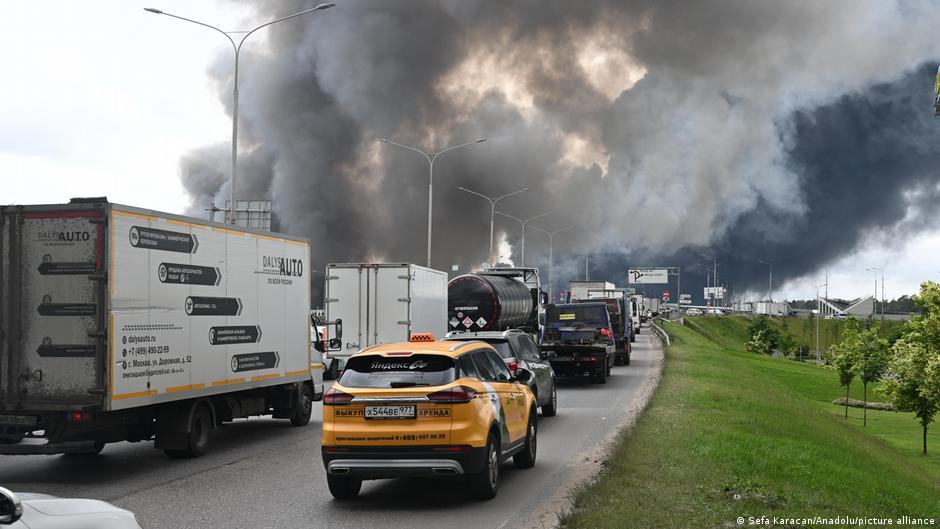
Ukrainian drones reportedly penetrated Moscow’s air defenses on June 18, hitting a major refinery that supplies 40% of the region’s fuel and briefly halting production for several days. The article argues Russia’s air defense network is increasingly patchwork due to redeployments, system shortages, and the challenge of countering low-signature composite drones, though Russian analysts say over 90% of UAVs were still intercepted. The attacks are framed as political pressure ahead of September State Duma elections rather than a decisive military shift.
The key investment implication is not that Russian air defenses are collapsing, but that they are becoming increasingly expensive to operate relative to the threat. That shifts the war into a cost-exchange dynamic where cheap drones force Russia to spend scarce interceptors, manpower, and logistics on point defense, creating a gradual bleed in readiness that is more important than any single strike. For markets, the second-order effect is a higher probability of intermittent disruption to Russian fuel processing and transport, which can widen regional product spreads even if headline crude supply remains largely intact.
The most actionable read-through is to Russian domestic logistics and energy infrastructure, not global energy prices. Repeated strikes on urban or refinery-adjacent assets raise the odds of localized diesel/gasoline tightness, forced rerouting, and higher security capex, while sanctions pressure replacement parts and air-defense inventory. Over a 3-6 month horizon, this can modestly support refined-product export scarcity from Russia, but the more immediate effect is operational friction and uncertainty premium rather than a durable crude shock.
The contrarian point is that Western investors may be overweighting the visual drama of the attacks and underweighting Russia's ability to absorb them politically. If the strike pattern remains episodic, Moscow can frame it as evidence of resilience while continuing to prioritize offensive munitions over homeland defense, which means the system may degrade only slowly. The real catalyst to watch is not the number of drones, but evidence of sustained damage to refinery throughput, airport operations, or air-defense redeployment that meaningfully changes civilian perception ahead of domestic political milestones.
AI-powered research, real-time alerts, and portfolio analytics for institutional investors.
Request DemoOverall Sentiment
mildly negative
Sentiment Score
-0.20
