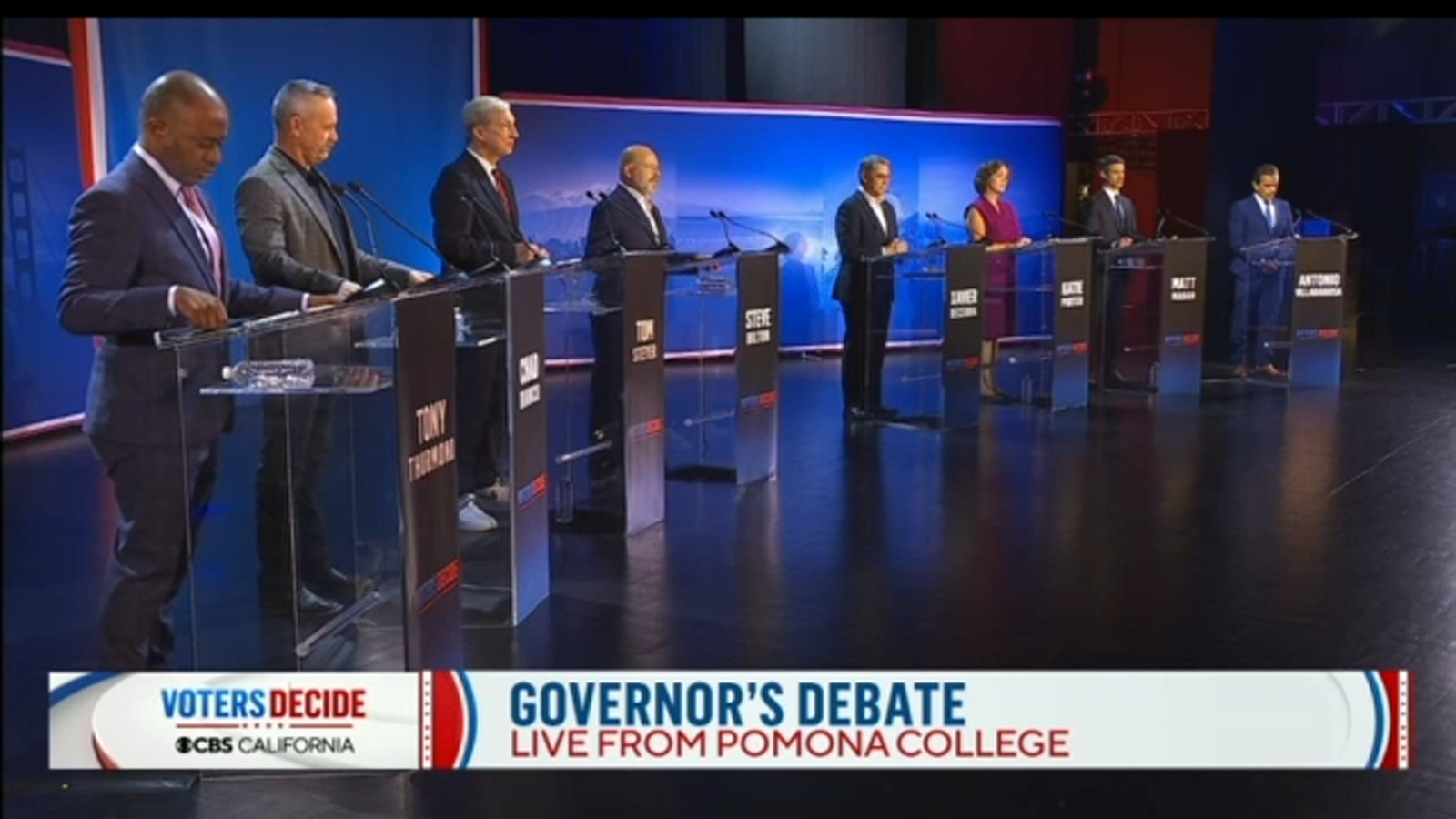
California’s gubernatorial race remains highly competitive ahead of the June 2 primary, with all eight candidates debating housing, gas taxes, and the cost of living. Xavier Becerra, Steve Hilton, Tom Steyer, Katie Porter, Tony Thurmond, Antonio Villaraigosa, Matt Mahan, and Chad Bianco all traded attacks, but no breakout moment emerged. About 25% of voters remain undecided, and only the top two vote-getters advance to November.
The debate matters less for persuasion than for ballot-flow volatility. In a crowded top-two format with a large undecided block, the immediate winner is whoever can convert name recognition into late deciders before mail voting hardens preferences; that favors candidates with higher baseline media share and sharper ideological contrast, not necessarily the most policy-detailed platform. The market implication is that the race is likely to remain a low-conviction event until turnout data start showing which lane—anti-establishment, housing reform, or public-safety/fiscal restraint—is capturing casual voters.
The second-order issue is policy signposting rather than policy enactment. Housing rhetoric points to more aggressive entitlement-style down payment or first-time buyer programs, but the binding constraint in California is permitting and local zoning, so any near-term legislative delta is more likely to be modestly pro-developer than truly demand-boosting. That means the most levered public-market exposure is not homebuilders broadly, but intermediaries tied to transaction volume, housing affordability stress, and refinancing/turnover activity; if voters coalesce around cost-of-living, expect pressure on the state to favor incremental tax relief and energy-cost relief over new spending.
Energy and gas-tax rhetoric is the cleaner tradable signal. A credible suspension/reform path would be mildly negative for California-specific fuel retail margins but more important for consumer discretionary spending at the margin, with a larger benefit to lower-income and inland households where fuel is a bigger share of weekly outlays. The contrarian risk is that this becomes a symbolic campaign promise with low legislative odds, so the right setup is to own optionality on any post-primary policy shock rather than express a large directional view now.
The hidden catalyst is the top-two cutoff: if one Democrat consolidates the center-left and another collapses, the race could reprice quickly in a 2-3 week window after ballot returns begin. That creates a short-duration event window where debate spikes can move polling, but the durability of those moves depends on whether mail ballots lock in before the next round of earned media. In short, this is a late-stage narrative market with limited conviction until turnout and ballot-return data validate the debate winner.
AI-powered research, real-time alerts, and portfolio analytics for institutional investors.
Request DemoOverall Sentiment
neutral
Sentiment Score
-0.05
