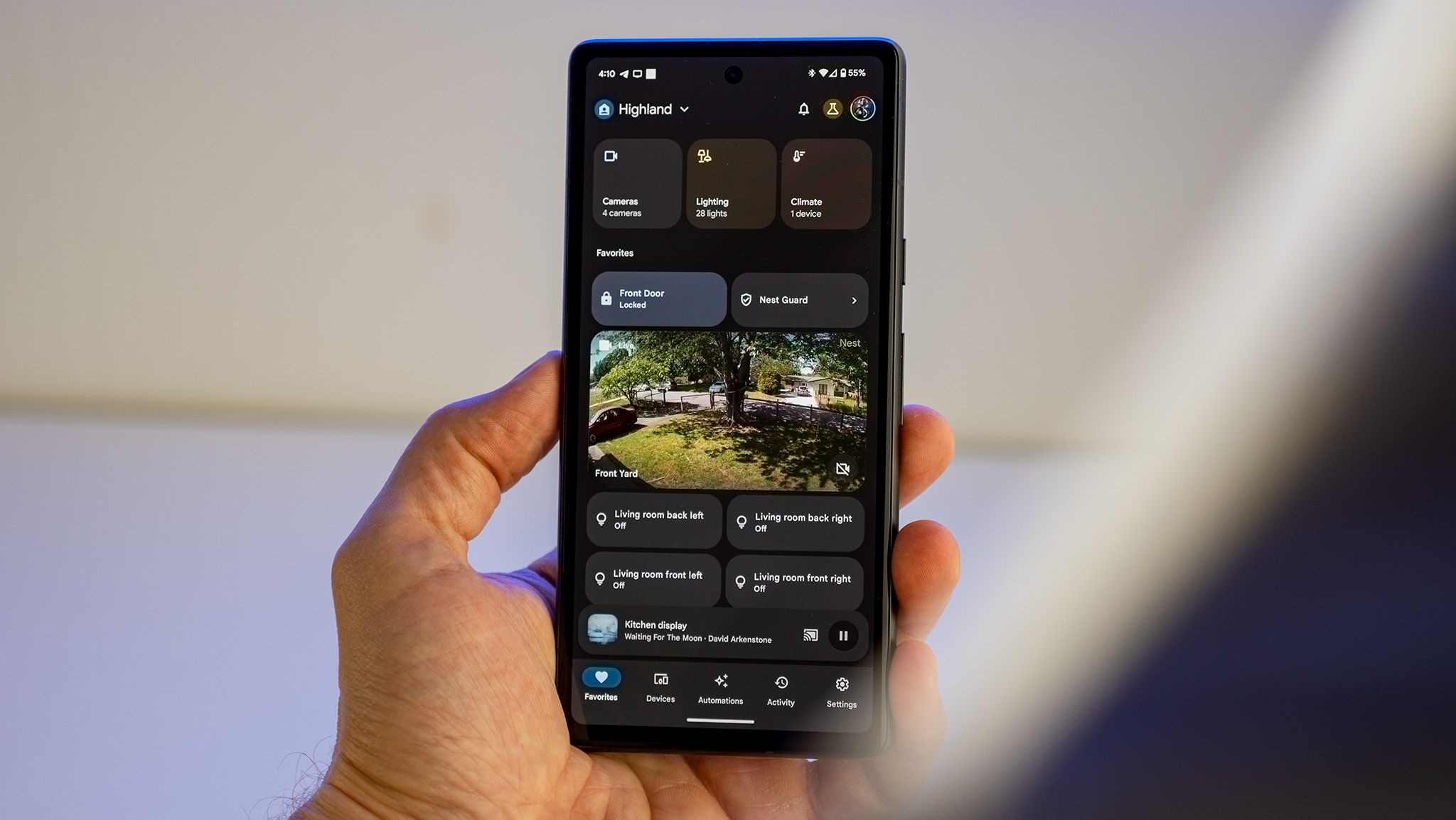
Google Home is rolling out Continued Conversations for Gemini for Home early access, letting the assistant keep the mic active for a few extra seconds to support follow-up requests. The update also adds multilingual support and side-talk detection, building on recent improvements to casual speech understanding, music playback, and task management. The news is positive for Google’s smart-home AI experience, though the immediate market impact is likely limited.
GOOGL is still in the monetization phase of a broader assistant reboot: the incremental value is not the feature itself, but the data exhaust from longer, more natural conversations that improves intent classification across Search, Home, and eventually paid automation surfaces. In smart-home, conversational continuity raises engagement per session and lowers user frustration, which should improve retention, but the bigger second-order effect is that it makes Gemini the default interface for multi-step household tasks rather than a novelty layer. That matters because defaults compound; once families rely on a voice layer that can chain requests, switching costs rise even if the raw feature set is only modestly better.
The competitive implication is that Google is narrowing the gap with Amazon’s Alexa on natural-language control while leveraging a stronger AI stack than legacy assistants ever had. The near-term winner is not necessarily hardware sales, but ecosystem stickiness across Android, Nest, and connected services; the likely losers are smaller smart-home middleware players that depended on being the orchestration layer. A less obvious beneficiary is Alphabet’s broader ad/search franchise: better voice context can improve query reformulation, which should lift commercial intent capture over time, especially for local and household service requests.
The risk is execution more than demand. In the next 1-3 months, the key failure mode is reliability: if multi-user, multilingual, or background-chatter detection produces false positives, household trust can erode quickly and usage reverts to command-style behavior. Over 6-12 months, the market may overestimate revenue contribution because smart-home engagement does not automatically translate into near-term ARPU unless Google successfully routes more transactions through shopping, subscriptions, or premium assistant tiers.
The contrarian read is that the move is mildly positive but not yet investable as a standalone catalyst; the feature increases strategic optionality more than current earnings. That suggests the market may be underappreciating the long-duration option value in Gemini adoption, while overreacting if it assumes immediate hardware or subscription monetization. For now, this is more about strengthening Alphabet’s moat and data advantage than about a quarter-to-quarter financial inflection.
AI-powered research, real-time alerts, and portfolio analytics for institutional investors.
Request TrialOverall Sentiment
mildly positive
Sentiment Score
0.20
Ticker Sentiment
