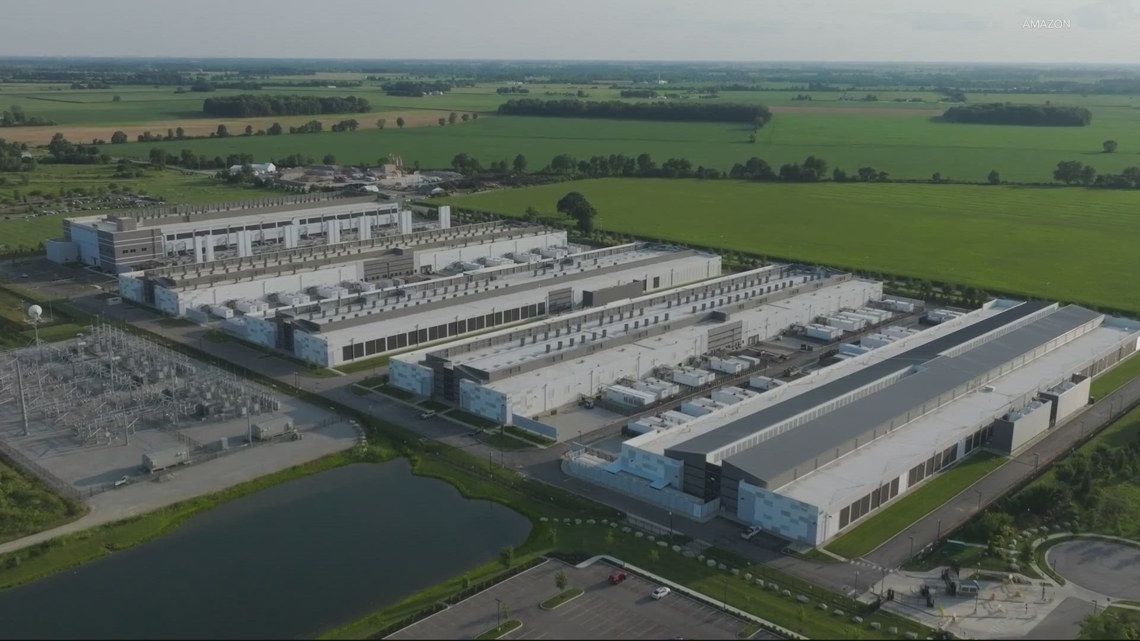
Oregon regulators approved new rules allowing Portland General Electric to charge data centers higher rates, including contracts covering 100% of grid expansion costs and a 1 cent/kWh surcharge for customers with capacity above 100 MW. Large energy users must also meet 90% utilization thresholds, and PGE can delay hookups until sufficient zero-emission capacity is available. The order is designed to prevent cost shifting to households and takes effect after PGE files a pricing plan by June 3, with implementation set for June 10.
This is a margin-transfer event more than a pure demand shock. The regulatory shift pushes incremental grid capex and reserve-cost risk back onto the hyperscale cohort, which should improve the durability of utility returns but likely slows near-term load growth conversion because interconnection economics now look less attractive on a risk-adjusted basis. The second-order winner is not just the utility: transmission/electrification supply-chain names tied to customer-funded buildouts can still see demand, but the mix shifts toward projects with better pre-funded economics and away from speculative load assumptions.
The bigger implication is that Oregon is effectively turning data-center access into a constrained, emissions-conditioned option. That creates a queue value for firms with dispatchable clean power, behind-the-meter generation, or the ability to prepay for infrastructure, while penalizing pure load-growth stories that depend on cheap, fast interconnects. Over the next 6-18 months, expect some announced projects to slip, reprice, or re-site to jurisdictions with faster permitting and less punitive cost allocation; that is negative for landowners, local contractors, and secondary grid equipment vendors whose order books were implicitly assuming every megawatt request would close.
For POR, this is modestly positive on allowed revenue visibility, but not a clean multiple expansion catalyst because the market will focus on execution risk: implementation complexity, litigation from large-load customers, and possible political pushback if data-center investment slows. The contrarian angle is that the market may underappreciate how little of the cost burden this actually solves if regional power scarcity persists; if new load is merely diverted rather than eliminated, rate pressure can reappear elsewhere through higher system costs or delayed industrial buildout. That makes the policy supportive for incumbent ratepayers in the near term, but not necessarily a durable fix for affordability if supply growth remains bottlenecked.
AI-powered research, real-time alerts, and portfolio analytics for institutional investors.
Request DemoOverall Sentiment
neutral
Sentiment Score
0.15
Ticker Sentiment
