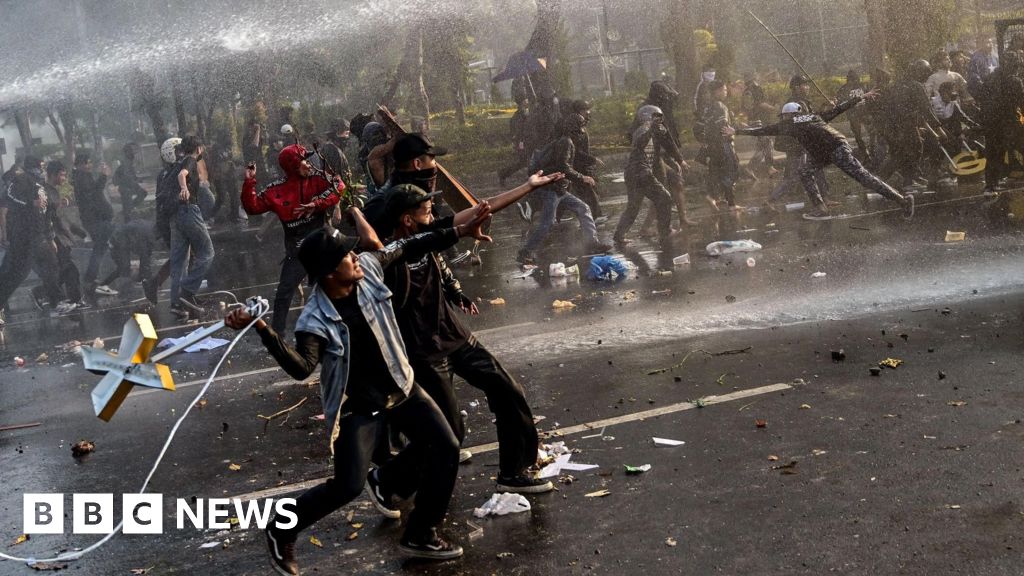
Widespread anti-government protests have erupted across Indonesia, fueled by public outrage over excessive parliamentary allowances amidst a cost-of-living crisis and escalating after a delivery driver's death during police clashes. The unrest, now encompassing demands for accountability and systemic reform, presents President Prabowo with his most significant leadership challenge as he attempts to quell dissent through a dual approach of limited concessions on perks and an intensified security crackdown. This situation reflects deep-seated economic insecurity and resentment towards the elite, signaling potentially broader instability.
Widespread social unrest across Indonesia, initially triggered by a government decision to raise parliamentary allowances to over 30 times the average national income amidst a cost-of-living crisis, has escalated into a significant political challenge for President Prabowo Subianto's new administration. The death of a protester during clashes with police acted as a catalyst, broadening the movement's focus to include systemic issues of corruption, inequality, and police accountability. The government's dual response—offering a partial rollback of politician perks while simultaneously ordering an intensified security crackdown—has been deemed insufficient by protest leaders and has raised concerns about potential human rights violations. Analysts note these demonstrations are the most significant in two decades, reflecting deep and broadly felt economic insecurity and resentment toward the political elite, creating a highly volatile and uncertain environment with a material impact on the country's stability.
AI-powered research, real-time alerts, and portfolio analytics for institutional investors.
Overall Sentiment
strongly negative
Sentiment Score
-0.70
