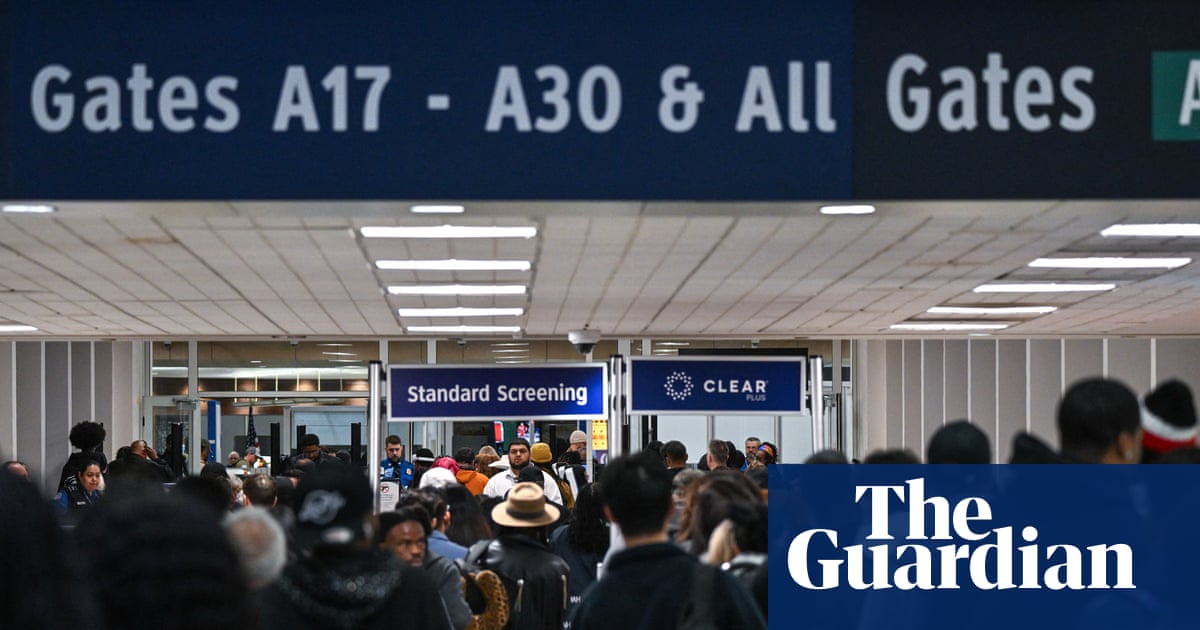
As of Friday morning there were 2,551 flight delays and 105 cancellations in/into/out of the U.S.; TSA staffing shortages from a Homeland Security funding lapse have produced security wait times up to two hours at peak periods (42 minutes reported at JFK Terminal 4). Airlines for America expects ~121 million passengers in the coming weeks (+4% year-on-year), raising disruption risk over the busy spring travel season. Federal officials warn prolonged shutdown could force airport closures and further payment interruptions for TSA workers, creating sustained operational risk for airlines, airports, and passenger volumes.
The immediate operational effect is non-linear: modest additional checkpoint delays amplify network fragility for hub-centric carriers because missed connections cascade across the day. Even a 10–20 minute increase in average passenger processing time can cut same-day connection completion rates by a material single-digit percentage for large legacy carriers, forcing re‑accommodation costs, extra crew hours and aircraft deadhead that are concentrated in the first 72 hours of a disruption.
Second-order winners are firms that monetize friction or provide alternative service layers — expedited screening vendors, government contractors that can be tapped for stop‑gap support, and premium/charter travel channels — while losers are networked airlines and secondary airports reliant on small staffing pools. Regional and leisure carriers that operate from smaller fields face outsized closure risk because they lack pool depth and alternative throughput; majors suffer reputational and yield pressure as irregular operations force voluntary refunds and loyalty churn over the next 1–3 months.
Key catalysts and reversals are political and binary: a short-term appropriation or emergency pay relief would materially reduce call-outs within days and restore network confidence; conversely, extension of the funding lapse into weeks would trigger operational rationing (route cutbacks/temporary small-airport closures) and likely push airlines to preemptively reprice/hedge capacity for the summer quarter. Monitor DHS appropriations language, TSA union statements and call‑out rates as high‑frequency indicators — these will dominate outcomes on a days-to-weeks horizon rather than macro travel demand shifts over months.
AI-powered research, real-time alerts, and portfolio analytics for institutional investors.
Request DemoOverall Sentiment
mildly negative
Sentiment Score
-0.30
