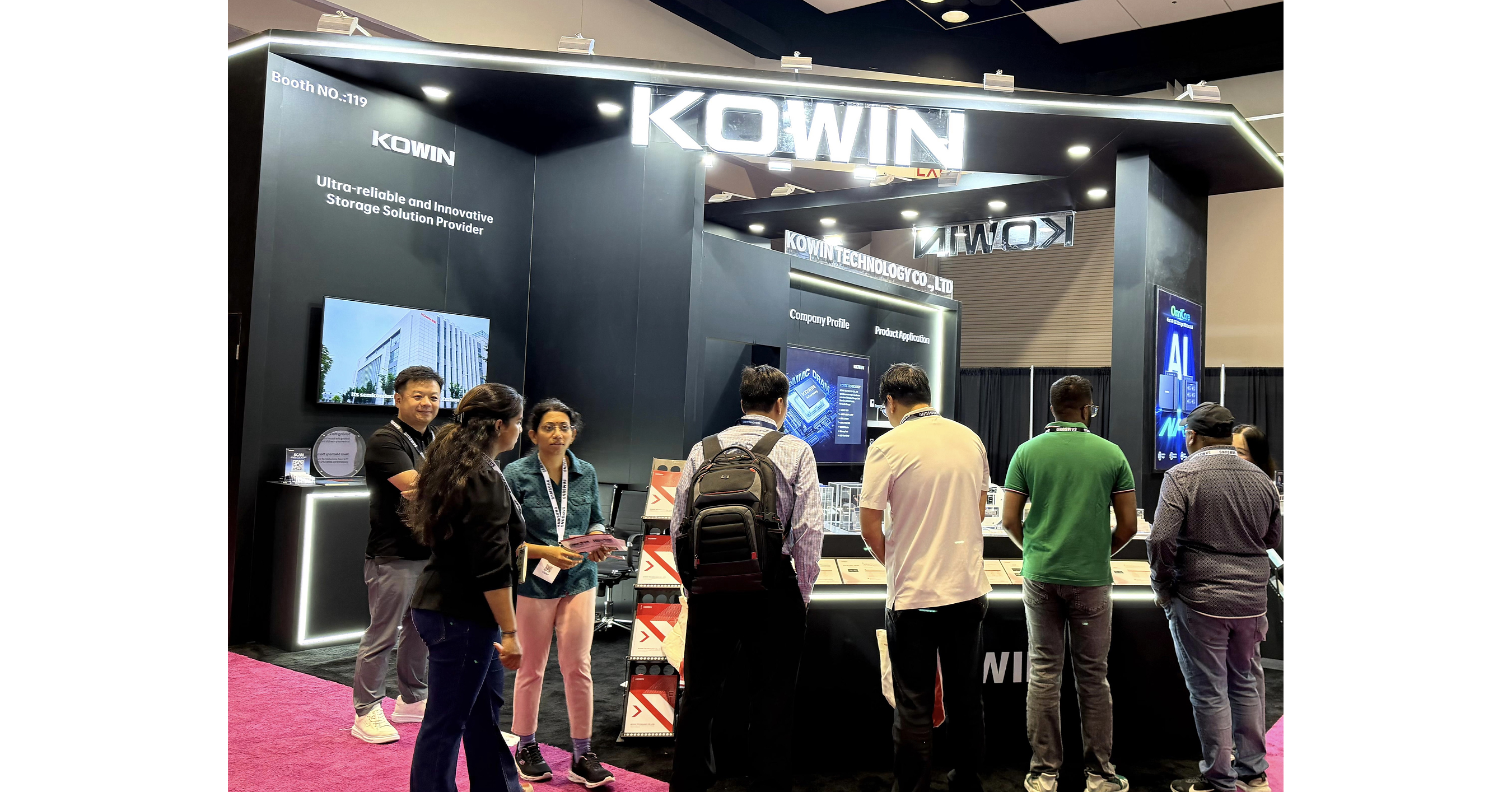
KOWIN stellte auf der FMS 2026 sein komplettes Speicherportfolio vor (Embedded-Speicher wie eMMC für KI-Smartglasses und ePOP für Smartwatches, dazu SSDs, DRAM-Module sowie microSD/USB-Wechselspeicher) und positioniert es gezielt für KI-Wearables, KI-PCs und industrielle Steuerungssysteme. Die Nachricht betont höhere Zuverlässigkeit und Leistung für Edge- und Trainings-/Rendering-Workloads, jedoch ohne konkrete Umsatz-, Auftrags- oder Guidance-Zahlen. Insgesamt eher produkt-/innovationsgetrieben als finanziell preismaterialrelevant.
This is better read as a validation of the edge-AI memory cycle than as a company-specific catalyst. The incremental value accrues upstream to DRAM/NAND content suppliers if AI PCs, wearables, and industrial endpoints truly require more capacity and higher reliability; however, most module-level announcements do not translate into near-term revenue inflection without a named OEM socket win. The first-order market reaction is likely to be negligible, while the second-order effect is a modestly constructive read-through for memory pricing discipline if more OEMs refresh specs around higher-density LPDDR/SSD configurations.
The competitive dynamic is that differentiation shifts toward qualification, thermal performance, and power efficiency rather than raw silicon cost. That tends to favor large incumbents with scale and supply assurance over smaller module assemblers, but it does not automatically expand margins because edge-device BOMs remain highly price-sensitive. In particular, if AI features stay confined to premium devices, unit content rises but volumes may not; that creates a slower, months-long thesis rather than a days-long trade.
Contrarian view: the market often overestimates the monetization of "AI" labels in peripherals. Many edge use cases add only a few dollars of memory content and can be offset by commoditization pressure in SSDs and removable storage, where competition keeps ASPs elastic. The real falsifier is the absence of corroborating BOM disclosures or upward commentary from OEMs over the next 1-3 quarters; without that, this remains marketing noise rather than a demand signal.
Risk/catalyst wise, the near-term risk is chasing memory names on thin evidence and getting trapped if broader PC demand softens. A more meaningful catalyst would be design-win commentary from major PC or industrial OEMs, or a sequential uptick in DRAM/SSD pricing that confirms content growth. Over 6-18 months, if edge AI penetration broadens, the beneficiaries are memory suppliers rather than branded module vendors.
AI-powered research, real-time alerts, and portfolio analytics for institutional investors.
Request DemoOverall Sentiment
mildly positive
Sentiment Score
0.18
