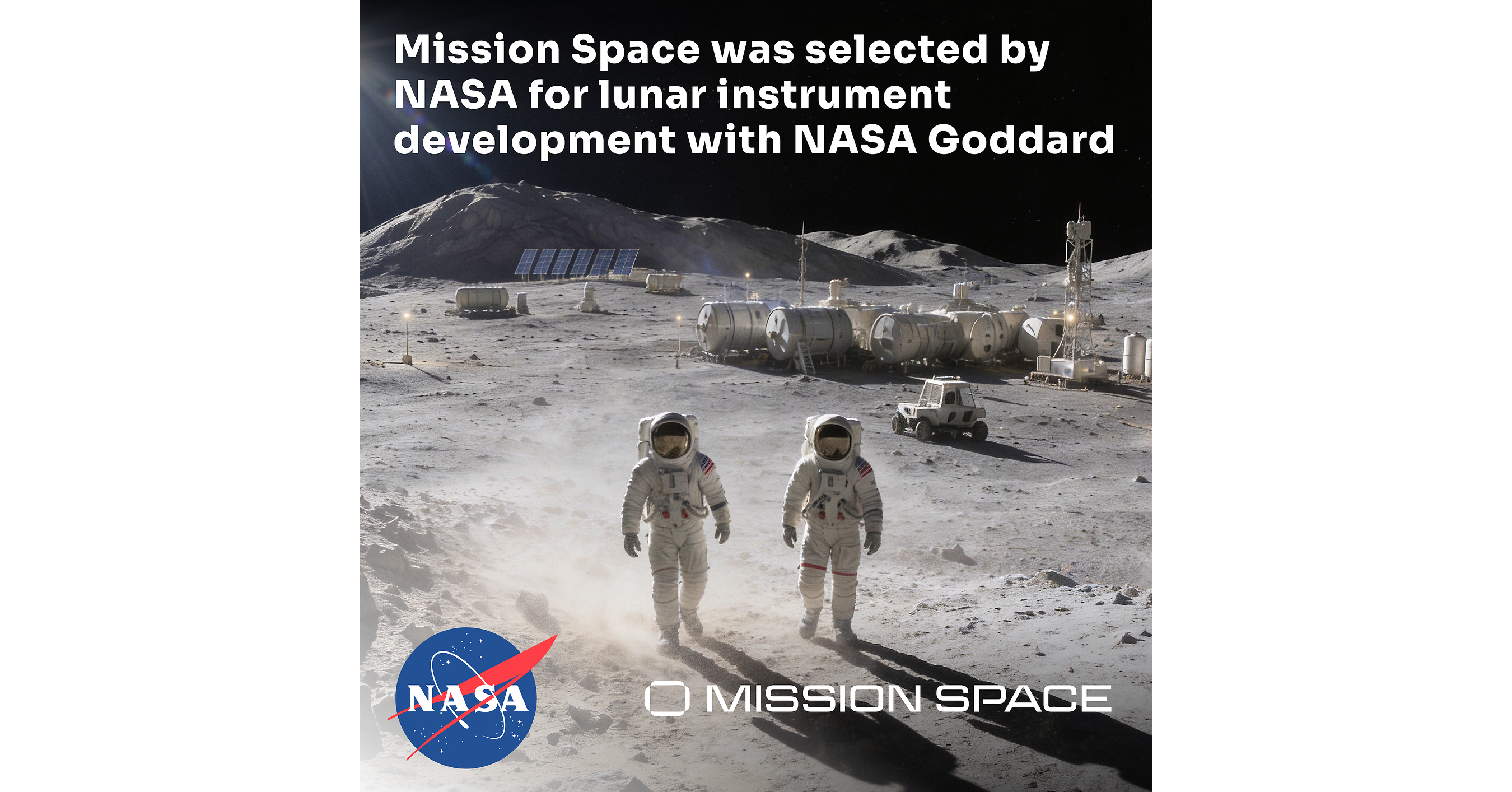
Mission Space was selected by NASA for an Announcement of Collaboration Opportunity (ACO) to advance LEEMR, a compact lunar dust and surface-charging monitoring instrument, in collaboration with Goddard Space Flight Center. The instrument will measure real-time surface charge accumulation and dust charging/density changes around lunar landers, rovers, and habitats, supporting safer infrastructure protection and mission planning. While commercially meaningful for Mission Space’s lunar roadmap, the article provides no financial figures and is unlikely to move broader markets materially.
This is more validation than monetization: NASA collaboration reduces technical risk, but it does not by itself create a near-term revenue step-up. The actionable read-through is that lunar surface operations are moving from one-off science payloads toward an instrumentation layer around every asset, which benefits companies selling low-SWaP sensors, autonomy, and environmental telemetry rather than pure launch or lander vendors. If that procurement pattern persists, the better listed proxies are names with recurring payload/sensor content and mission software exposure such as RDW, LUNR, and smaller defense-space subsystems suppliers rather than broad aerospace primes.
Second-order, the bigger winner may be the lunar infrastructure ecosystem that can bundle monitoring into mission services: landers, rovers, power systems, and habitats will need local environmental data to avoid dust-related degradation and charging failures. That creates a modest but real moat for firms with heritage electronics and in-situ measurement IP, while software-only space-weather narratives may need to prove they can translate orbital analytics into surface-specific data products. Over 6-18 months, any NASA or commercial Artemis procurement that explicitly budgets for environmental monitoring would be the signal that this becomes a line item, not just a science demo.
The contrarian view is that the market may overread this as a commercial validation event when it is still an R&D bridge. The catalyst path is likely binary: either Mission Space converts this into a funded flight demo and then a multi-mission standard, or it remains a niche technology with limited addressable revenue. Falsifiers are simple: no follow-on NASA funding, no announced flight manifest, or continued preference for lower-cost, integrated lander sensor suites from incumbents. Near term, the stock-level reaction should be muted; the tradeable angle is thematic, not event-driven.
AI-powered research, real-time alerts, and portfolio analytics for institutional investors.
Request DemoOverall Sentiment
mildly positive
Sentiment Score
0.25
Ticker Sentiment
