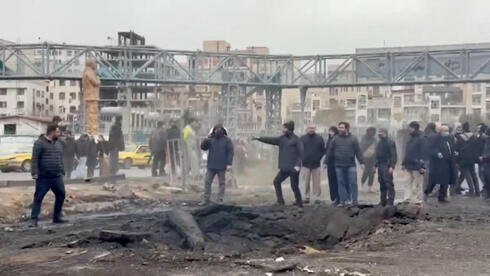
IDF and US strikes in Iran and targeted strikes on Hezbollah cash facilities have reportedly cut Hezbollah's direct Iranian funding to 'nearly zero' and damaged cash reserves estimated in the 'hundreds of millions' and a pre-war budget of 'tens of millions' per month. Iran provided an additional $1.0B for post-war compensation, but monthly transfers are insufficient to cover rising post-war expenses; Lebanon’s central bank on July 15 banned ties with Al‑Qard al‑Hassan and threatened freezes/licenses. The disruptions heighten regional financial and security risk, weaken Lebanon’s banking/sovereign position, and create a risk-off backdrop for regional assets.
The strikes have created a near-term squeeze in informal and semi-formal financing channels that supported a proxy war economy; that squeeze will transmit quickly into Lebanon’s balance sheets via deposit withdrawals, currency substitution and a freeze in large-value intermediation. Expect measurable pressure on FX liquidity and sovereign funding spreads over the next 1–3 months as reserves held off‑balance and in cash are consumed and as confidence erodes among depositors who relied on parallel systems.
Strategically, defense and ISR suppliers stand to capture outsized order-flow if the region enters a protracted phase of kinetic and countermobility operations, while networked money‑service providers and gulf‑based intermediaries could pick up redeployment routes — lowering the durability of current funding disruption within 6–12 months. The big reversal risk is rapid substitution: increased use of hard commodities, regional banking partners in permissive jurisdictions, or encrypted/crypto rails could restore flows within quarters, not years, if enforcement intensity lags.
Politically, a collapsing patron‑proxy funding model raises two second‑order dynamics: sharper domestic polarization in Lebanon that accelerates sovereign distress and creates refugee/credit spillovers into neighboring banking systems; and a higher probability of asymmetric Iranian responses that target shipping, cyber, or economic chokepoints rather than large conventional battles. Those pathways create concentrated event windows (days–weeks around strikes or sanctions moves) and a longer tail of chronic sovereign/credit stress (3–12 months) that investors should bracket separately.
AI-powered research, real-time alerts, and portfolio analytics for institutional investors.
Request DemoOverall Sentiment
strongly negative
Sentiment Score
-0.65
