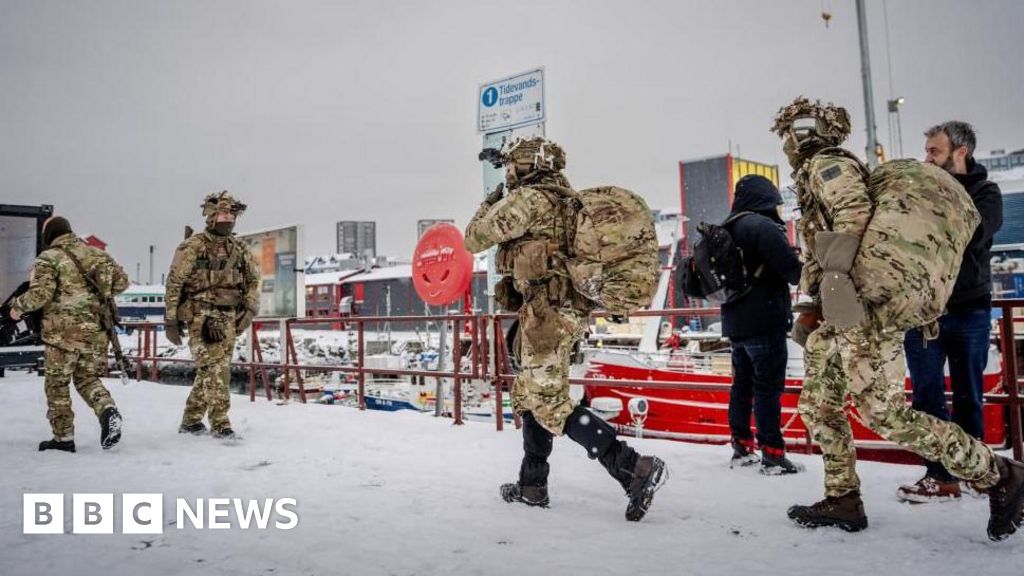
Danish forces deployed to Greenland in January were reportedly prepared to destroy runways at Nuuk and Kangerlussuaq and stockpiled blood supplies amid fears that President Trump might attempt to seize the island. The deployments — described as joint exercises (Operation Arctic Endurance) and involving Danish, French, German, Norwegian and Swedish units — were explicitly framed as deterrence against a potential US action after heightened rhetoric in early January. The episode raises NATO alliance tensions and could prompt short-term defensive posture adjustments in Arctic operations and regional defense planning.
This episode is a policy shock, not a market shock — immediate asset-price moves will be muted, but it meaningfully reprices the probability of sustained Arctic security spending over the next 12–36 months. Expect European and Nordic defense budgets to reallocate capital toward Arctic-optimized capabilities (cold-weather infantry, ISR, hardened runways, ice-class logistics), increasing addressable procurement for primes and specialized suppliers by a material single-digit percentage of current revenues over a 2-year window.
Supply-chain winners are niche: ice-class shipbuilders, runway-construction contractors with permafrost expertise, and persistent ISR/satellite imagery providers whose unit economics improve once multi-year contracts replace spot sales. Lead times are long — 12–36 months for ships and runway projects, 6–18 months for ISR contracts — so revenue recognition will be back-loaded; margins tilt in favor of vertically integrated primes and specialist OEMs with repeat-government relationships.
Geopolitical second-order effects favor European defense sovereignty: if NATO access friction persists, procurement will shift from US-centric suppliers toward European primes, creating a relative outperformance trade for EMEA contractors. Tail risks remain — rapid diplomatic de-escalation would unwind much of this reallocation, while a hard escalation would accelerate defense spending but also raise sanctions/insurance costs that compress near-term contractor free cash flow.
AI-powered research, real-time alerts, and portfolio analytics for institutional investors.
Request DemoOverall Sentiment
moderately negative
Sentiment Score
-0.55
