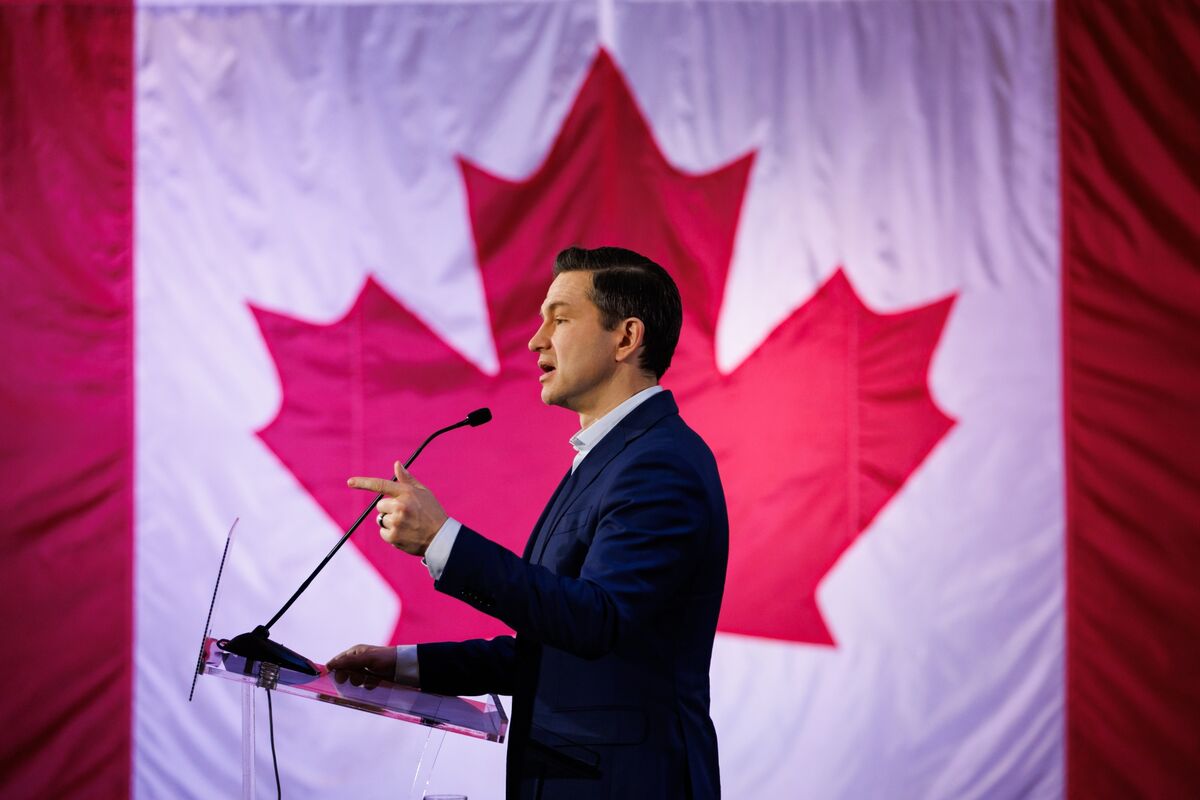
Canadian Conservative Leader Pierre Poilievre is advocating for the abolition of the nation's temporary foreign worker program, asserting it enables companies to import low-wage labor, thereby disadvantaging young Canadians and suppressing domestic wages. Highlighting the program's near doubling in size from 2020-2024, this stance signals a potential significant shift in labor policy that could impact Canadian businesses' cost structures and labor supply should the Conservatives gain power.
Canadian Conservative Leader Pierre Poilievre's call to abolish the temporary foreign worker program introduces significant political and regulatory risk for the Canadian labor market. The core argument is that the program, which nearly doubled in size between 2020 and 2024, allows corporations to suppress domestic wages by hiring lower-cost foreign labor, thereby disadvantaging young Canadians. Should this policy gain traction or be implemented, it would represent a material shift from the current framework under Prime Minister Trudeau. The immediate implication for businesses reliant on this labor pool is the prospect of significant wage inflation and labor shortages, which could compress margins and disrupt operations. The moderately negative sentiment and moderate market impact score reflect that while this is currently a political proposal, its potential to alter corporate cost structures is a tangible forward-looking risk for investors in the Canadian market, especially in labor-intensive sectors.
AI-powered research, real-time alerts, and portfolio analytics for institutional investors.
Request DemoOverall Sentiment
moderately negative
Sentiment Score
-0.40
