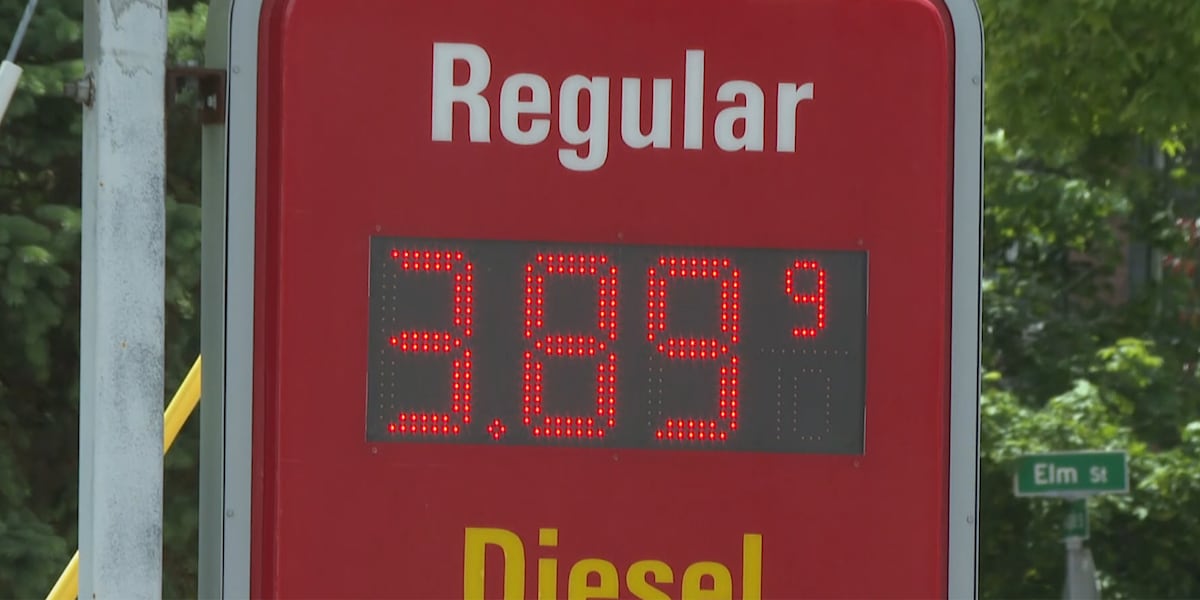
The national average gas price has fallen below $4 per gallon, while many Vermont drivers are still paying about 20 cents more and roughly $1 more than a year ago. Some local stations are pricing in the $3.89 range, about 10 cents below neighboring stations, to attract cost-conscious consumers. The article is mainly a regional pricing update with limited broader market impact.
The near-term economic read-through is less about absolute fuel prices and more about dispersion: regions that stay sticky versus the national trend become relative losers in household discretionary spend. Vermont’s premium effectively acts like a localized tax on commuting-heavy workers, which means the marginal benefit from lower fuel prices will be slower to show up in retail traffic, dining, and other low-ticket spend than in states where pump prices have converged faster. That creates a second-order drag on small-cap consumer cyclicals in the Northeast even if national inflation prints continue to soften.
For gas retailers, the important dynamic is not demand destruction but margin compression from price-matching behavior. Independently owned stations that are deliberately undercutting nearby peers are likely sacrificing gross margin to defend volume, which is sustainable only while traffic elasticity remains high and competitors hesitate to follow. Over the next 1–3 months, the risk is a localized race to the bottom that benefits consumers but pressures convenience-store economics, especially where in-store basket sizes are already weak.
The contrarian angle is that lower headline gasoline can be a net negative for upstream energy equities if it feeds broader disinflation and delays any refi in consumer spending without meaningfully improving volumes. The market may be underestimating how long regional price gaps can persist when distribution, tax, and competition constraints keep certain states structurally elevated; that argues against extrapolating a national gas-price decline into a uniform consumer tailwind. The cleaner trade is to own the beneficiaries of cheaper transport input costs while fading the margins of the most price-competitive retail fuel operators.
A tail risk is that the national downtrend reverses quickly if crude stabilizes higher or if seasonal demand lifts retail prices into peak driving months, which would hit the consumer relief narrative within weeks. If that happens, the highest-beta losers are discretionary retailers with exposure to rural and ex-urban commuting patterns, where fuel sensitivity is highest and wage growth is weakest.
AI-powered research, real-time alerts, and portfolio analytics for institutional investors.
Request DemoOverall Sentiment
neutral
Sentiment Score
0.05
