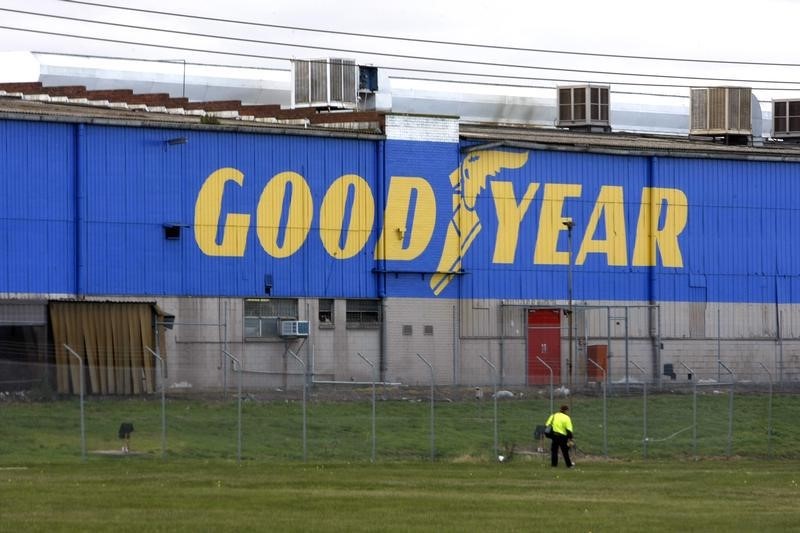
Goodyear reported Q1 adjusted EPS of -$0.39, beating the -$0.42 consensus, and revenue of $3.88 billion, ahead of the $3.81 billion estimate but down 8.7% year over year. Segment operating income fell to $95 million from $195 million as higher inflation, weaker volumes, and soft consumer demand offset benefits from the Goodyear Forward initiative and a $46 million tariff adjustment. Shares fell 2% as investors focused on margin pressure and subdued industry demand despite the earnings beat.
GT is printing a classic “good quarter, bad stock” setup: earnings quality improved enough to beat, but the market is keying on the fact that the operating leverage remains highly asymmetric to volume. The important second-order effect is that a weak replacement market usually lags GDP and consumer confidence by 1-2 quarters, so this may be less a one-off cyclical dip and more an early signal that discretionary auto spend is being deferred across the channel.
The bigger medium-term risk is that tariff/tax benefits are transitory while inflation and freight/energy inputs are sticky, meaning margin support can disappear faster than management can execute on restructuring. If raw material costs stabilize or decline, GT can show sharp sequential improvement; if not, pricing power will remain constrained because OEM and aftermarket customers can switch mix toward cheaper/imported alternatives. That makes competitor dynamics important: any supplier with a cleaner cost base or more exposure to premium replacement demand should defend share better than a broad-market incumbent.
The contradiction the market may be missing is that the Americas weakness may actually be a leading indicator for a later profit inflection in non-U.S. regions if industrial production and auto builds normalize there first. But that is a months-not-days story, and the near-term trade is still dominated by inventory correction and demand elasticity. The stock likely needs evidence of sustained volume stabilization, not just cost actions, before multiple expansion is credible.
From a setup perspective, this is more attractive as a relative-value expression than a naked directional long because the business can look ‘cheap’ on trough numbers while free cash flow remains hostage to volume. A sharper downturn in consumer demand over the next two quarters would force more aggressive capacity rationalization, which can help earnings later but would pressure the stock first.
AI-powered research, real-time alerts, and portfolio analytics for institutional investors.
Request DemoOverall Sentiment
neutral
Sentiment Score
-0.05
Ticker Sentiment
