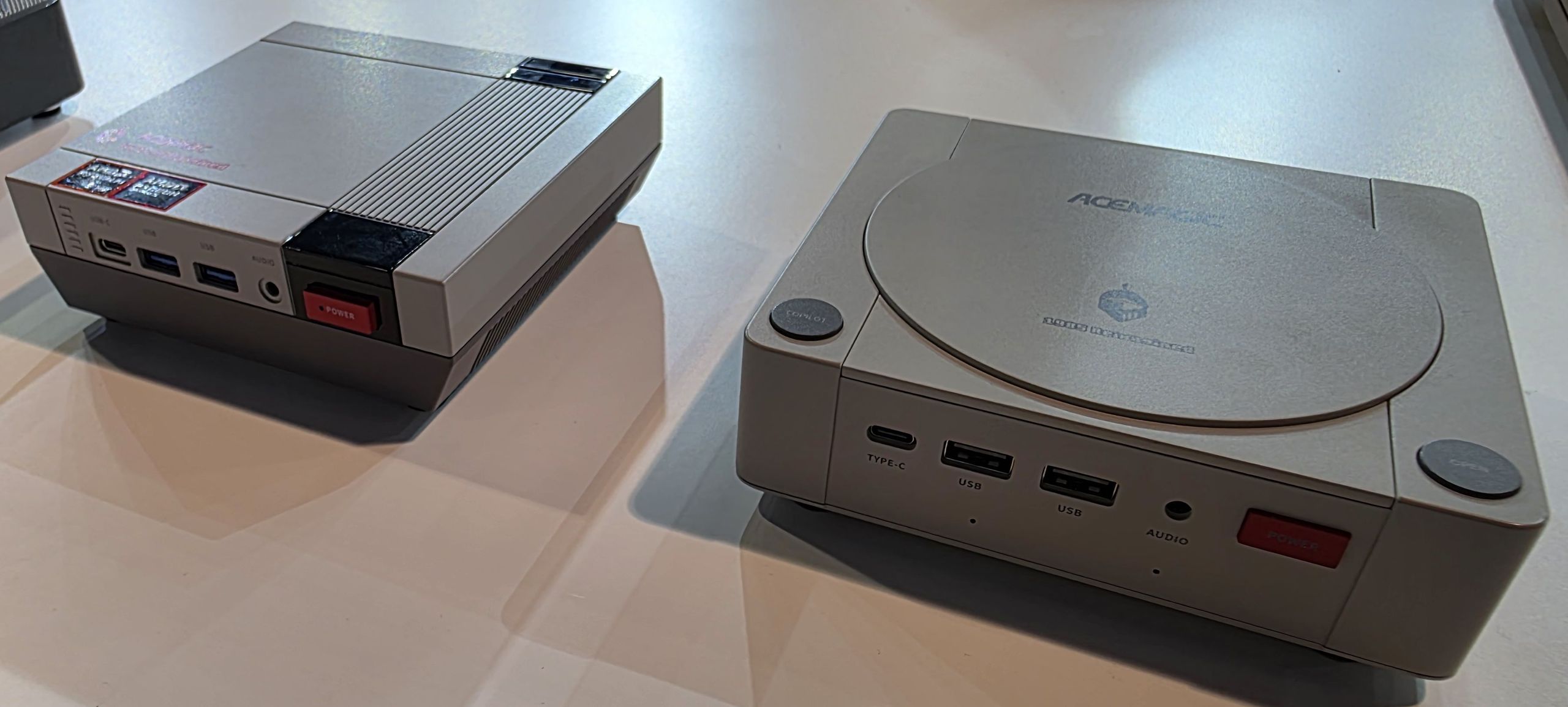
Acemagic unveiled retro console–styled mini‑PCs at CES offering AMD Ryzen AI 9 HX 470 and 465 options with Radeon 890M/880M integrated GPUs, up to 64 GB DDR5 and dual M.2 NVMe bays supporting up to 4 TB drives each in a compact 140×128×41 mm chassis. An Intel Panther Lake variant was also shown with Core Ultra X 9 388H/386H (65 W and a higher‑performance 120 W SKU), Arc B390 graphics, up to 96 GB RAM and similar dual 4 TB NVMe storage, plus dual LAN, Wi‑Fi 7 and Bluetooth 5.4. The models target the high‑performance small‑form‑factor consumer niche and could modestly influence component demand for AMD/Intel and NVMe suppliers, but this product announcement is unlikely to move broader public markets materially.
Market structure: Boutique mini‑PC launches primarily benefit silicon suppliers (AMD, INTC), memory/SSD vendors (e.g., MU, Samsung suppliers), and connectivity chipset makers (QCOM/AVGO). Downstream winners are niche ODMs and premium small‑form‑factor OEMs; mass‑market OEMs face modest share pressure as consumers trade up to compact, higher‑spec devices. Pricing power is limited — these are low‑volume premium SKUs — so near‑term margin upside for chipmakers is incremental (single‑digit % revenue tailwind at most over 12–24 months).
Risk assessment: Tail risks include IP/trademark litigation against retro styling, a sharper than‑expected NAND/DRAM price decline (>15% in 3 months) crushing supplier margins, or driver/firmware failures that slow adoption. Immediate (days) — CES headlines; short (weeks–months) — preorders, early reviews and driver fixes; long (quarters) — design‑win conversion into OEM revenue. Hidden dependency: reliance on WiFi‑7 ecosystem and OS/firmware (Copilot ties) could delay real uptake.
Trade implications: Direct plays are small, asymmetric exposures to AMD (benefits from Ryzen AI) and Intel (Core Ultra mobile wins) with memory/SSD suppliers as leveraged plays. Use defined‑risk options to capture CES/earnings catalysts (3–6 month windows); rotate into semiconductors and components, trim consumer hardware retailers if NAND oversupply appears. Act within 2–6 weeks to capture post‑CES momentum; de‑risk around quarterly earnings.
Contrarian angles: The market may underweight component suppliers that benefit from NVMe/DDR5 refreshes — incremental revenue per supplier could be 1–3% annually but persists. Conversely, consensus may overestimate scale of sales for boutique SKUs; historical parallels (NUC cycles) show megacap chipmakers often see only modest share shifts. Unintended consequence: trademark suits or poor thermal management could force recalls, creating short windows for tactical shorts.
AI-powered research, real-time alerts, and portfolio analytics for institutional investors.
Request DemoOverall Sentiment
mildly positive
Sentiment Score
0.25
Ticker Sentiment
