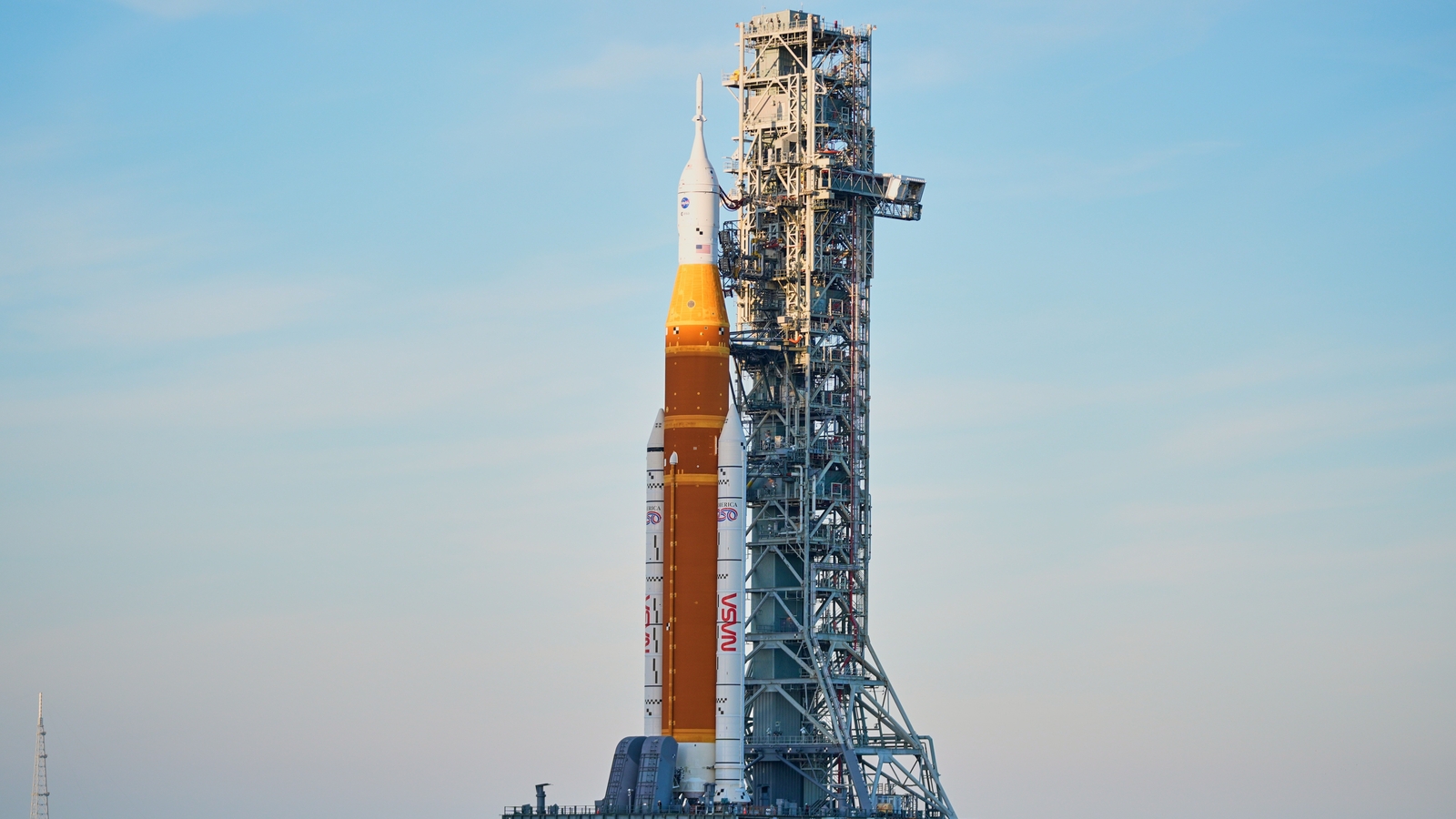
NASA, under new administrator Jared Isaacman, is reworking the Artemis flight schedule to add an extra uncrewed practice flight and to shift the originally planned Artemis III crewed lunar landing into a 2027 Earth-orbit lander docking rehearsal, with crewed landings now targeted for 2028 (potentially two). The changes follow recurring Space Launch System issues (hydrogen leaks, helium flow problems) and a safety panel's recommendation to scale back ambitions; the plan standardizes SLS hardware and increases reliance on commercial landers from SpaceX and Blue Origin, a development that could affect aerospace and defense contractors' timelines and contract execution.
Market structure: Faster cadence + an extra practice flight shifts value toward large, integrated primes (Lockheed Martin LMT, Northrop Grumman NOC) and industrial gas suppliers (helium/hydrogen logistics providers like Air Products APD). Small bespoke SLS subcontractors and Boeing (BA) — which has pad-failure baggage — carry execution risk; political appetite for expensive bespoke vehicles could also shift spend to reusable entrants (SpaceX private) over multi-year horizons.
Risk assessment: Tail risks include a catastrophic test failure (Starship or SLS) that triggers a 12–36 month program pause and congressional reallocation of ~$1–3bn/year of discretionary NASA funds; regulatory probes or supply-chain helium shortages could spike costs 20–50% short term. Immediate (days) risk: contractor stock volatility around NASA announcements; short-term (3–12 months): contract award timing and test pass/fails; long-term (2–5 years): program funding and political changes that could cancel or compress missions.
Trade implications: Favor primes with stable cashflows and government moat (LMT, NOC) and industrial gas suppliers (APD); underweight BA and small-cap launchers (RKLB, SPCE) that face competitive pressure and integration risk. Use LEAPS (12–24 month) calls on LMT/NOC and put or short exposures to BA; consider long APD for commodity tailwinds (helium/hydrogen).
Contrarian angles: Consensus assumes SpaceX wins unambiguously; NASA’s SLS standardization and added practice flight preserve prime contractor revenues and create multi-year services contracts. Historical parallel: Apollo’s rapid cadence was followed by budget cuts; if political will fades (a 30–50% drop in mission funding probability), large primes outperform smaller players due to diversified defense exposure.
AI-powered research, real-time alerts, and portfolio analytics for institutional investors.
Request DemoOverall Sentiment
neutral
Sentiment Score
-0.05
