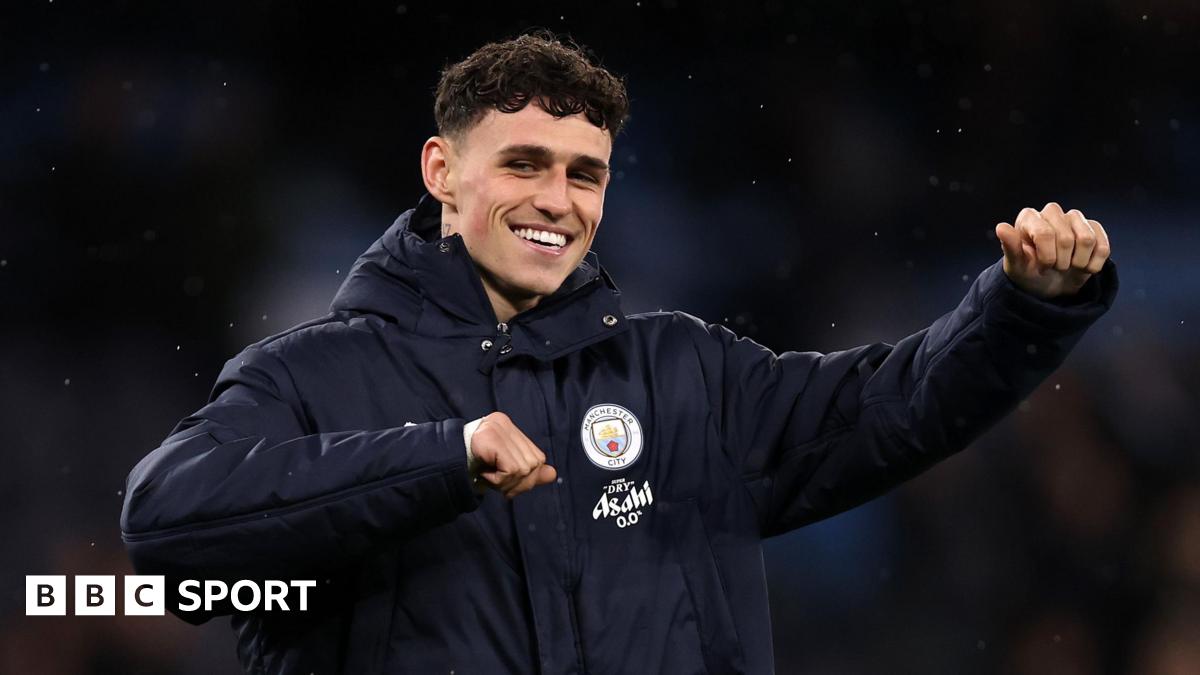
Manchester City beat Crystal Palace 3-0 as Phil Foden produced two first-half assists, including a standout backheel, to keep City within 2 points of Arsenal in the Premier League title race. Foden also created 5 chances in the opening 45 minutes, his best first-half creative output in a Premier League match this season, and was named man of the match. The result preserves City's title hopes heading into the final week and reinforces Foden's case for an FA Cup final role and potential World Cup selection.
This is less a one-off highlight and more a signal that City may still have a late-cycle “control lever” for the title run: if Foden is near even 80% of peak, the marginal impact in low-block games is outsized because he compresses chance creation into a few high-leverage touches. The market-like implication is that City’s downside in the title race is not binary talent loss, but volatility in lineup coherence when Guardiola rotates aggressively; Foden reduces that variance by solving the exact problem opponents present against them.
The second-order effect is on selection economics for both club and country. A strong finish increases the probability that Foden is restored into the spine for the cup final and the league run-in, which would crowd out some minutes for wider, higher-pressing profiles and tilt City toward possession security over transition intensity. For England, the upside is that a player with elite low-block unlocking ability is still available if Tuchel decides tournament football will feature more settled defenses than pressing duels; the downside is that the selection debate may be resolved more by recent narrative than by role fit, which creates late-squad volatility.
The contrarian read is that this may be a “one game, one scheme” rebound rather than a true form inflection. Low-block opponents are exactly where Foden’s touch profile and decision speed look best, but that does not fully address the broader issue: availability, rhythm, and defensive trust over 90-minute high-tempo matches. If he is overvalued by the market as a simple reversion story, the right trade is not to chase the narrative immediately, but to wait for confirmation across two matches and one high-pressure start.
Catalysts are very short-dated: the next 7-10 days decide both the title path and whether he re-enters Guardiola’s core rotation. The failure mode is obvious: if City’s attack stalls again when the game state is more chaotic, the club will revert to safer, more athletic options and the current optimism will fade quickly. That makes this a tactical setup, not a structural one, unless he strings together repeated high-usage performances.
AI-powered research, real-time alerts, and portfolio analytics for institutional investors.
Request DemoOverall Sentiment
mildly positive
Sentiment Score
0.35
