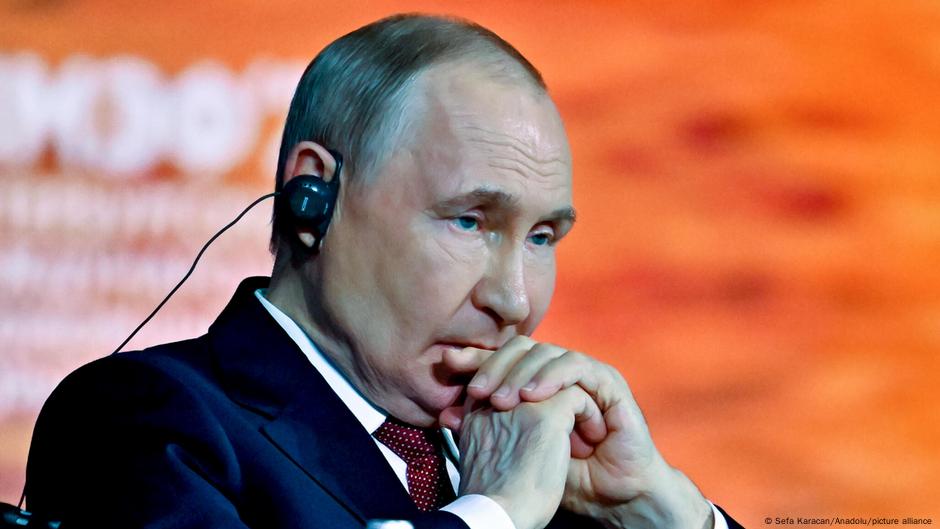
President Putin stated that "all of Ukraine is ours" based on his view that Russians and Ukrainians are "one people," renewing concerns about Russia's territorial ambitions. He also stated that he does not rule out capturing the city of Sumy, while accusing Ukrainian forces of shelling Russian border areas. These remarks, made at the St. Petersburg International Economic Forum, signal a continued rejection of Ukrainian sovereignty and raise skepticism about potential peace negotiations.
Russian President Vladimir Putin's statements at the St. Petersburg International Economic Forum represent a significant rhetorical escalation, reinforcing a maximalist stance on the war in Ukraine. The assertion that "all of Ukraine is ours" and the specific mention of not ruling out the capture of Sumy city signal a potential expansion of military objectives beyond the previously annexed regions. This position, justified by the need for a protective "buffer zone," fundamentally undermines the prospect of near-term, viable peace negotiations by tying any ceasefire to further Ukrainian territorial concessions. The strongly negative sentiment (-0.8) and high market impact score (0.7) associated with this development underscore the market's interpretation of heightened geopolitical risk, which is likely to translate into increased volatility in asset classes sensitive to European stability, such as energy commodities, regional currencies, and defense-sector equities.
AI-powered research, real-time alerts, and portfolio analytics for institutional investors.
Request DemoOverall Sentiment
strongly negative
Sentiment Score
-0.80
