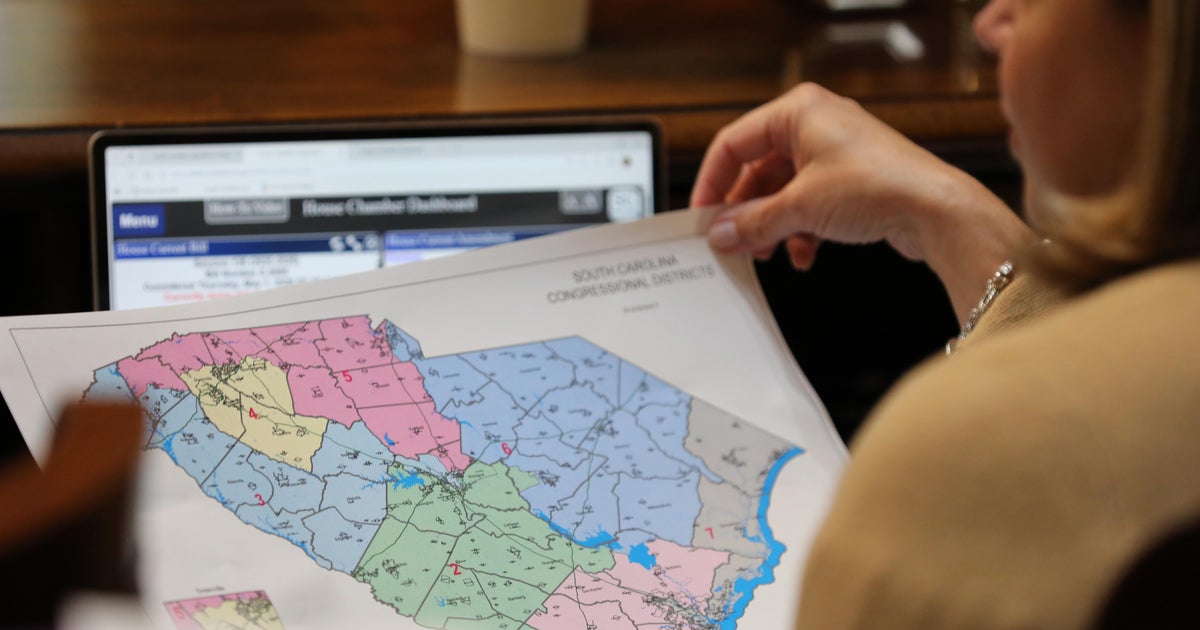
South Carolina Gov. Henry McMaster is expected to call a special legislative session on Thursday to redraw the state's congressional map, with Republicans aiming to secure all seven U.S. House seats. The move follows similar redistricting actions in Louisiana, Alabama, and Tennessee after a Supreme Court ruling narrowed Voting Rights Act protections. The article is politically significant but carries limited direct market impact.
This is a tactical GOP seat-optimization event, but the market implication is not the headline redistricting itself; it is the compression of the legislative timeline. Once a special session is called, the odds shift toward a faster, lower-friction map change than a normal process, which raises the probability that primary calendars, candidate filings, and campaign spending get distorted within days rather than months. The second-order effect is that House control becomes a function of map design in a small set of states, increasing the value of political forecasting, legal monitoring, and rapid-positioning around district-level incumbents.
The biggest near-term risk is not the final map; it is judicial or procedural delay that creates campaign uncertainty right as early voting/ballot prep windows approach. That tends to depress local field operations, complicate fundraising allocation, and force national committees to redeploy money into a few winnable districts instead of broad turnout programs. In practical terms, the beneficiaries are national GOP committees and adjacent media/ad-tech vendors with high political spend concentration, while vulnerable Democratic incumbents in targeted districts face a widening downside if they are forced to defend unfamiliar terrain under compressed timelines.
The contrarian view is that markets may be overpricing the durability of these maps. The current cycle of redraws increases litigation probability and raises the odds of a compensating counter-push after the next census or court ruling, so the advantage may be real for the 2026 cycle but not necessarily structural. Also, if multiple states keep reopening maps, the net partisan gain can become self-canceling at the national level, shifting value from election outcome proxies to firms monetizing election churn rather than election direction.
AI-powered research, real-time alerts, and portfolio analytics for institutional investors.
Request DemoOverall Sentiment
neutral
Sentiment Score
-0.05
