



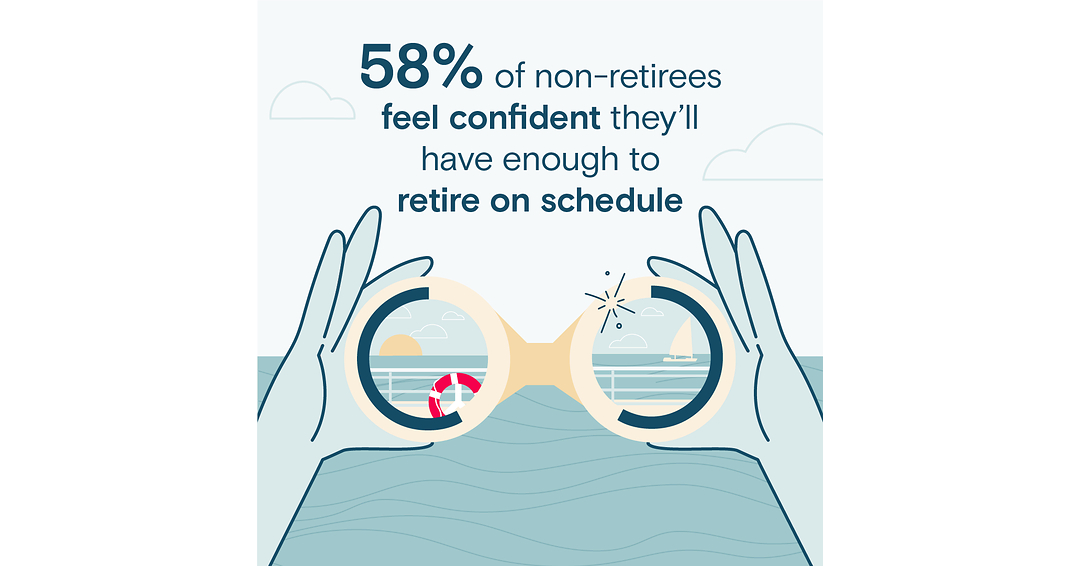
A Thrivent/Ipsos survey finds retirement concern rising in 2026: 63% of Gen Z and 59% of Millennials expect AI to reduce jobs and hurt retirement (vs. 49% for Gen X/Boomers), and retirees reporting negative AI-driven work effects increased to 29% from 20% in 2025. Retirees cite stronger macro headwinds—70% for inflation, 61% for political instability, and 54% for global economic conditions (vs. 57%, 48%, and 44% last year). With 64% of non-retirees prioritizing current finances over retirement planning and 47% of non-retirees skeptical they will fully retire, the article signals elevated long-term household planning risk rather than a direct market catalyst.
The investable read-through is not the survey itself; it is the shift in household psychology toward income certainty and away from discretionary risk-taking. That tends to favor retirement-income wrappers, annuities, managed accounts, and advice-heavy distributors such as PRU, MET, LPLA, and AMP more than low-touch asset gatherers, because confusion and fear increase the willingness to pay for guidance. The first-order effect is modest, but if this sentiment persists it can lift default savings behavior in payroll-driven plans while keeping brokerage activity softer at the margin.
The second-order loser is consumer cyclicals: when workers feel behind, they defer big-ticket spending and build precautionary cash, which is bearish for XLY and discretionary retail more than for staples. AI anxiety also does not directly monetize for IPSOF; if anything, it is a narrative tailwind for the advisory channel, not a near-term earnings event for survey or index providers like MCO and SPGI. For insurers with income products, the setup is better only if rates stay elevated; a sharp drop in yields or equity drawdown would blunt demand for retirement income guarantees.
Time horizon matters: near-term market impact is likely negligible, but 1-3 month monitoring should focus on 401(k) deferral rates, retail brokerage cash balances, and annuity sales commentary. The thesis breaks if labor data stay firm and household balance sheets improve, because then the "falling behind" sentiment will not translate into actual product demand. Contrarian view: the market may be overstating the negativity; higher later-life labor participation can extend earning years and support wealth accumulation, which is a slow burn positive for wage-heavy sectors rather than an immediate alarm bell.
AI-powered research, real-time alerts, and portfolio analytics for institutional investors.
Request TrialOverall Sentiment
mildly negative
Sentiment Score
-0.18
Ticker Sentiment
