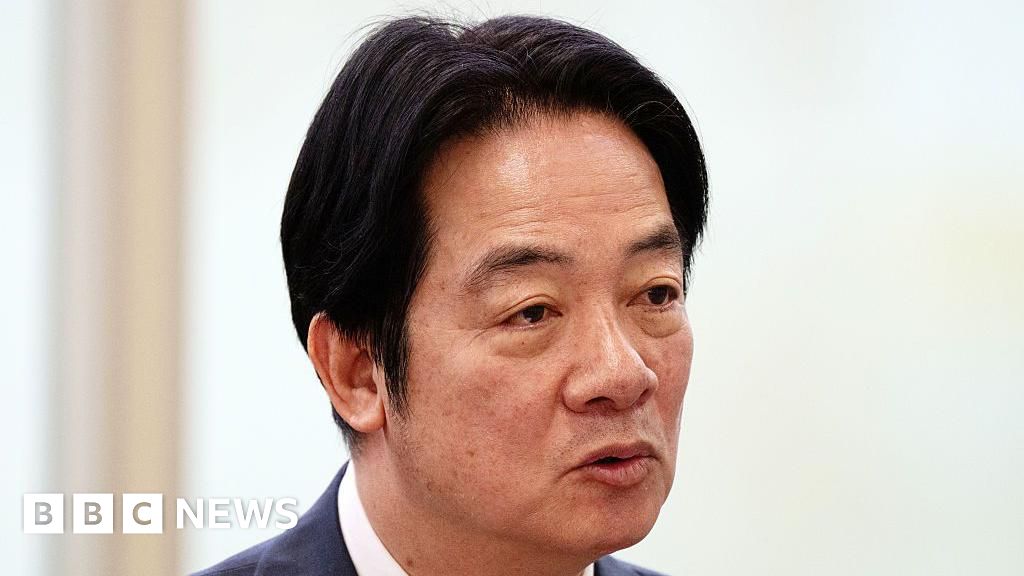
The article centers on escalating Taiwan-related tensions after Trump and Xi discussed the issue in Beijing, with Trump signaling he did not want Taiwan to "go independent" and leaving U.S. arms-sales commitments uncertain. Lai Ching-te reiterated that Taiwan will not provoke conflict or surrender sovereignty, while Beijing continued to pressure the island and keep the option of force on the table. The geopolitical risk is elevated for regional defense and broader Asia-Pacific markets, especially given the proposed $11bn in U.S. arms sales to Taiwan.
This is less about an immediate military escalation than about a tighter policy boundary around Taiwan risk: Washington is signaling willingness to keep arms flowing, while simultaneously broadening room for ambiguity around the island’s political status. That combination is bullish for regional defense readiness but not necessarily for the probability of a near-term crisis; the market should distinguish between headline risk and actual escalation risk, which is still gated by logistics, stockpiles, and command-and-control timelines measured in months, not days.
The first-order beneficiaries are defense primes and missile/sensor supply chains that support Taiwan-related replenishment cycles, especially firms with exposure to anti-ship missiles, air defense, EW, and ISR. A less obvious winner is Japanese and Korean defense electronics and shipbuilding, since any sustained Taiwan premium pushes allied procurement higher and accelerates multi-year budget growth across the first island chain. The likely loser is cross-strait logistics and semicap equipment sentiment: even if there is no sanctions event, customers will likely push for diversification of assembly, testing, and board-level packaging away from Taiwan, increasing costs and lengthening lead times.
The key tail risk is not invasion; it is a sustained coercion campaign that forces a policy response through shipping insurance, export controls, or more explicit security commitments. That would hit global tech multiples before it shows up in earnings, because the market re-rates supply-chain concentration risk faster than it re-prices actual physical disruption. The contrarian view is that the rhetoric may be more performative than substantive: if Washington wants leverage with Beijing, it may tolerate tougher language on Taiwan while still preserving the existing defense framework, which would cap downside in the absence of a concrete arms-sale rollback.
Near term, the most tradable catalyst is any confirmation or delay of the approved Taiwan arms package; that is where sentiment can move in hours, while actual revenue impact to suppliers accrues over several quarters. For equity positioning, the cleaner expression is long defense exposure versus semicap hardware tied to Taiwan-heavy manufacturing. The risk/reward is asymmetric: defense has a gradual earnings tailwind with low event-risk dependence, while Taiwan-linked supply-chain names face discontinuous downside if the market starts pricing blockade drills as rehearsal rather than signaling.
AI-powered research, real-time alerts, and portfolio analytics for institutional investors.
Request DemoOverall Sentiment
mildly negative
Sentiment Score
-0.15
