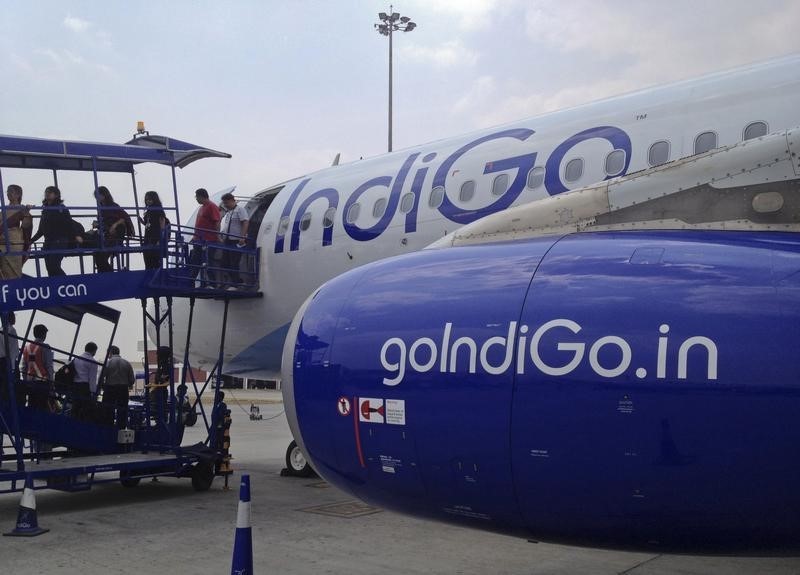
CEO Pieter Elbers resigned effective immediately; shares of InterGlobe Aviation (IndiGo) rose 0.4% as of 07:15 GMT. Managing Director and co-founder Rahul Bhatia will serve as interim CEO while the board searches for a permanent successor. Key near-term risks to monitor: operational stability following December 2024 scheduling disruptions, clarity on the summer schedule, and continuity amid ongoing fleet expansion and capacity growth.
A leadership shift at a carrier mid-expansion materially raises execution risk for the next 2–6 months because network-wide schedule integrity is driven by centralized planning and change-control. With rolling fleet deliveries, a small mismatch between crew training/rostering and new aircraft induction can cascade into outsized AOG and recovery costs, squeezing near-term margins even if demand remains stable.
Second-order beneficiaries of any short-term disruption are asset servicers — engine MROs, lessors and regional wet-lease providers — who can monetize forced short-term flying changes and increased on-ground interventions; conversely, airports with constrained gates see the least upside from competitor route shuffling because physical capacity, not market share, becomes the bottleneck. Market-share dynamics are also non-linear: a temporary reliability gap can deliver disproportionate loyalty losses among premium business travelers, reducing RASM by an outsized percentage vs. the same passenger loss in economy.
Key catalysts that will resolve the uncertainty are (1) the next 60–90 day operational performance metrics (OTP, cancel rate), (2) confirmation of fleet delivery and pilot cadre ramp timelines, and (3) clarity on the loyalty/ancillary roadmap execution. Tail risks include regulatory probes or material network disruption during a peak travel window, which could flip sentiment from mild caution to a multi-quarter rerating; conversely, visible re-assertion of operational control within 6–8 weeks should compress implied volatility and re-open the path to structural domestic growth earnings multiple expansion.
AI-powered research, real-time alerts, and portfolio analytics for institutional investors.
Overall Sentiment
neutral
Sentiment Score
0.00
