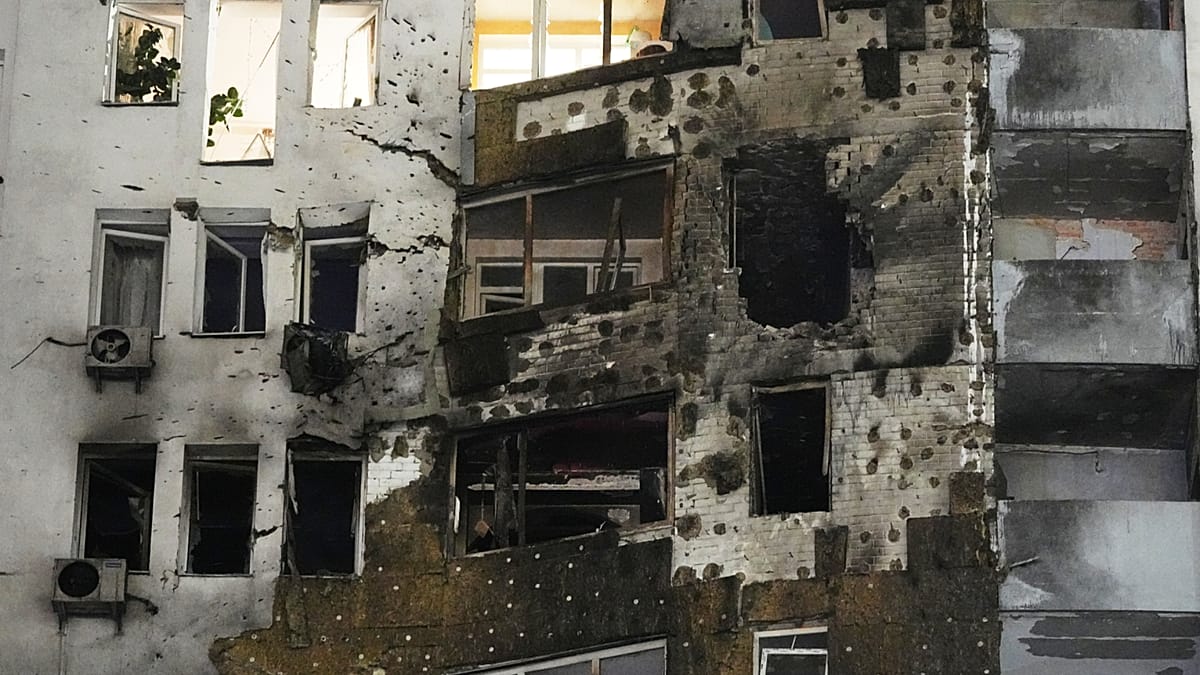
Russia launched an Oreshnik intermediate-range hypersonic missile at critical infrastructure in Lviv near the EU/NATO border, which Kyiv says is being investigated as a war crime; UK, Germany and France condemned the strike and Ukraine has called for urgent UN Security Council and Ukraine‑NATO Council meetings. Separately, a massive Russian missile and drone attack on Kyiv killed four, injured 24, and left roughly half of apartment buildings (about 6,000) without heating amid extreme cold, while Ukrainian authorities recovered missile fragments and reported possible damage to an underground gas storage facility. The strike — Russia’s second public use of the Oreshnik, which can carry nuclear payloads — raises regional escalation risk and poses short-term disruptions to energy and urban infrastructure that could weigh on risk assets sensitive to geopolitical shocks.
Market Structure: The immediate winners are defense prime contractors and air‑defense integrators (e.g., RTX, LMT, GD or ETF ITA) as governments front‑load procurement and rehearsed symbolic hypersonic use raises perceived demand for layered air defenses; losers are EU border regional infrastructure owners, gas storage operators and consumer cyclical names in Eastern Europe where repair/replacement capex and insurance costs rise. Cross‑asset: expect a 5–30bp downward knee‑jerk in core yields (flight‑to‑quality) and a 2–5% USD strength versus EUR/PLN, a 5–20% short‑term spike in TTF/northern European gas and a 2–4% safe‑haven gold uptick. Risk Assessment: Tail risks include miscalculation leading to strikes inside NATO or direct supply‑chain sanctions escalation (low prob, high impact) that could spike oil >$100/bbl or freeze EU banking ties to Russia; probability window is 0–3 months. Immediate (days) — volatility and liquidity squeezes; short (weeks–months) — defense order announcements, EU emergency gas purchases; long (quarters) — sustained reallocation of EU capex into energy security and domestic munitions, raising long‑run pricing power of defense/energy infrastructure suppliers. Trade Implications: Tactical: favor 2–3% portfolio long in defense names/ETF over 1–3 months via call spreads to cap cost while capturing a 15–40% upside on news; hedge equity beta with 1–2% SPX put spread for 1 month. Macro: short EUR/long USD (0.5–1% notional) and allocate 1–2% to GLD as volatility hedge; add 3–6 month long positions in TTF/dutch gas futures if regional storage reports show >20% deficit vs 5‑yr average. Contrarian Angles: Consensus assumes persistent escalation and a prolonged energy shock; that may be overdone because the reported Oreshnik used inert warheads — a signaling move — which mutes immediate supply disruptions. If NATO avoids kinetic escalation and EU furnaces/heat are restored within 2–6 weeks, defense rerating could be front‑loaded and mean‑revert 10–25%, creating shortable near‑term squeezes. Historical parallel: 2014 sanctions produced multi‑year defense capex growth rather than immediate GDP collapse — favor long‑duration thematic allocations rather than purely tactical squeezes.
AI-powered research, real-time alerts, and portfolio analytics for institutional investors.
Request DemoOverall Sentiment
strongly negative
Sentiment Score
-0.55
