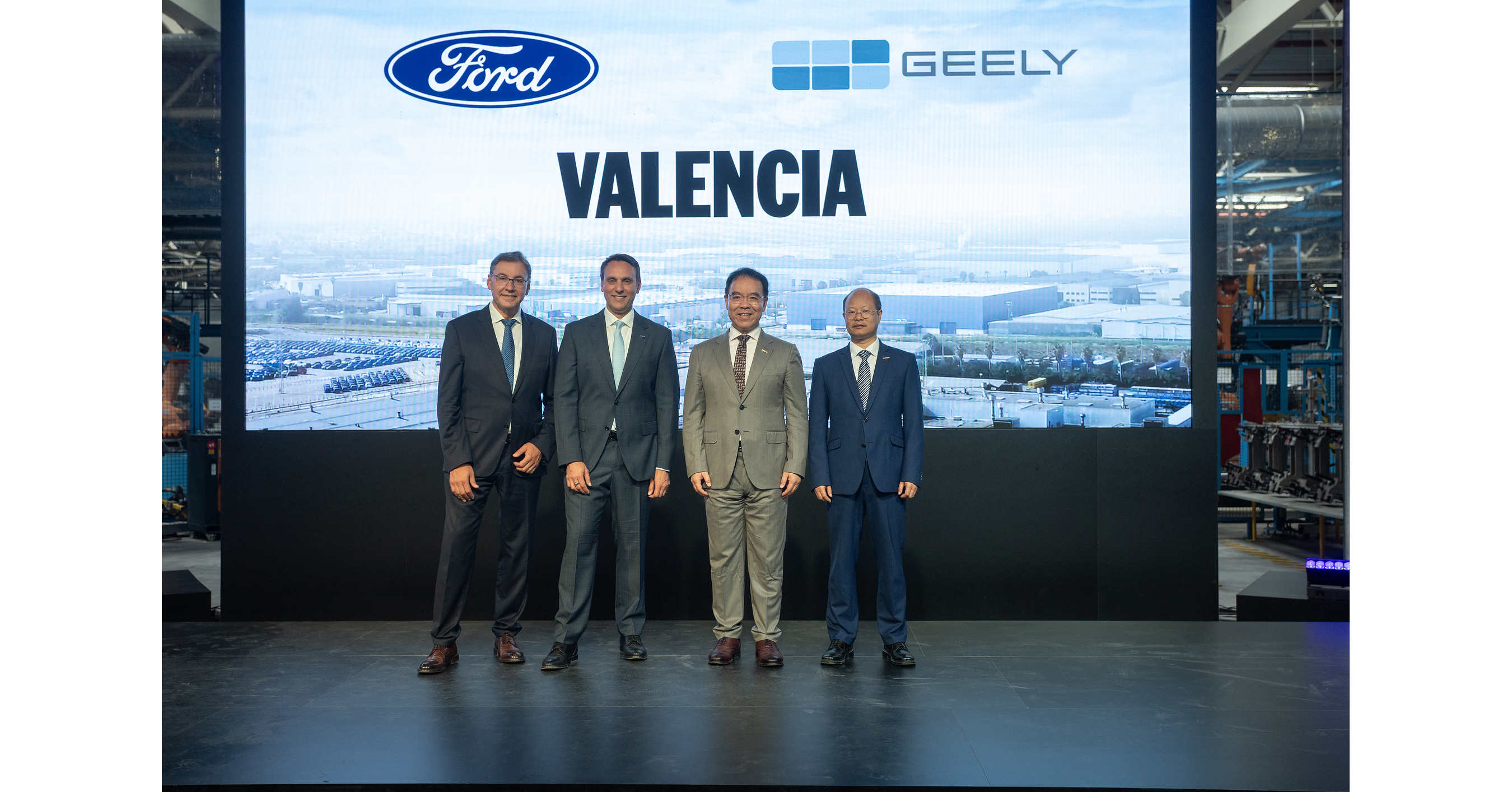
Ford et Geely annoncent une coentreprise en Europe au sein de l’usine Ford de Valence (Espagne), avec une structure de détention proposée de 66% pour Ford et 34% pour Geely. Sous réserve d’approbations réglementaires, l’activité démarrerait au S1 2027 et les premiers nouveaux véhicules sortiraient en 2028, dont un crossover multi-énergies, un nouveau Bronco et deux SUV électriques Geely (production continue du Kuga). Le partenariat vise à mutualiser les volumes, optimiser l’utilisation de l’usine (capacité potentielle ~500 000 véhicules/an) et réduire le coût par véhicule pour mieux faire face à la concurrence et aux contraintes réglementaires en Europe.
This is more a strategic de-risking move than a near-term earnings event. Ford is effectively buying itself lower fixed-cost exposure in Europe without adding a greenfield burden, which should help protect segment margins if regional volumes stay soft; the bigger benefit is optionality around product mix and utilization, not this year’s EPS. The market is likely to underprice the value of having a localized manufacturing base if EU trade friction, local-content pressure, or tariff retaliation intensifies over the next 12-36 months.
Second-order winners are likely Spanish industrial suppliers, automation vendors, and logistics firms tied to the Valencia cluster; the losers are European OEMs that still carry higher-cost legacy footprints and can’t spread platform investment across enough units. For Geely, the hidden advantage is regulatory insulation: EU-local production reduces the risk that Chinese-branded imports face policy headwinds, so the real asset is market access rather than just assembly capacity. That makes this more relevant for Geely’s 1-3 year European expansion thesis than for Ford’s near-term revenue line.
The key risk is timing: the production ramp is so far out that execution slippage, weak European demand, or a change in subsidy/tariff policy could erase the narrative before it monetizes. If Ford’s European launches underperform or if plant utilization stays below target, the JV becomes a cost-sharing story rather than a growth catalyst. The contrarian view is that consensus may be too focused on headline partnership symbolism; the economic uplift is modest until 2028, so the trade is really about relative positioning in a market where fixed costs and localization are becoming decisive.
AI-powered research, real-time alerts, and portfolio analytics for institutional investors.
Request DemoOverall Sentiment
mildly positive
Sentiment Score
0.20
Ticker Sentiment
