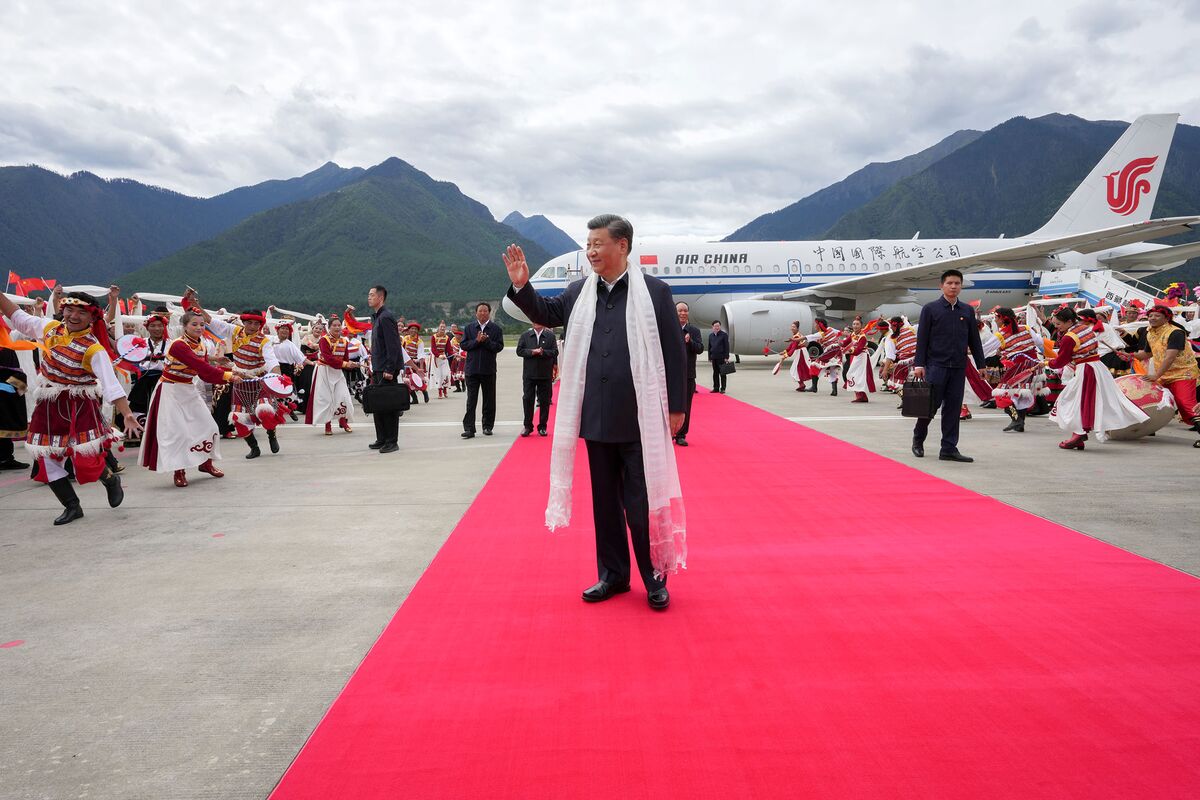
China has commenced construction on a monumental $167 billion hydropower project in Tibet, a significant infrastructure undertaking designed to serve multiple strategic objectives for President Xi Jinping. This massive endeavor aims to stimulate China's slowing economy, bolster energy security, and solidify control over a vital river. The project simultaneously projects power and reinforces internal control, while shaping Xi's legacy.
China has initiated a monumental $167 billion hydropower project in Tibet, an undertaking of historic scale designed to address several key strategic objectives for President Xi Jinping. The project's immense material requirements, including sixty times the cement of the Hoover Dam and steel equivalent to more than 116 Empire State Buildings, underscore its role as a powerful fiscal stimulus intended to reinvigorate the nation's slowing economy. Beyond domestic economic management, the dam is a critical component of China's long-term energy security strategy, significantly expanding its renewable power capacity. The initiative also carries substantial political weight; it is a move to tighten control over the restive Tibetan region while simultaneously projecting China's power externally by controlling a river system vital to millions in downstream countries. The article frames this as a "legacy-defining gamble" for Xi, highlighting the high stakes associated with this multi-faceted infrastructure, energy, and geopolitical play.
AI-powered research, real-time alerts, and portfolio analytics for institutional investors.
Request DemoOverall Sentiment
moderately positive
Sentiment Score
0.50
