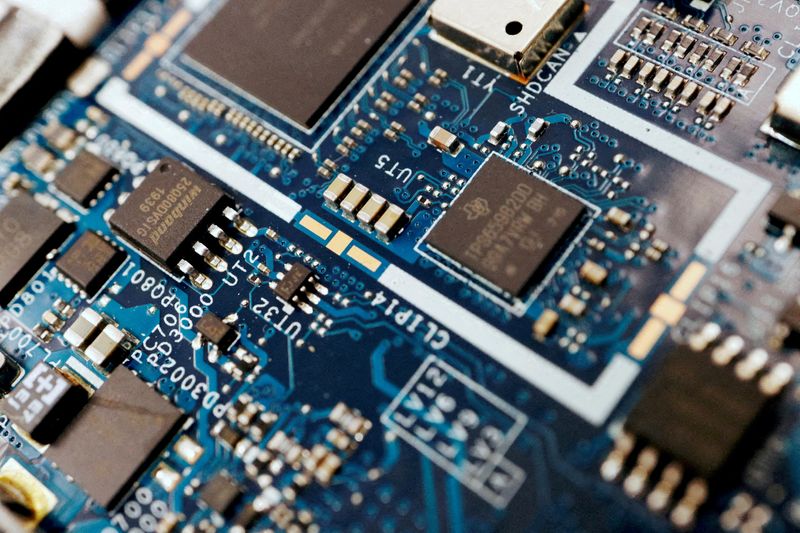
Morgan Stanley says the semiconductor cycle is turning more decisively, with first-quarter 2026 results showing a clearer upcycle and distributor checks pointing to above-seasonal sequential growth in Q2. The firm sees strength in industrials, power semis, and auto semis, citing inventory replenishment and tighter supply, while stopping short of calling a full shortage cycle. Positive mentions include Analog Devices, Microchip Technology, ON Semiconductor, Texas Instruments, NXP, and Allegro MicroSystems.
The key market implication is not simply “semis are improving,” but that the earnings leadership is broadening away from the most crowded AI/data-center complex into the parts of the chain where expectations are still depressed. That creates a cleaner setup for analog, MCU, and power names because incremental evidence of normalization can drive multiple expansion and estimate revisions simultaneously, whereas data-center beneficiaries are already priced for perfection. The best asymmetry sits in suppliers with operating leverage to a modest rebound in industrial/auto demand and limited dependency on hyperscaler capex cycles.
Second-order, tighter trailing-edge and memory input costs should improve pricing discipline for incumbents and squeeze weaker second-tier competitors that were relying on inventory liquidation and discounting to maintain share. That supports relative outperformance for higher-quality franchises like ADI/TXN versus more execution-sensitive names, while also making microcap analog and auto-exposure names vulnerable if end-demand falters before replenishment fully takes hold. If the upcycle is real, channel inventory rebuild can add 1–2 quarters of revenue acceleration without needing final demand to re-accelerate much further.
The contrarian risk is that this is a restocking rally, not a true demand inflection. If distributors are pulling orders forward because supply risk feels tighter, growth could flatten by late summer once inventories normalize, especially in industrial and auto end markets where OEMs remain cautious. A second risk is that geopolitical supply shocks in memory or substrates can improve near-term revenue but compress gross margin expansion if companies lack pricing power.
Most underappreciated is the relative-value opportunity: the market may continue to pay up for AI infrastructure while ignoring that cyclical semis can deliver faster estimate revisions from a lower base. That favors a 3–6 month trade in broad semiconductor exposure versus a short-duration hedge against a mean reversion in the most crowded AI winners. The setup is constructive, but it is likely a better relative call than a full-sector outright beta call.
AI-powered research, real-time alerts, and portfolio analytics for institutional investors.
Request TrialOverall Sentiment
mildly positive
Sentiment Score
0.35
Ticker Sentiment
