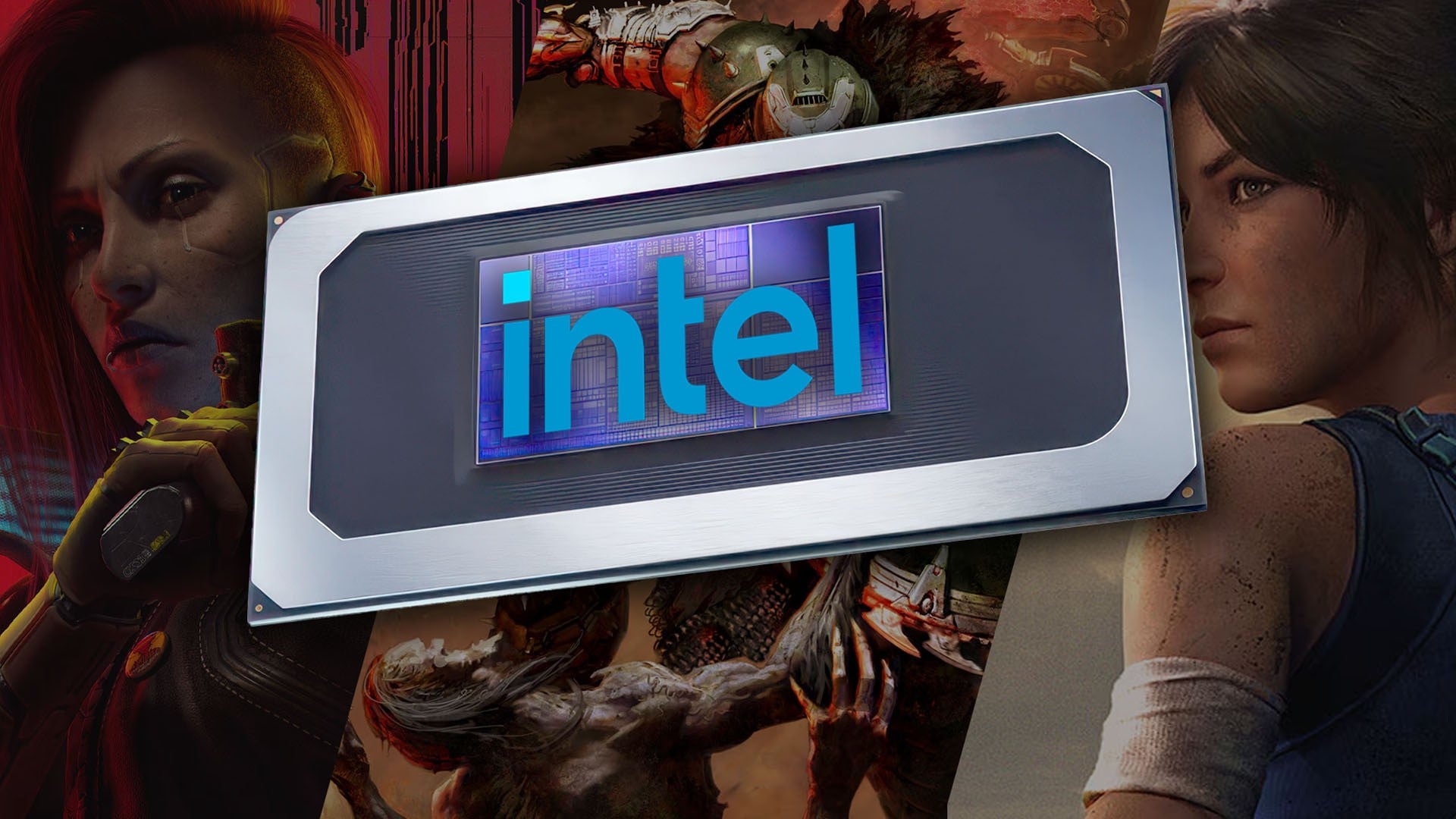
Intel's new Panther Lake mobile platform (compute tile on Intel 2nm-class 18A) demonstrated unexpectedly strong integrated-GPU performance at CES 2026, with the 12-Xe-core B390 iGPU doubling AMD Strix Point APU frame-rates in heavy RT-enabled 1080p benchmarks (Cyberpunk 2077, Doom: The Dark Ages, Shadow of the Tomb Raider) and approaching parity with entry-level discrete cards (RX 6600/RTX 3050 within ~14% on many tests; RTX 3050 led by 27% when native upscaling was used). Key specs highlighted include typical 16-core CPU configurations, an NPU ~50 TOPs, mixed foundry sourcing (Intel 18A, Intel 3, TSMC N3E/N6), and strong XeSS frame-generation and upscaling results; however, pricing, 30W handheld power-scaling and final retail silicon remain unknown, leaving commercial upside promising but unquantified.
Market structure: Intel's Panther Lake materially reshuffles the mobile/handheld GPU value curve by delivering integrated performance in the ballpark of entry-level discrete cards (RX6600/RTX3050) — a segment representing roughly 10-15% of GPU unit volume. Winners: INTC (mobile OEM share, better margin mix if priced competitively) and foundries (TSM for N3E); losers: AMD's Strix Point cohort and low-end discrete GPU ASPs (NVDA/AMD). Expect OEM pricing pressure and potential margin compression for discrete GPUs if Intel targets sub-$800 handheld/laptop price points within 3-9 months.
Risk assessment: Key tail risks include Intel execution on 18A yields and thermal scaling at 30W (handhelds) — a failed ramp could wipe expected share gains (low-probability but >20% downside to thesis). Regulatory/antitrust risk is medium-term (12-36 months) but limited near-term. Catalysts: retail pricing and independent benchmarks (0-90 days), AMD RDNA5/SoC announcements (90-270 days), and TSMC capacity signals (90-180 days).
Trade implications: Tactical play is to front-run likely share reallocation: long INTC exposure vs short selective AMD exposure; size positions to risk-managed 2-3% conviction weights and horizon 3-12 months. Options: use limited-risk call spreads on INTC (6–12 month LEAP spreads) and buy 3–6 month put spreads on AMD to express relative weakness; modest long TSM for foundry upside (6–12 months).
Contrarian angles: Consensus underestimates pricing sensitivity — if Intel prices Panther Lake devices at parity with Strix Halo, AMD/NVDA unit volume and low-end ASPs will compress beyond current expectations. Conversely, if Intel chooses premium pricing, adoption slows and the market will re-rate INTC less favorably; monitor street expectations vs realized retail pricing within 30–90 days for a fast trade.
AI-powered research, real-time alerts, and portfolio analytics for institutional investors.
Request DemoOverall Sentiment
mildly positive
Sentiment Score
0.35
Ticker Sentiment
