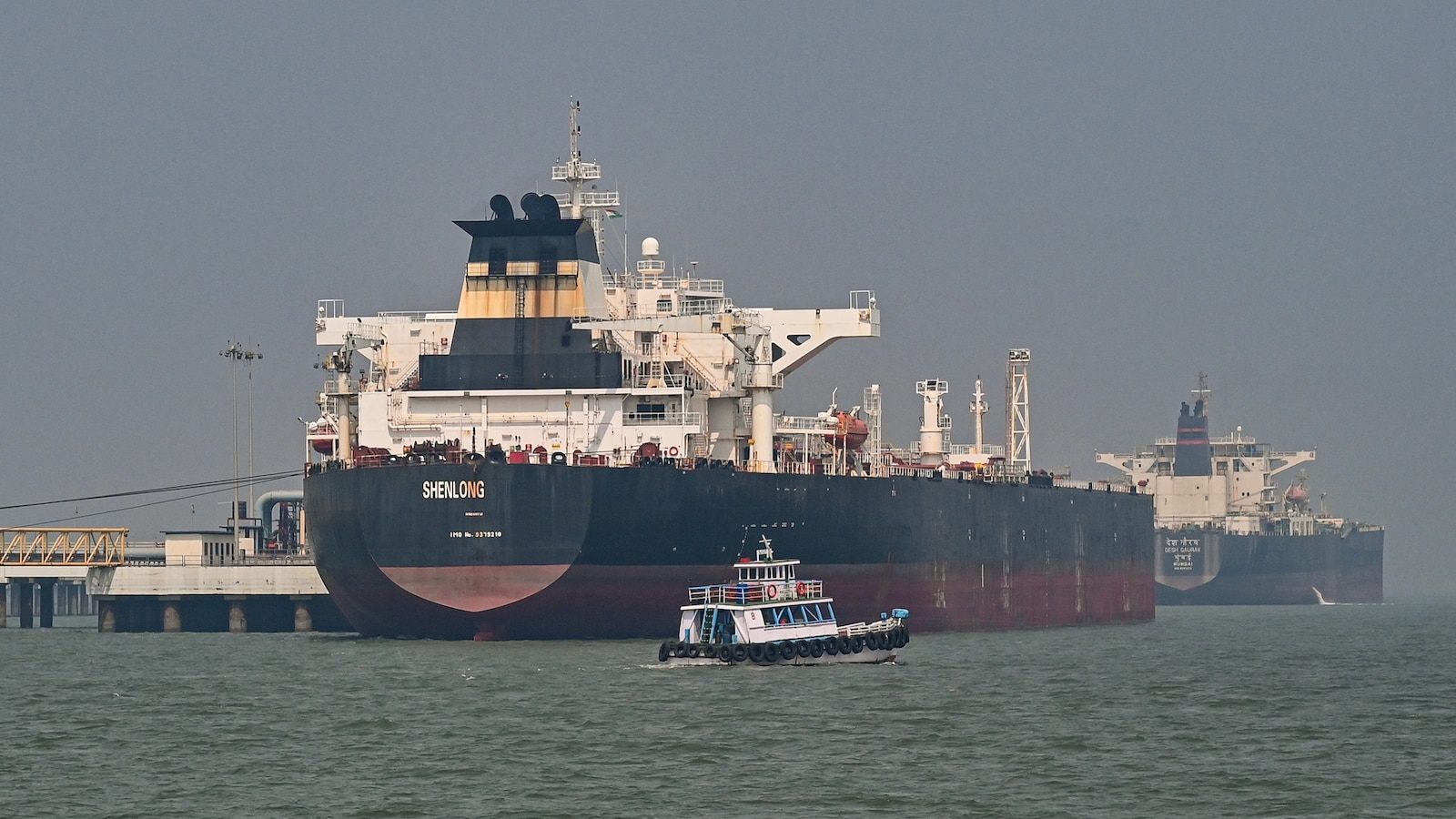
Trump’s Beijing summit is being overshadowed by the Iran war, with U.S. officials seeking Chinese pressure on Tehran while Beijing signals caution. China’s leverage is meaningful but limited, and the article says no breakthrough or “mega-deal” is expected on Iran’s nuclear program or ceasefire terms. The conflict is also weighing on U.S.-China competition by depleting U.S. munitions and reshaping strategic calculations around the Strait of Hormuz and Taiwan.
The market implication is not a clean “risk-on” or “risk-off” binary; it is a dispersion event. The most important second-order effect is that Washington is signaling it may externalize Middle East stabilization costs onto Beijing, which raises the probability of a transactional, short-horizon de-escalation in shipping lanes without resolving the underlying strategic rivalry. That favors assets tied to reduced near-term disruption in energy transit, while leaving a meaningful tail risk premium in defense, cyber, and semiconductor supply-chain names because the broader U.S.-China contest is becoming more explicitly militarized and sanction-driven.
China’s leverage is strongest where its interests are narrow: keeping Hormuz open and avoiding an oil spike that hits its industrial margins. It is weakest on the U.S. core demand, which is a verified rollback of Iran’s nuclear and missile posture; that asymmetry means any diplomatic progress is likely to be operational, not strategic. In practice, that creates a market setup where crude risk premium can compress quickly on headlines, but re-expands if talks stall or if Tehran uses process as cover to reset force posture.
The more underappreciated channel is U.S. readiness depletion. If Beijing concludes Washington is overextended, that could embolden Chinese pressure around Taiwan over the next 3-12 months, especially if munitions replenishment remains slow. That argues for owning beneficiaries of higher defense spending and inventory rebuilds, while fading the assumption that a Middle East truce automatically reduces Asia risk. The consensus is likely overestimating the chance of a grand bargain and underestimating the probability of a series of fragile mini-deals that keep headline volatility elevated but do not materially lower structural geopolitical risk.
AI-powered research, real-time alerts, and portfolio analytics for institutional investors.
Request DemoOverall Sentiment
mildly negative
Sentiment Score
-0.15
