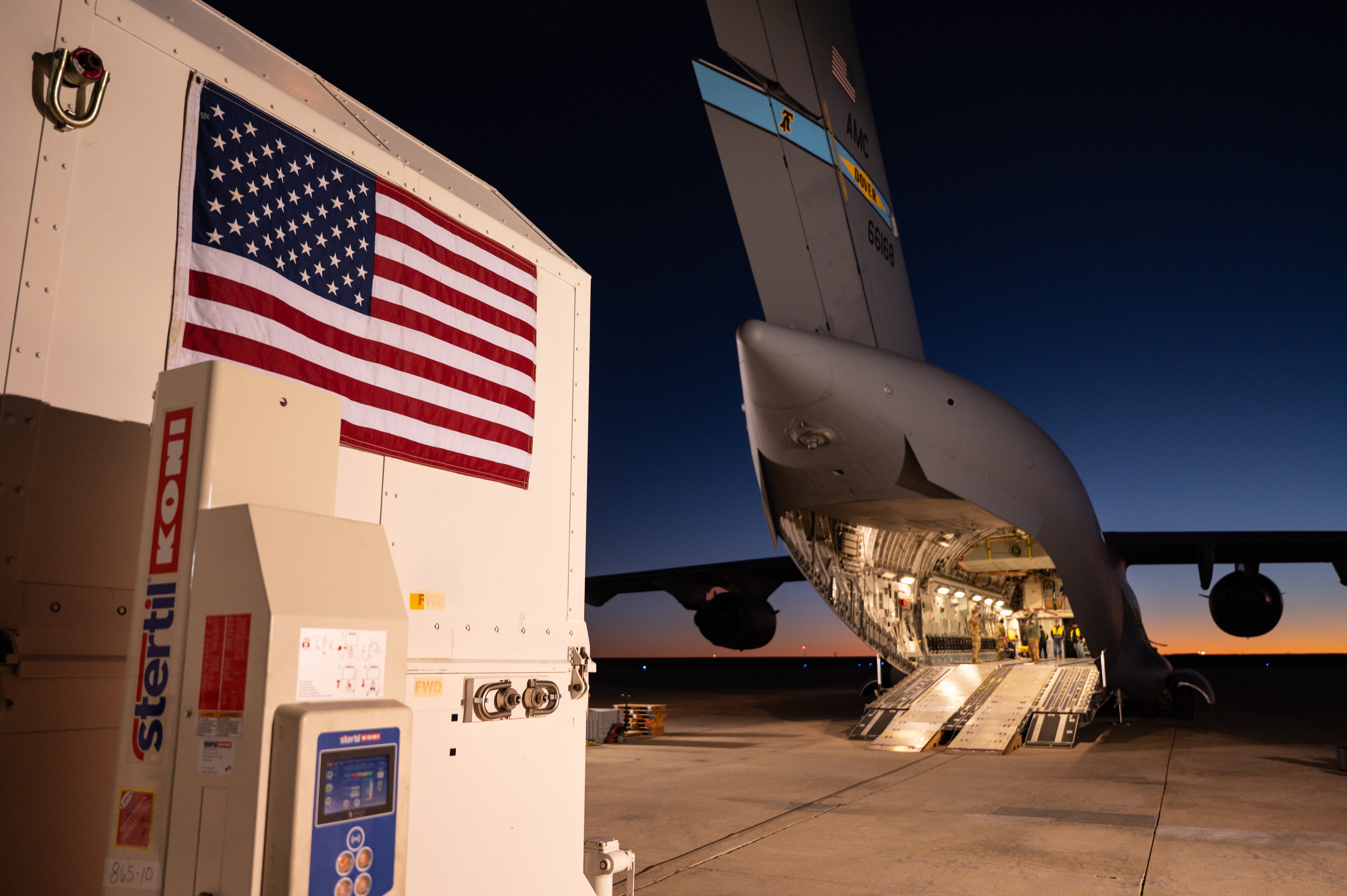
US Central Command confirmed six American service members killed and 18 wounded following Operation Epic Fury, after one service member who had been seriously wounded died and two previously unaccounted-for personnel were recovered; reporting indicates the US casualties occurred in Kuwait. The US and Israel conducted strikes that reportedly killed Iran’s Supreme Leader and other top leaders, with the Iranian Red Crescent reporting 555 Iranian fatalities; US military is reinforcing regional air assets and raised domestic base security to Force Protection Level Bravo. The developments represent a major escalation with likely sustained operational risk, potential for further casualties, and implications for markets via heightened geopolitical risk premiums, defense-sector demand and possible regional disruption. Managers should prepare for risk‑off positioning, volatility in energy and regional assets, and elevated tail‑risk premium pricing.
Market structure: Immediate winners are defense primes (Lockheed LMT, Raytheon RTX, General Dynamics GD, ETF ITA) and spot crude producers (smaller E&P names like OXY, APA) because budgets and oil producers’ pricing power re‑rate; immediate losers are commercial airlines (AAL, UAL), Gulf shipping/reinsurance, EM FX and regional banks tied to trade flows. Expect oil to shock +5–15% within 2–6 weeks if Strait of Hormuz incidents escalate; gold +5–10% and core sovereign yields to fall 10–30bp as safe‑haven flows boost USD and gold while pushing equities lower and equity vol up 30–80% on VIX basis.
Risk assessment: Tail risks include large regional escalation that pushes Brent >$120/bbl (low probability ~10% but >$1.5T GDP shock) and supply‑chain shocks from chokepoint closures; a full mobilization would force US defense outlays +15–25% over baseline in FYs 1–3. Time horizons: immediate (days) = volatility spike/flight to safety; short (weeks–months) = re‑rating of defense and energy; long (quarters–years) = higher structural defense spend, possible higher inflation if energy shock persists. Hidden dependencies: insurance costs for shipping and presidential election policy under Trump materially alter procurement timelines and sanctions enforcement.
Trade implications: Bias long defense primes (3% position each across LMT/RTX/GD or 2–4% ITA ETF), tactical crude exposure via 2–3 month WTI call spreads (size to risk 0.5–1% portfolio), and a hedged safe‑haven allocation (IEF 2% or TLT 2% for 7–10y duration) while buying volatility protection (1‑month VIX 30/50 call spread sized to 0.5–1% risk). Pair trades: long RTX / short UAL (equal $ exposure) to capture defense vs commercial travel divergence; set stop if ceasefire announced and oil falls >15%.
Contrarian angles: Consensus may overpay integrated majors (XOM, CVX) which have hedges—prefer levered exposure in high‑beta E&Ps (OXY, APA) for asymmetric upside if supply disruption persists. Airline shorts could be overdone if conflict remains localized — limit position sizes and use options (buy puts 6–8 weeks) to control loss. Historical parallels (Gulf War 1990–91) show sharp initial risk‑off then selective rallies in defense and energy over 3–12 months; use that window to scale positions.
AI-powered research, real-time alerts, and portfolio analytics for institutional investors.
Request TrialOverall Sentiment
strongly negative
Sentiment Score
-0.65
