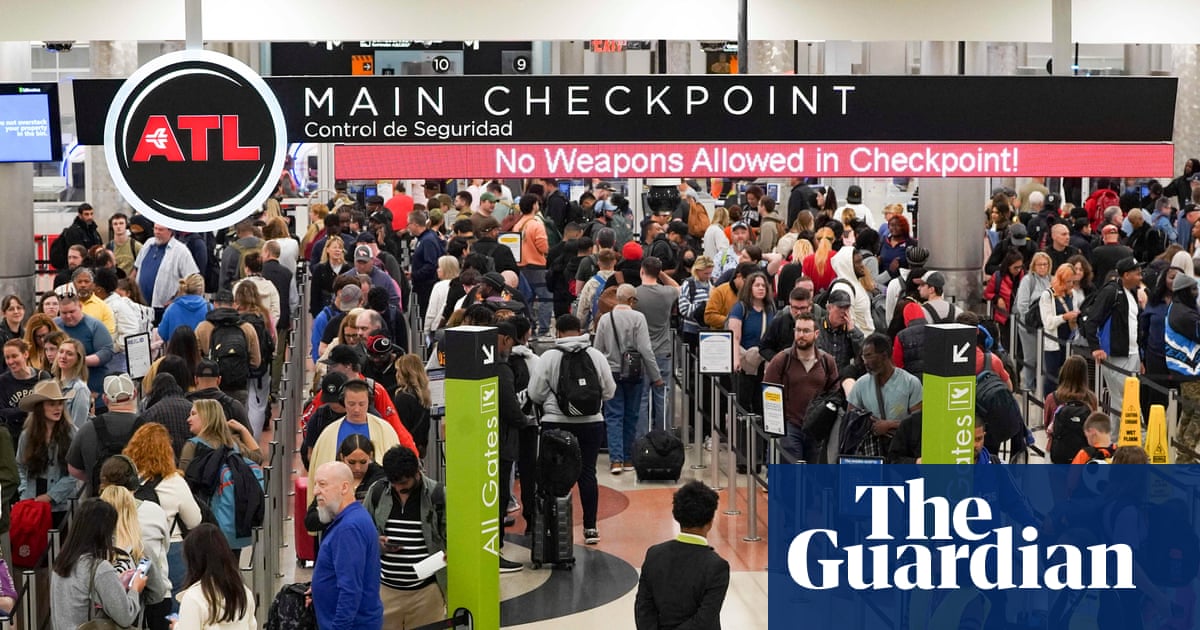
More than 300 TSA agents have quit and officers missed their first full paycheck as a DHS funding standoff (now into its second month) has left TSA staff working without pay; passengers faced security lines >2 hours at ATL and 90–100 minute waits in Houston. The dispute—Democrats withholding DHS funding to pressure immigration enforcement reforms—has prompted CEOs of major carriers (American, Delta, Southwest, JetBlue) to demand funding be restored, while rising resignations and unscheduled absences (union represents >47,000; average TSA salary ~$35,000) threaten broader operational disruption and pressure airline operations until Congress resolves the budget impasse.
Operational chokepoints at major hubs behave like a negative supply shock to network carriers: a single multi-hour screening delay at a hub typically cascades into same-day cancellations and crew misconnects that can reduce effective daily capacity by ~3–5% for that carrier. That mechanical hit forces immediate cash outlays (reaccommodation, hotels, crew overtime) and dilutes yields on rebooked itineraries, compressing unit revenues for the following 2–6 weeks while recovery work propagates through rolling schedules.
Credit and liquidity are the next-order battleground. If the disruption persists past two billing cycles, expect measurable widening in airline and airport operator credit spreads (order of 20–60bp) as working capital needs and refund liabilities spike; weaker balance-sheet carriers and concession-dependent airport REITs will see the largest knee-jerk moves. Conversely, large lessors and network incumbents with diversified revenue pools are positioned to capture market share as smaller operators trim capacity.
Political dynamics make the path binary and event-driven: intense industry lobbying and concentrated economic pain at large hubs raise the probability of a stopgap resolution within 1–3 weeks, but a protracted stalemate into peak travel months (2–3 months) materially raises downside for discretionary leisure flows and airport retail revenue for a full quarter. Market implied volatility in travel names will therefore be elevated and skewed to downside until a clear funding outcome emerges, creating asymmetric option opportunities.
AI-powered research, real-time alerts, and portfolio analytics for institutional investors.
Request DemoOverall Sentiment
moderately negative
Sentiment Score
-0.50
