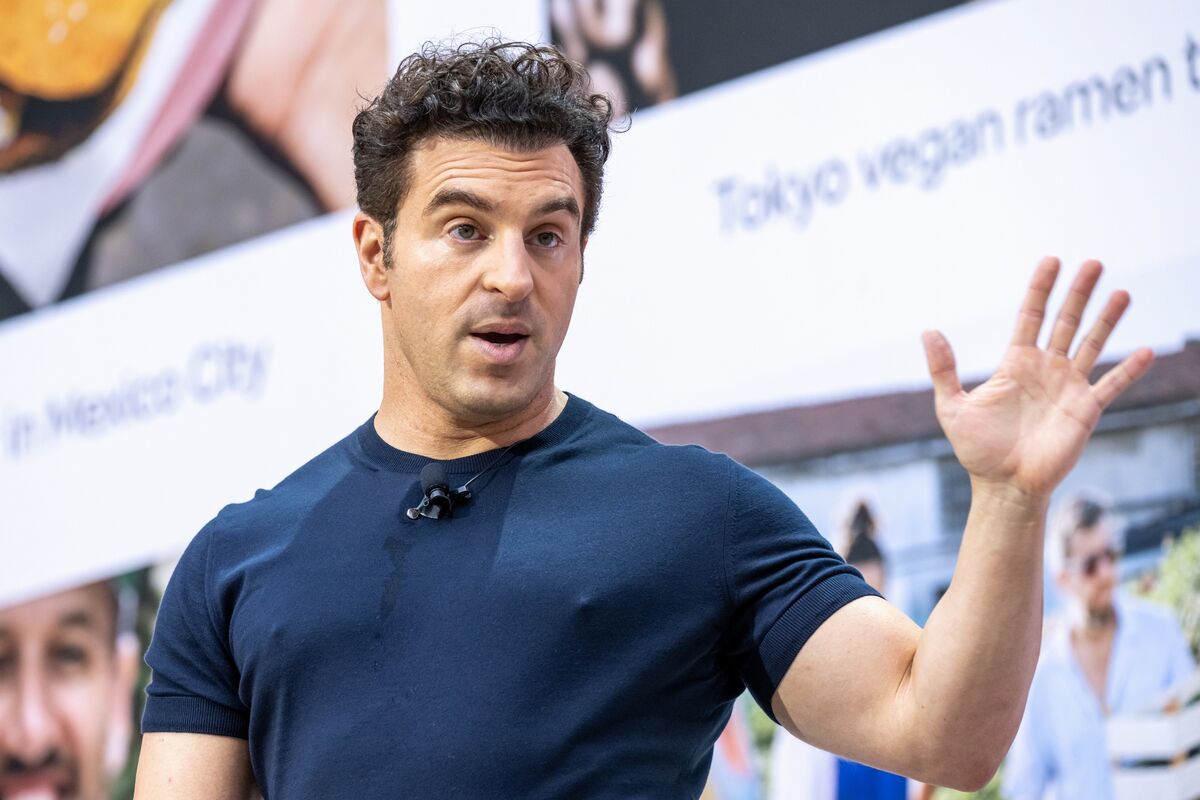
Airbnb CEO Brian Chesky is starting a new AI lab and is in the early stages of funding an AI venture focused on developing models and potentially user interaction and design. The move marks Chesky’s first foray into the global AI race. The announcement is strategically notable, but details are limited and still subject to change.
This is less a direct revenue catalyst for ABNB than an optionality event that can change the company’s valuation regime. If management can credibly embed AI into discovery, trip planning, and customer support, ABNB can raise conversion and lower service cost simultaneously — a rare operating leverage combo that the market tends to underappreciate until margins re-rate. The bigger strategic point is that travel is one of the few consumer categories where an AI interface can sit between users and suppliers, creating a potential control point over demand allocation rather than just a feature.
The second-order winner may be whoever owns the “last-mile intent layer” in travel: if ABNB builds a differentiated interface, it reduces dependence on Google-style traffic acquisition and may shift bargaining power away from intermediaries. That is mildly negative for metasearch and OTA-adjacent funnel economics over a multi-year horizon, even if near-term the experiment simply improves ABNB’s own unit economics. For large language model infrastructure players, this is also a modest positive signal that consumer-facing AI spend is broadening beyond pure software and into vertical applications.
The key risk is execution dilution: a founder-led moonshot can burn management bandwidth without producing monetizable product advantage for 12-24 months. The market may initially reward the narrative, but if there is no measurable uplift in booking conversion, support costs, or retention within the next 2-3 quarters, the move becomes a distraction premium that compresses back out. The contrarian view is that the most valuable outcome may not be building a model at all, but using AI as a design layer over existing models — in which case the headline sounds more ambitious than the actual economic moat change.
AI-powered research, real-time alerts, and portfolio analytics for institutional investors.
Request DemoOverall Sentiment
mildly positive
Sentiment Score
0.20
Ticker Sentiment
