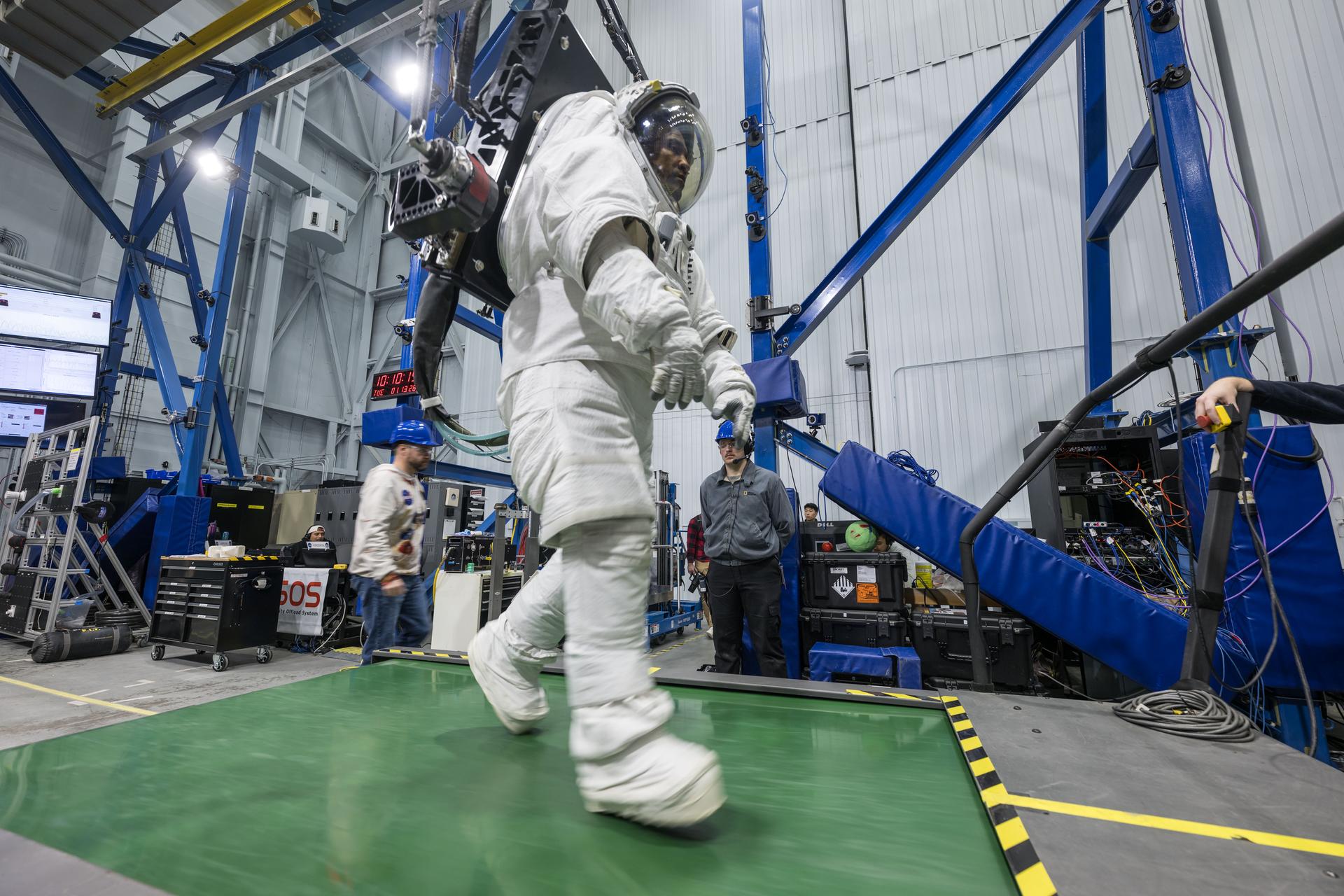
NASA said Artemis II postflight science work is underway, with initial crew health data collection concluding 45 days after splashdown and AVATAR organ-chip analysis now in progress. The agency will also release more than 100 audio recordings and about 11,500 Earth and Moon image/video files from the mission science campaign. The article is largely a factual update on NASA research and data archiving, with limited immediate market impact.
The near-term investable signal is not "space exploration" broadly, but the acceleration of a government-funded biosurveillance stack for long-duration human operations. NASA is effectively building a validated pipeline for remote diagnostics, wearable telemetry, post-exposure immune monitoring, and organ-on-chip modeling; that raises the odds that procurement shifts toward niche medtech, assay, and lab automation vendors with aerospace-qualified workflows. The second-order winner is the tooling layer that can standardize data capture across small N astronaut populations and translate that into scalable clinical-grade products.
The most important commercial implication is that the de-risking of human adaptation to microgravity and radiation compresses timelines for commercial lunar infrastructure. If NASA can reduce uncertainty around crew readiness, personalized medicine, and mission-safe performance, it improves the probability of follow-on spending on habitats, autonomy, and life-support systems over the next 24-48 months. That is a positive read-through for defense-adjacent space contractors with recurring integration revenue, but a negative signal for pure-play launch providers whose thesis depends more on cadence than on science validation.
Contrarian view: the data package is scientifically valuable but economically small in the near term. Most of the content is archival, experimental, and institutional, so the market may overestimate immediate monetization while underestimating the longer-dated procurement beneficiaries. The real trade is not on the headline mission success; it is on which vendors become embedded in NASA's standards, databases, and laboratory protocols before those workflows are scaled across Artemis follow-on missions.
AI-powered research, real-time alerts, and portfolio analytics for institutional investors.
Request DemoOverall Sentiment
neutral
Sentiment Score
0.15
