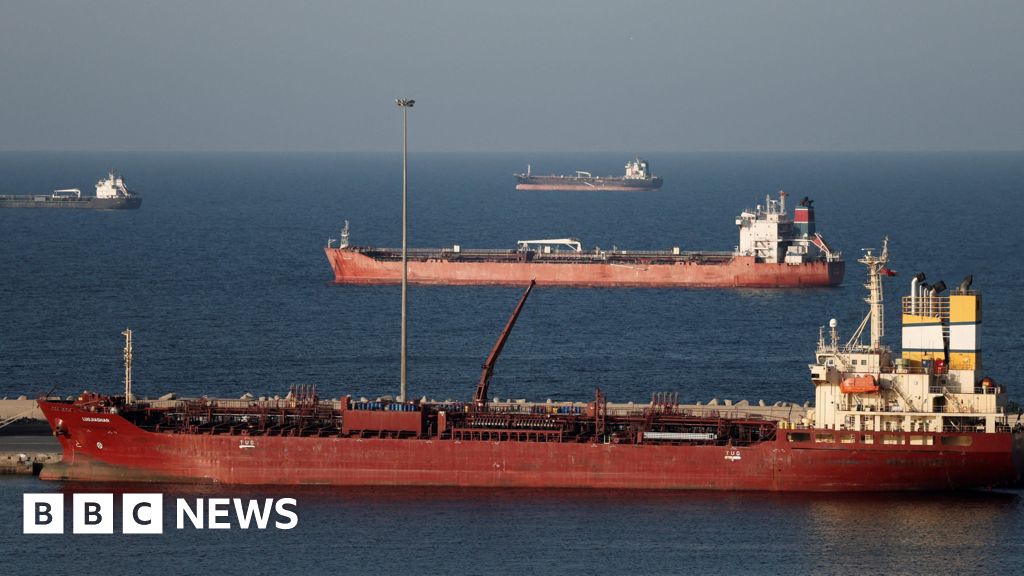
About 20% of global oil transits the Strait of Hormuz; oil prices jumped from roughly $71/bbl pre-conflict to nearly $120/bbl (≈+$49, ≈69%) as Iran effectively blocked the strait and at least 16 vessels were reported attacked, threatening roughly $600bn/yr of energy trade. The UK says it is considering "any options," including working with US/allies and deploying mine-hunting drones or ships to reopen the passage, while urging de-escalation and withholding operational details. The situation represents a material supply-chain and energy-market disruption that creates a risk-off environment for markets.
Assuming elevated risk to a major energy shipping corridor, the most immediate commercial impact is on ton-mile economics rather than on upstream production volumes. Rerouting and slower transits increase demand for available tonnage and bunker fuel consumption, creating a 3-9 month window where modern tanker owners and charter market participants can capture outsized spot and time-charter rates even if physical crude flows ultimately normalize.
Producers with integrated downstream optionality retain the best cash-flow resilience: they can absorb higher feedstock costs by flexing refinery throughput or export logistics, whereas standalone refining and petrochemical margins are the most sensitive to sudden crude-forward and feedstock dislocations. Adjacent commodity chains (fertilizers, industrial gases, speciality gases) see asymmetric pricing power—shortages in one region often force buyers to pay 10–40% premia to alternative suppliers for 1–3 months.
Defense and maritime services will see immediate contracting demand for mine-countermeasure, salvage, and unmanned-systems capabilities; procurement-to-deployment timelines compress to weeks for leased systems and 6–12 months for platform buys, translating to near-term revenue visibility for certain primes and specialist contractors. Insurance and war-risk premium repricings are a critical transmission mechanism: higher premiums increase landed oil costs and can flip profitability for marginal shipping and trading firms within weeks.
Contrarian angle: the market often conflates headline disruption with structural supply loss. Capacity to reroute, release strategic reserves, and rapidly scale private security means the “worst case” is reversible on a 2–8 week diplomatic or logistical reset; that makes volatility trades and convexity strategies more attractive than naked directional bets on spot commodity prices.
AI-powered research, real-time alerts, and portfolio analytics for institutional investors.
Request DemoOverall Sentiment
strongly negative
Sentiment Score
-0.70
